Decorex International 2010

Decorex is here again. This time it’s the 2010 version.

Beautiful logo isn’t it?

For those of you interested in fabric there are many fabric companies here. Not KOTHEA of course! but more of that another time.

Decorex is probably the magazine equivalent of House & Gardens. It competes with 100% Design and Focus (Chelsea Harbour Design Week). 100% Design is probably the  equivalent of Elle Decoration.

Personally I’d go just because of the logo.

If you are keen to get new contacts in the world of fabric then there are some interesting companies here. Quite a few new ones as well as some you will have heard of before.

As with all exhibitions of this sort it is a good place to go to get an idea of ‘consensus trends’. Try to figure out where all the manufacturers are heading. Of course they could all be heading in entirely the wrong direction for your particular target market so go having your own opinion as well. Go with that opinion in mind and see if what you find validates it.

Remember as well that the exhibition stands are there to grab your attention. To drag you to talk to a sales rep. Just because the stand looks good and the fabrics on display look good in the exhibition it does not mean they will work in your schemes of course! Although obviously striking designs do sometimes work for some people.

We were tempted to show off some of our new Cashmere Throws and Cashmere blankets but we weren’t quite ready with the full range yet. And we’d like to think that the best quality throws will generate interest through word-of-mouth throughout the industry in the year ahead! (Hmmm)

Cashmere Colour Trends for 2011/12 to be Unveiled at Cashmere World Trade Show (via Cashmere Throw Blog)

Do manufacturers really lead colour / color trends? Can industry associations do better? Or do designers know best?

Oh dear oh dear. More manufacturers and industry bodies telling interior designers what the colour trends are for the year ahead. Read more… Do interior designers genuinely follow these 'trends'. Or Do interior designers suspect that the manufacturer already has the colours planned and is looking for a way to market those colours to interior designers? Related Articles Interiors: Show your true colours (telegraph.co.uk) … Read More

via Cashmere Throw Blog

Cashmere Production In Mongolia

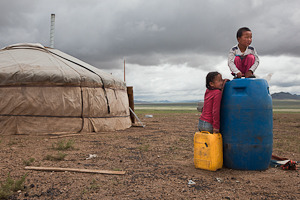
Photo: Jeffrey Lau I have been reading an interesting article on CNN.com about the high cost of CASHMERE. Take a look….

There are some amazing photos by Jeffrey Lau which  add definitive realism to the lives that many of us are fortunate enough not to lead. It also raises again the issue of the environmental cost and environmentally friendly products; on the one side cashmere production in this area has economically benefitted many people yet at the same time the area is probably at, or beyond, the limit of what can be realistically sustained.

Do we in the affluent west have a right to make these people live the poor but ‘worthy’ lives they used to lead? Or can they exploit the enviroment like we in the west have done over the last few hundred years?

Cashmere Throws & Pashmina (via Cashmere Throw Blog)

A Cashmere Throw is sometimes called a pashmina. This is not strictly true and at best confusing. Cashmere and Pashmina essentially refer to the same kind of wool. It's just that over recent years Pashmina has come to refer to a cashmere shawl. So if you are looking to source a top quality Cashmere Throw please don't waste your time looking for Pashmina, the people who are using the phrase are trying to pull the (goat's !) wool over your eyes. If … Read More

via Cashmere Throw Blog

Cashmere Throws ( Throws )

Cashmere Throws are set to arrive in KOTHEA’s expanding fabric collection in September. As an aid for Interior Desingers we are creating a series of Designers’ Worksheets covering a variety of fabric related issues. They are all downloadable in pdf format.

The latest addition covers the esteemed Cashmere Throw.  A design staple. The Worksheet covers many of the aspects of throws in general and bed covers, etc. and it also highlights some specific issues relevent to our Cashmere Throws. Hopefully also some light can be shed on some of the confusion in the marketplace concerning the much inferior Cashmere Scarf…great for a scarf but many manufacturers and stockists of these more flimsy items seem to be selling them for decorating the house rather than the person – the latter of which they are far more suited.

Cashmere Throws – Luxury Refined From KOTHEA

Cashmere is the most exclusive wool practically available for interiors use. It is sometimes called Pashmina, and a few other things, but essentially Cashmere is what the wool really is and it rarely comes from Kashmir!

There are one or two wools that are possibly ‘better’ (ie warmer or softer) but they are extremely expensive (such as Vicuna). They are SO expensive and ‘rare’ that you will never come across them in reality unless you work in a very niche area of the fashion fabrics market. I have never even heard about such fabrics being available for interiors use, let alone seen or touched them. Although I would imagine it would not be dissimilar from cashmere!

Which brings me back to Cashmere Throws.

Maybe you already have a Cashmere Throw, or possibly a Cashmere scarf. They feel wonderful. It is not just marketing hype either, there are a variety of technical reasons why the Cashmere yarn makes fabrics that are warmer and softer to the touch than any other woolen yarn.

Yet there remains a huge variation in price from one Cashmere throw to the next. Why?

We have struggled to answer that question ourselves. Cashmere Throws can retail at £2,000. Yet the quality is only very good. Scarves too can easily cost several hundreds of pounds (and upwards).

So we are about to release Cashmere Throws that are better than everyone else. We are using: higher quality, thicker yarns than anyone else; sourcing our own designs, qualities and colours from the best mills.

I can guarantee that if you put one of our throws next to any competing alternative you would always choose a KOTHEA Cashmere Throw. We would even let our competitor choose the criteria that they wish to compete on! We are SO confident that our throws win on all counts.

Or you could go and buy one for £2,000 from somewhere else and be unsure that you have the best.

What is BS5867 / BS 5867 part 2 type B? type C?

For the full guide to BS 5852 Crib 5 fire standards for contract upholstery, see: BS 5852 Crib 5: A Complete Guide for Interior Designers and Specifiers.


BS 5867 Part 2 Type B is the contract fire retardancy standard for curtains.

As an interior designer you do not need to understand the technical details of the test. However you are responsible for the project and must:

  • Confirm what standard is required for your project.
  • Specify fabric that meets that standard.
  • Prove that the fabric installed complies.

Here is what to do:

1. Determine the fire retardancy standard required. This may involve contacting the local fire officer. Confirm what documentation you need to provide.

2. Confirm with your fabric supplier whether the fabric inherently meets the standard or requires treatment.

3. On purchasing the fabric, specify the treatment required. Say to the fabric company: treat this fabric to BS 5867 Part 2 Type B and provide documentation confirming this has been done.

4. A treatment certificate confirms the fabric has been treated to the standard. It does not confirm the fabric has passed the test. For larger projects, arrange for your specific batch of fabric to be independently tested after treatment at a UKAS-accredited testing laboratory (not the treatment house). At the end of that process you will receive documentation confirming the fabric meets the standard.

Related: fire retardancy for contract upholstery, Crib 5 and BS 7176. For specifying contract curtains overall, covering light control, lining, fullness, and fabric quantity alongside this fire standard, see our contract curtain fabric specification guide.

Test Details

Test method

A sample of the fabric, vertically held, is exposed to a small flame. For Type B (hotels and similar) the ease of ignition is observed. It is noted whether the flame reaches any edge of the specimen and whether any burning pieces fall. For Type C (NHS environments) the fabric is further assessed for behaviour once the flame is removed but when the fabric may still be smouldering. The fabric is tested before and after laundering: Type B requires 12 wash cycles at 40 degrees; Type C requires 50 wash cycles at 40 degrees.

Type B performance criteria: The edges must remain completely intact and no burning debris should fall.

Quick answers

What is BS 5867?
BS 5867 is the British Standard for the flammability of fabrics used as curtains and drapes. Part 2 covers the fire performance of curtain and drapery fabrics in buildings. It is a separate standard from BS 5852, which covers upholstery: a Crib 5 upholstery certificate does not qualify a fabric for curtain use. BS 5867 Part 2 has two relevant types, Type B for general contract environments and Type C for healthcare.


What is the difference between BS 5867 Type B and Type C?
Both test a vertically held fabric against a small flame, before and after laundering. Type B, for hotels and general contract environments, requires 12 wash cycles at 40 degrees. Type C, for NHS and healthcare environments, requires 50 wash cycles at 40 degrees and additionally assesses the fabric once the flame is removed while it may still be smouldering. Type C is the more demanding standard and applies where curtains are laundered frequently.


Do contract curtains need to be fire treated?
Most decorative curtain fabrics need topical FR treatment to meet BS 5867 Part 2. Some inherently fire-resistant fabrics, such as certain Trevira CS constructions, meet the standard without treatment. As the designer you are responsible for confirming the required standard with the fire officer, specifying fabric that meets it, and proving the installed fabric complies with an independent test certificate from a UKAS-accredited laboratory.

Request Samples

Order cutting samples of any fabric from our current collections. Trade accounts only.

Order Cuttings

Or call +44 (0)20 8943 4904 or email info@kothea.com

Fabric Tips #10

Interior Designers are sometimes asked for the environmental credentials of their specification. Here are some figures that give you an idea of the greenness of different yarns used in fabric production. The figures show the energy consumption (per kilo in KWH) required to make the fibres. Of course this is far from the total carbon footprint of the finished delivered and fully made up cushion or sofa or curtain. But it is a starting point often covering the more energy intensive part of the process.

17 Wool
27 Viscose
32 Polypropylene
35 Polyester
69 Nylon

Clearly natural wool wins hands down!

As a side note, the “Campaign For Wool” should start to get media coverage throughout the rest of 2010 with the patronage of HRH Prince Charles. The society of British Interior Design are planning to give wool a big push “All we are saying is…give fleece a chance”. Their tagline. Great! Well it made me laugh!

New images on the KOTHEA web site.

Perhaps not the most exciting news you will read today I know! We have been aware for a few months that our web site images needed to improve. We re-used the same images again and again. So we have finally acquired a new image for just about every page, all reflecting the product we offer in the relevent area! Well, at least you can sleep soundly tonight knowing that we are happy. I joke of course.

Coming from the designer/producer/supplier of fabrics angle makes it a little tricky for us. We do not feel it is our job to stage our fabrics on a photo set in a room of our liking. We are not the interior designers, that’s your job! We may see one of our fabrics in a certain way – for example I always associate our faux leathers with bar stools (misspent youth). However you may well see many other angles: wall covering, cushions and so on. So we try not to second-guess you. the interior designer. So, our challenge is to show some of the fine detail of our products without you being able to either see it in 3D yourself or feel it. Tricky. Have a look.

Anyway, we hope you enjoy the photos (along with the parts of the new collections on flickr) and any comments will be greatly appreciated.