
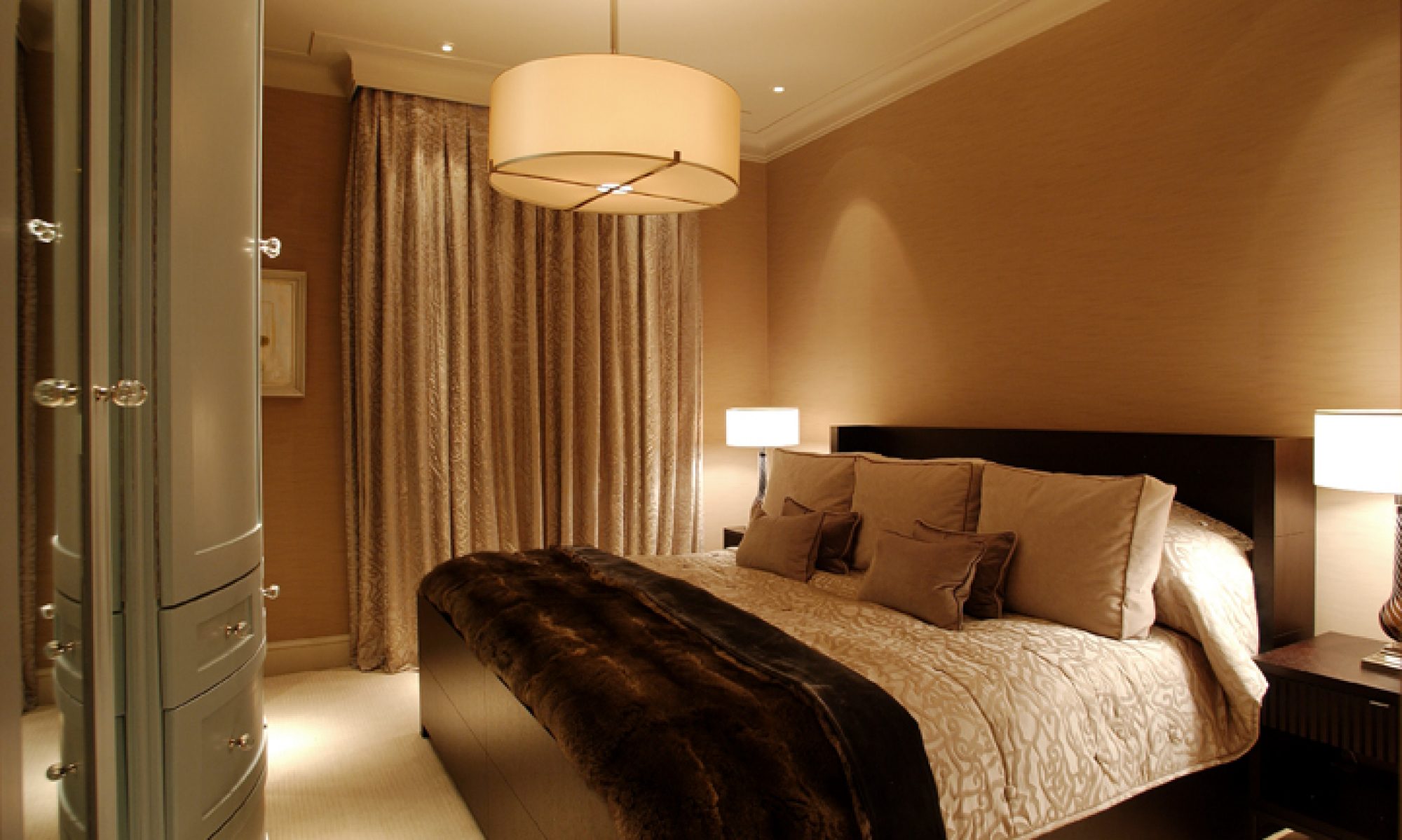
Contract curtains are governed by a different fire standard from upholstery, and by a set of practical decisions, fullness, lining, drop, and light control, that determine both cost and performance. This guide covers what a designer needs to specify contract curtains correctly. For the upholstery fire standard, which is separate, see our BS 5852 Crib 5 guide.
The Curtain Fire Standard: BS 5867
Contract curtains are governed by BS 5867 Part 2, not by BS 5852 Crib 5, which applies to upholstery. The two are not interchangeable: a Crib 5 upholstery certificate does not qualify a fabric for contract curtain use, and a curtain certificate does not qualify a fabric for seating. BS 5867 Part 2 has two relevant types. Type B is the standard requirement for most contract environments, hotels, offices, public buildings. Type C adds a launderability pre-conditioning stage and applies where curtains are laundered repeatedly, principally healthcare cubicle curtains, and the fabric is tested after 50 cycles of commercial laundering. Specify the type by environment: Type B for general contract, Type C for healthcare and anywhere curtains are regularly laundered.
Most decorative curtain fabrics need topical FR treatment to meet BS 5867. Some inherently fire-resistant fabrics, notably Trevira CS, meet it without treatment. For which fibres can be treated and how, see our FR treatment and fibre compatibility guide and how FR treatment works guide. For the BS 5867 test method and the full Type A, B and C detail, see our BS 5867 Part 2 guide.
Light Control: Blackout, Dimout, and Sheer
Light control is specified separately from the face fabric and is usually delivered by the lining. Blackout blocks effectively all light, either through a face fabric with a blackout coating or, more commonly, a separate blackout lining. It is the standard for hotel bedrooms. Dimout reduces light substantially without eliminating it, suitable where full blackout is not required. A sheer or voile controls privacy and glare while admitting daylight, and is often layered with a heavier curtain or a separate blackout blind. Specify the light-control requirement by room: blackout for bedrooms, dimout or sheer-plus-blind for living and meeting spaces.
Fullness and Fabric Quantity
Curtain quantity is driven by fullness, the ratio of flat fabric width to finished curtain width, and by drop. A typical contract fullness is between 2 and 2.5 times the track width for a gathered or pencil-pleat heading, meaning a 3-metre track needs 6 to 7.5 metres of fabric width across the required drops. Wave and wave-style headings often use around 2.2 times. Sheers are frequently fuller, up to 3 times, to read well against the light. Drop is the finished length plus hem and heading allowances. For patterned fabric, add the pattern-repeat allowance on top: see our pattern matching guide for the method, and our fabric quantity guide for upholstery estimates.
Light Fastness for Curtains
Curtains at a window take direct and sustained sunlight, so light fastness matters as much as it does for upholstery in a bright room. A south or west-facing window fades a curtain at the fold lines before the body of the fabric shows change, producing an irregular striped effect that only full replacement corrects. For curtains in sun-exposed positions specify ISO 105-B02 grade 6 or above. For the full grading detail, see our light fastness and Blue Wool Scale guide. For the full specification library organised by environment, application, and performance need, see our fabric buying guide by purpose.
Quick answers
What fire standard applies to contract curtains?
Contract curtains are governed by BS 5867 Part 2, not BS 5852 Crib 5, which applies to upholstery. Type B is the standard requirement for most contract environments such as hotels and offices. Type C adds a launderability pre-conditioning stage and applies to curtains that are regularly laundered, principally healthcare cubicle curtains. A Crib 5 upholstery certificate does not qualify a fabric for curtain use. Most decorative curtain fabrics need topical FR treatment to meet BS 5867, though inherently fire-resistant fabrics such as Trevira CS meet it without treatment.
What is the difference between blackout and dimout curtains?
Blackout blocks effectively all light, delivered either by a face fabric with a blackout coating or, more commonly, a separate blackout lining, and is the standard for hotel bedrooms. Dimout reduces light substantially without eliminating it, suitable where full blackout is not required. Both are usually specified through the lining rather than the face fabric, so the decorative fabric can be chosen independently of the light-control requirement.
How much fabric do I need for contract curtains?
Curtain quantity depends on fullness and drop. A typical contract fullness is 2 to 2.5 times the track width for a gathered or pencil-pleat heading, so a 3-metre track needs 6 to 7.5 metres of fabric width across the required drops. Sheers are often fuller, up to 3 times. Add hem and heading allowances to the finished drop, and add the pattern-repeat allowance on top for patterned fabric.
To request cuttings for a curtain project, visit KOTHEA.com/cuttings.
Request Samples
Order cutting samples of any fabric from our current collections. Trade accounts only.
Order CuttingsOr call +44 (0)20 8943 4904 or email info@kothea.com
Our Collections
Mohair Velvet Faux Leather Cashmere Throws Silks Linen Textured Upholstery
Specification Guides
Buying Guide by Purpose Crib 5 Fire Guide Martindale Rub Test BS 5867 Curtains Marine Fabric