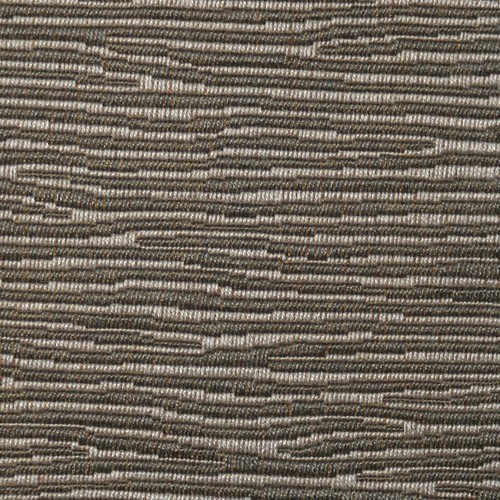
Raffia Wallcovering

Tatami Wallcovering And Upholstery Fabric TextileRaffia adds texture as a wallcovering. As a natural product it has many benefits for the interior designer including a degree of thermal insulation and the ability to be adhered directly to wall surfaces or fastened to wall surfaces or ceiling when wrapped around wooden panels.

With Wyzenbeek rubs of 40,000 KOTHEA’s 2011 Raffia (Raphia) are also eminently suitable for a wide range of upholstery uses.

Raffias can usually be fire treated to meet a wide range of contract requirements including hotels and marine installations.

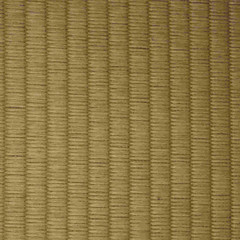
This type of raffia weave has been used for thousands of years perhaps most famously as Japanese Tatami mats. They are of course one of today’s modern day design staples for a clean, modern look.

Links:

Interior Design With Russian Oligarchs (Guardian.co.uk)

Interiors: The new bling

In a world far removed from cuts or recession, the super rich are spending like never before – investing their millions in mansions and art. ‘I don’t think there is a higher end,” says John Lees of his work as architect to the super rich. A distinction must be made, he says, between the merely vulgarly rich (ie, footballers of the Cheshire belt or the mere-millionaires of The Bishops Avenue) and the world of obscene wealth that Lees inhabits.

“I don’t think there is a high end”

He creates homes for the Russian oligarchs and Chinese business moguls who run the global economy and who continue to inhabit a land untouched by cuts and recession. In fact, their extreme wealth is buoying the fine-art market: Andy Warhol’s Coke Bottle sold for a record $35m in New York in November, the same month a Chinese vase sold in London for an unprecedented £48m to a Chinese businessman.

billionaires are currently spending “without restraint”

Sources in the art and property markets say these billionaires are currently spending “without restraint”. In response, developers in London are creating a new crop of luxury homes, dripping with original Picassos and swimming pools, to cater for this profligate class, including a vast development in Cornwall Terrace being sold for £29m upwards. Likewise for Lees, business is booming.

“Our big-scale jobs are £40m-£125m,” he says. “I work for private individuals and I’ll be doing their country house, their London house, one in Hong Kong and another in, say, the south of France. We recently did a dacha outside Moscow for £174m, for someone who entertains Putin.”

“On our current job, the accessories budget is £2m,”


Which makes it all the stranger that Lees is sitting in the scruffy offices of Lees Associates, near Borough Market in south London. The stairs are rough concrete, the shelves dusty, but the computer screens rotate with virtual tours of excessive luxury. “On our current job, the accessories budget is £2m,” he says. “That’s teaspoons, glasses, plates. Towels and linen is a separate budget. Each bed costs £20,000. We are a very specialised market at the very highest end.”

So what does an oligarch require in his home? Not the classic markers, such as banks of TVs (“We put some televisions in, but we hide them”), gold-plated taps or swimming pools shaped like a shell. Wealth at the hard-to-imagine end of the spectrum is “subtle”. Creating a truly, deeply wealthy home becomes more about rarity and materials: imported stone, works of art, grand pianos and libraries.

At Cornwall Terrace, Lansdowne’s development of eight mansions, two show homes have just reached the market, luring the super rich with original Francis Bacons, Murano glassware and furniture from Portofino. Everything is bespoke: the paints specially mixed; the hardback books handpicked. Lees is similarly aware of the hunger for provenance. “At that level, your bathrooms will be made of heated, solid stone carved in Brac, an island off the coast of Split in Croatia, which produces a particularly white limestone.”

Click To Read More Interior Design Articles

A spokesman for Knight Frank, an agent operating at the top end of the market, says the super rich “have moved their money away from bank deposits and stock markets into alternative investments such as luxury property and art.

It is increasingly normal for Christie’s to deliver a painting to a potential buyer’s house so the owner can see it on the walls.” These gliding swans of houses, occupying only the best London addresses, have layer upon layer of service floors from the basement down. The traditional family kitchen might be above ground, for coffee or a snack, but below ground there are catering kitchens with a dozen chefs ready to entertain a party of 100. Lees says these subterranean floors “contain all sorts of service departments, catering kitchens, gymnasiums, collections of cars. We’ve made swimming pools where the floors come up to become ballrooms. There’s no noise in the pools and no smell of chlorine. We have projected dolphins on to gymnasium walls – hologram images behind glass. We put a bowling alley in one house.”

Bathrooms have become the most expensive rooms, he says, with their requisite body jet showers, warmed toilet seats and timed bathwater heaters that maintain supply at a specific temperature.

But wealth and power create problems of their own. A house full of staff means no privacy. Owning homes all over the world means a fragmented family life. Lees is asked to, if not solve these problems, then at least mitigate them. “The family kitchen is incredibly important, because they all live dissociated lives. You want to find a home, don’t you? The fundamental thing is the family.”

Children have suites, dressing rooms and all the latest toys. And Lees adds “secrets” for the children to discover: a doll’s house full of make-up or stepping stones in the garden that set off a fountain. “There is a sense of loneliness these children have, and that’s a great shame.”

Does he ever feel contaminated by these monuments to consumption? Or envious? Isn’t it odd to return to life as a working London architect? “Happiness isn’t driven by anything you’ve got. It’s inward. I’m not sure I want all those things myself. It’s the sheer hard work in having them. They need these tools in order to play the public persona. I find it’s bad enough having just one house.”

Super rich must-haves

• Direct access from road to underground parking complex, with lift directly into the residence.

• James Bond-level security including CCTV, infrared scanners, panic room, bomb-proof garage doors, bomb-resistant lift and bulletproof windows.

• A home office complete with a communications system that would please a Royal Navy destroyer.

• A master suite the size of a one-bed flat with his-and-hers ensuites, walk-in dressing rooms, day rooms, exercise area and TV lounge.

• A subterranean basement containing bar, nightclub, hairdressing salon, gymnasium, sauna, spa, swimming pool and private 3D cinema (with seats that move with the movie).

• Staff quarters, separate from the main residence.

• A show kitchen above ground and a basement industrial kitchen that can cater for up to 300.

Surce: guardian.co.uk

Upholstery Linen – Sourcing Luxury Upholstery Linen in the UK

Upholstery Linen
Upholstery Linen

Upholstery Linen is notoriously difficult for interior designers to source. Sourcing linens for curtains is easy enough but often linens are not woven with sufficient strength to score Martindale results that are high enough to warrant using the fabric for upholstery.

Some suppliers can be a little evasive and will quote the weight of the linen as a measure of the linen’s quality. The implication is that the higher the weight the better suited the fabric will be for upholstery. There is some truth in that implication but you cannot say for certain that high-weight linen is inherently suitable for upholstery. Get the Martindale!

Most KOTHEA luxury upholstery linens have inherent Martindale rub tests of around 20,000 rubs with one range further strengthened to 85,000 rubs for contract usage – 20,000 Martindale being eminently suitable for domestic upholstery.

Furthermore, when buying upholstery- (or curtain-) linen you need to know whether or not it will shrink when washed. Linen ALWAYS shrinks. So what you have to find out is whether or not it has been pre-shrunk before you buy it. A common way of pre-shrinking linen is through the sanforisation process.

Click To Read More Interior Design Articles

Here are the details of our new 2011 upholstery linens that are named Recline, Relax and Restful. We have many others, these are just the new ones:

Name: Recline

Usage: Luxury Contract Upholstery

Colourways: 24

Width:   135cm

Comp:  54% Li 35% Co 11% Pa

Weight: >350g/m2

Notes:   Martindale >85,000

Request Samples

Name: Relax

Usage: Luxury Domestic Upholstery

Colourways: 24

Width:  135cm

Comp: 100% Li

Weight: >265 g/m2

Notes:   Martindale >15,000

Request Samples

Name: Restful

Usage: Heavyweight Luxury Domestic Upholstery

Colourways: 4

Width:  135cm

Comp: 100% Li

Weight: >470 g/m2

Notes:   Martindale >45,000

Request Samples


Fabric Abbreviations and Textile Label Codes: A Complete Reference for Interior Designers

Fabric Abbreviations and Textile Label Codes: A Complete Reference for Interior Designers

Two separate systems: Fabric labels carry both fibre composition abbreviations (WO for wool, CO for cotton, PES for polyester) and cleaning code abbreviations (W, S, WS, X). They are different systems with different purposes.
Most searched: WS, WV, WP, PA, CV, EA — these are fibre composition codes, not cleaning codes. WS means cashmere goat; it is not the cleaning code for water-soluble cleaning.
Cleaning codes: W means water-based cleaning. S means solvent or dry cleaning only. WS means either method. X means vacuum or brush only — no liquid cleaning.
European standard: ISO 2076 defines the standard fibre abbreviations used across the EU. Some Italian and European variants differ from the ISO codes.

Fabric labels on upholstery textiles, curtain fabrics, and soft furnishings carry two distinct types of abbreviated code: fibre composition codes declaring what the fabric is made from, and cleaning codes declaring how it should be maintained. Understanding the difference between the two systems, and knowing what each code means, is a practical daily requirement for any interior designer or specifier. This reference covers both systems in full.


Fibre Composition Abbreviations

Fibre composition abbreviations on fabric labels follow ISO 2076, the international standard for textile fibre names. The codes below are the standard abbreviations used across the UK and EU. All EU fabrics must carry a label declaring fibre content by percentage using these codes.

Natural Protein Fibres

WO — Wool. Fleece of the domestic sheep.

WV — Virgin wool. Wool that has not previously been processed into a textile product. Distinct from recycled or reclaimed wool. Also written as New Wool on British labels.

WP — Alpaca wool. Fleece of the alpaca. In some Italian labelling WP also indicates baby alpaca specifically.

WL — Llama wool.

WS — Cashmere. Fibre from the undercoat of the cashmere goat, known in German as Kaschmir and in French as Cachemire. WS appears on cashmere fabric and cashmere throw labels as the fibre composition code. It is not a cleaning code.

WM — Mohair. Fleece of the Angora goat. Used in mohair velvet upholstery fabric and mohair knit fabrics.

WK — Camel hair.

WA — Angora wool. Fibre from the Angora rabbit. Distinct from WM (mohair, which is from the Angora goat).

SE — Silk. Natural protein fibre produced by the silkworm. In German the word for silk is Seide, hence SE.

Natural Cellulosic Fibres

CO — Cotton. The most widely used upholstery and curtain fibre globally.

LI — Linen (flax). Bast fibre from the flax plant. Also known by its German name Leinen or French lin.

HA — Hemp. Bast fibre from the cannabis plant. In German Hanf.

JU — Jute. Bast fibre, typically used in hessian and backing fabrics.

SI — Sisal. Leaf fibre from the agave plant.

CR — Coir. Coconut fibre used in matting and some backing applications.

Man-Made Fibres from Natural Sources

CV — Viscose (also known as rayon). Regenerated cellulosic fibre made from wood pulp. Widely used in fabric linings, velvet piles, and blended upholstery fabrics. Also written as VI on some Italian labels.

CMD — Modal (also known as polynosic). A modified form of viscose with higher wet strength.

CLY — Lyocell. Regenerated cellulosic fibre produced in a closed-loop solvent process. Sold under the brand name Tencel by Lenzing AG.

CA — Acetate. Cellulose acetate, a semi-synthetic fibre with a silky handle. Not suitable for FR treatment at significant proportions.

CTA — Triacetate. Similar care and treatment limitations to CA.

CUP — Cuprammonium (cupro). Used in some luxury linings and smooth-handle fabrics.

Synthetic Fibres

PES — Polyester. The most widely used synthetic fibre globally. Trevira CS is a permanently flame-retardant variant of polyester.

PA — Polyamide (nylon). In some European labelling also appears as NY.

PAN — Acrylic (polyacrylonitrile). Not suitable for FR treatment. Solution-dyed acrylic such as Sunbrella is the standard for outdoor and marine upholstery. In Italian labelling sometimes abbreviated as PM.

PP — Polypropylene. Not suitable for FR treatment.

PUR — Polyurethane. Used in stretch fabrics and as a bonding layer in coated or laminated textiles.

EL — Elastane (also known as spandex or Lycra). Also written as EA on some Italian labels.

MT or ME — Metallic fibre.

AF — Other fibres not otherwise classified.

Common Italian and European Label Variants

VI — Viscose (equivalent to CV in ISO standard).

EA — Elastane (equivalent to EL in ISO standard).

PM — Acrylic or polyester (context-dependent in Italian labelling).

PC — Acrylic (polyacrylonitrile, equivalent to PAN).

PBT — Polybutylene terephthalate, a form of polyester used in some technical fabrics.

WP — Baby alpaca in some Italian labelling.


Cleaning Code Abbreviations

Cleaning codes appear on upholstery fabric data sheets and on care labels attached to finished upholstered pieces. They are a separate system from the fibre composition abbreviations.

W — Water-based cleaning. The fabric can be cleaned using water-based cleaning agents and foam upholstery cleaners. This code does not mean the fabric is waterproof — it means water-based products can be applied to the surface without damage.

S — Solvent-based cleaning only. The fabric should be cleaned using dry-cleaning solvents only. Water applied to an S-coded fabric will typically cause watermarks, pile distortion, or shrinkage. Most velvet fabrics — including mohair velvet, cotton velvet, and silk velvet — carry an S code. This is the single most important cleaning code for interior designers to communicate to clients and housekeeping teams.

WS — Either water-based or solvent-based cleaning may be used. Note that WS as a cleaning code is entirely distinct from WS as a fibre composition code (cashmere). The context — care label or fibre content label — determines which meaning applies.

X — No liquid cleaning. The fabric should only be maintained by vacuuming or brushing. No water-based or solvent-based liquid cleaners should be applied.

P — Professional dry cleaning only (used on garment care labels following GINETEX international care symbols).

F — Professional dry cleaning with petroleum-based solvent (GINETEX care symbols).


Understanding WS, WV, and WP: The Most Commonly Confused Abbreviations

Three abbreviations cause consistent confusion because they look like cleaning codes but are fibre composition codes.

WS is cashmere. WV is virgin wool. WP is alpaca or baby alpaca. All three are fibre composition abbreviations defined by ISO 2076. They appear on fabric content labels alongside the percentage of each fibre present — for example, 90% WS 10% SE means 90% cashmere and 10% silk. They have no connection to cleaning instructions.

When a fabric data sheet or care label shows WS followed by a percentage, it is always a fibre content declaration. When WS appears alone on a care instructions line or inside a cleaning care symbol, it is always a cleaning code.


Quick Reference List

  • AB — Abaca
  • AF — Other fibres
  • CA — Acetate
  • CLY — Lyocell / Tencel
  • CMD — Modal
  • CO — Cotton
  • CR — Coir
  • CTA — Triacetate
  • CUP — Cuprammonium / Cupro
  • CV — Viscose / Rayon
  • EA — Elastane (Italian variant of EL)
  • EL — Elastane / Spandex / Lycra
  • HA — Hemp
  • JU — Jute
  • LI — Linen / Flax
  • ME / MT — Metallic fibre
  • PA — Polyamide / Nylon
  • PAN — Acrylic
  • PBT — Polybutylene terephthalate
  • PC — Acrylic (Italian variant)
  • PES — Polyester
  • PM — Acrylic or polyester (Italian variant)
  • PP — Polypropylene
  • PUR — Polyurethane
  • SE — Silk
  • SI — Sisal
  • VI — Viscose (Italian variant of CV)
  • WA — Angora wool
  • WK — Camel hair
  • WL — Llama wool
  • WM — Mohair
  • WO — Wool
  • WP — Alpaca / Baby alpaca
  • WS — Cashmere
  • WV — Virgin wool

Cleaning codes:

  • W — Water-based cleaning safe
  • S — Solvent / dry clean only
  • WS — Water or solvent cleaning safe
  • X — Vacuum or brush only. No liquid cleaning

For fabric care symbols and international care label icons, see our fabric care symbols guide. For cleaning codes by fabric type including mohair velvet and faux leather, see our fabric hand and tactile properties guide. For mohair velvet and upholstery fabric ranges, visit the mohair velvet upholstery page. .

Request Samples

Order cutting samples of any fabric from our current collections. Trade accounts only.

Order Cuttings
Interior Designer? Did Your Web Site Just Pop Up In My Search?

[youtube=https://www.youtube.com/watch?v=cGWQ-4lnwG0]Interior Designers increasingly understand the need to reach at least part of their target market through online search results.

With that in mind I have been looking through a few search terms that potential customers of interior designers might use. Unsurprisingly lots of interior designers popped up.

Click To Read More Interior Design Articles

But one thing that I noticed was that VERY few of you were making use of video.

I know it takes a long time to do these things to a reasonable degree of quality but I would suggest it is worth it.

The reason being that Kelly Hoppen popped up again and again. She is obviously a renowned interior designer of the first degree BUT she also appreciates the importance of PR to her new business generation activities. The internet is not much more than PR … just the digital kind.

Why did Kelly appear? Well google doesn’t favour her over you, that much is true. Google does not think that she is better than you. However Google DOES put more emphasis sometimes on non textual information eg pictures and videos. So her video (above) popped up. When you go and check it out, YOUTUBE takes you through lots more of her videos. Before I knew it I had spent 15 minutes looking at her work and hearing her views.

Now if you go to your web site designer and ask them to talk to your ISP and get the stats for YOUR web site, you will probably find that the average visitor spends MUCH less than one minute on your site.

Food for thought.

What Is Sanforisation? Sanforised and Sanforising Explained for Interior Designers

What Is Sanforisation? Sanforised and Sanforising Explained for Interior Designers

What it is: A mechanical pre-shrinking finishing process applied to woven fabric before it leaves the mill. Named after Sanford Lockwood Cluett, who patented the process in 1930.
Which fabrics: Most commonly applied to cotton and linen. Also used on some cotton-blend upholstery and shirting fabrics.
Why it matters: Fabric that has not been sanforised may shrink when used in curtains or upholstery that are subsequently washed or exposed to moisture. Sanforised fabric has been pre-shrunk to defined limits at the mill, reducing but not eliminating subsequent shrinkage.
On the label: Sanforised is a registered trademark. Fabric labelled Sanforised has been tested and certified to shrink no more than 1% in either direction. Sanforised-Plus is the rating for fabrics with even greater dimensional stability.

Sanforising is a mechanical finishing process applied to woven fabric to reduce the shrinkage that would otherwise occur when the fabric is exposed to moisture or heat after making up. Interior designers encounter the term on fabric data sheets and labels, most commonly on cotton and linen upholstery and curtain fabrics. Understanding what it means and what it does not guarantee is a practical specification consideration.


How the Process Works

Sanforising passes the woven fabric through a machine that compresses it mechanically in the warp direction — along the length of the fabric. A rubber blanket is stretched and then released, and the fabric is carried through this process so that the yarns are forced into a more compact arrangement in the warp direction before they are set by steam. The result is a fabric whose yarns have already been displaced into the position they would naturally move to if the fabric were washed. When the finished curtain or upholstered piece is subsequently washed or exposed to moisture, the fabric has less remaining tendency to shrink because the displacement has already occurred.

The process addresses warp shrinkage — shrinkage along the length of the fabric. Weft shrinkage — shrinkage across the width — is controlled by a separate process called tentering, in which the fabric is held to a defined width during drying and heat setting. Sanforised fabric has typically been through both processes.


What Sanforised Means on a Label

Sanforised is a registered trademark owned by Cluett, Peabody and Co. Fabric carrying the Sanforised mark has been independently tested and certified to shrink no more than 1% in either the warp or weft direction when washed. This is the residual shrinkage after the sanforising process — fabric may still shrink by up to 1% in each direction, but no more.

Sanforised-Plus is a higher standard, certifying residual shrinkage of no more than 0.5% in either direction. It appears on some high-quality cotton fabrics and performance linens.

Fabric described as pre-shrunk rather than Sanforised may have been through a similar mechanical process but without independent certification to the same standard. The level of residual shrinkage permitted under a pre-shrunk claim is not standardised.


What It Does Not Guarantee

Sanforised certification applies to shrinkage caused by washing. It does not address all the dimensional changes that fabric may undergo in use. Natural fibre fabrics — cotton and linen in particular — absorb and release atmospheric moisture as humidity changes. This hygroscopic behaviour causes minor dimensional changes that are distinct from washing shrinkage and are not addressed by sanforising. In environments with significant humidity variation — a room that alternates between very dry and very damp conditions — even sanforised linen or cotton may show minor dimensional change over time.

Sanforised certification also does not address the relaxation shrinkage that may occur in curtains hung under their own weight over time, particularly in heavy cotton or linen fabrics. This is a tension-release effect rather than a moisture-induced shrinkage and is unrelated to the sanforising process.


Relevance for Upholstery Specification

For upholstery fabrics that will not be washed — most contract upholstery is dry-clean or spot-clean only — sanforised certification has limited direct relevance to the face fabric performance. Where it matters most is in curtain fabrics that will be laundered, and in loose covers and cushion covers in domestic settings where machine washing is planned.

For linen upholstery fabrics, the dimensional stability of the fabric during making-up is more practically significant than its washing shrinkage. A fabric that relaxes or distorts during the tension applied in upholstery construction will affect the alignment of the finished piece regardless of its sanforised status. Confirm dimensional stability under tension with the supplier for any linen or cotton fabric being used in tight upholstery applications.


For linen upholstery fabric specification, see our upholstery linen page. For fabric care and cleaning codes, see our fabric care symbols guide. For fabric hand and how natural fibres behave in use, see our fabric hand and tactile properties guide.

Request Samples

Order cutting samples of any fabric from our current collections. Trade accounts only.

Order Cuttings

Moleskin Upholstery Fabric

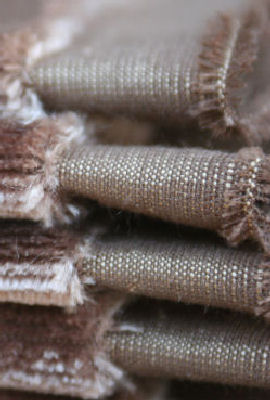
Moleskin Upholstery FabricMoleskin Fabric is an unusual fabric for upholstery, usually associated with clothing. KOTHEA moleskin is a premium moleskin specifically designed for upholstery with Martindale Rubs between 20,000 and 30,000. Moleskin is often a blend of cotton and linen; however KOTHEA‘s 100% cotton moleskin is extremely tightly woven ensuring that a luxurious look and feel is guaranteed. The overall look is similar to suede yet more exclusive and durable.
Interior Design Marketing Strategies

Silk Velvet Upholstery Fabric TextileInterior Design Marketing Strategies need to reflect the modern technological age as well as the creativity and organisation skills of the designer.

We have previously covered on this blog many aspects of the (click link here fro more info=>) business of interior design often focusing on sales and marketing issues. Mostly marketing on the internet using sites like Facebook but also covering sales issue for interior designers with retail spaces. The following articles give more…

What is BS5867 / BS 5867 part 2 type B? type C?

For the full guide to BS 5852 Crib 5 fire standards for contract upholstery, see: BS 5852 Crib 5: A Complete Guide for Interior Designers and Specifiers.


BS 5867 Part 2 Type B is the contract fire retardancy standard for curtains.

As an interior designer you do not need to understand the technical details of the test. However you are responsible for the project and must:

  • Confirm what standard is required for your project.
  • Specify fabric that meets that standard.
  • Prove that the fabric installed complies.

Here is what to do:

1. Determine the fire retardancy standard required. This may involve contacting the local fire officer. Confirm what documentation you need to provide.

2. Confirm with your fabric supplier whether the fabric inherently meets the standard or requires treatment.

3. On purchasing the fabric, specify the treatment required. Say to the fabric company: treat this fabric to BS 5867 Part 2 Type B and provide documentation confirming this has been done.

4. A treatment certificate confirms the fabric has been treated to the standard. It does not confirm the fabric has passed the test. For larger projects, arrange for your specific batch of fabric to be independently tested after treatment at a UKAS-accredited testing laboratory (not the treatment house). At the end of that process you will receive documentation confirming the fabric meets the standard.

Related: fire retardancy for contract upholstery, Crib 5 and BS 7176.

Test Details

Test method

A sample of the fabric, vertically held, is exposed to a small flame. For Type B (hotels and similar) the ease of ignition is observed. It is noted whether the flame reaches any edge of the specimen and whether any burning pieces fall. For Type C (NHS environments) the fabric is further assessed for behaviour once the flame is removed but when the fabric may still be smouldering. The fabric is tested before and after laundering: Type B requires 12 wash cycles at 40 degrees; Type C requires 50 wash cycles at 40 degrees.

Type B performance criteria: The edges must remain completely intact and no burning debris should fall.

Request Samples

Order cutting samples of any fabric from our current collections. Trade accounts only.

Order Cuttings

Interior Designers: Facebook 5 Crucial Bits To Add To Your Fan Page

The good: Facebook is a great way for Interior Designers to target their chosen demographic markets.
The bad: Facebook is given little thought by many interior designers when considering how to market
The ugly: Facebook itself is a bit of a nightmare when it comes to organising your fan page just how you would like it. Whilst using it IS relatively intuitive to use, the act of making/building your fan page is a minefield of inconsistency and counter intuition on Facebook’s part – truly awful AND it is not going to improve anytime soon.

Let’s start. Facebook, by default, will not do all the bits that I would imagine you would probably want it to do. After you have created a basic page for the first time you will probably struggle to figure out how to make it just right. You may well get confused and frustrated, I know I did. Then you will figure out that actually it’s not possible to do what you want to do on a default Facebook Fan Page. You will need to use Facebook Applications to change various bits of the page. There are a plethora of these applications, I’ll tell you the ones you need to know to produce a reasonable stab at a first IMPROVEMENT over what you already have.

Click To Read More Interior Design Articles

OK here are the various key parts of the page that you will have to alter and work with (point number 1 you should already have done yourself). I list the parts of the screen first and then tell you afterwards what to do about each.

1. Get your business name and image added to the top left hand corner. Add you contact details and the like to the info tab.

2. Your vanity url eg KOTHEA’s is www.facebook.com/kothea. Here is a blog post I wrote earlier on this potentially tricky subject.

3. If you have read all our posts over the last year or so you will know that we keep saying GET A BLOG AND WRITE EVERY WEEK. I won’t dwell on the subject, you just need to do it for a plethora of reasons. However once you have a blog you will need to put it on Facebook as well as where you originally write it. you will need to use an application to avoid duplicating your effort. Like This.

4. Tabs. You will need to add new tabs containing the information about your organisation that you consider relevent. e.g. compare   this “traditional info” tab to this “additional info” tab . (Traditional vs. Additional). The frist one is from Pepsi and at first you might think what a poor show they have made of the tab. They have not. the problem is facebook. pepsi put the minimum amount of information on a page that Facebook says you have to have. Then, like KOTHEA, we put all the juicy bits onto another tab that we have control of. Far from perfect but that’s life.

5. Then you will want to customise the bits in the left hand side column. Again, www.facebook.com/kothea shows you some buttons we added on the left hand side to link to our twitter account, our real blog, our flickr feed and a final button to prompt an action to contact us via our real web page. You get the idea and can probably see scope to add many more buttons or actions or images that we have not considered.

How do I do those 5 things?:

1. You should have figured this bit out yourself. on your fan page just look for a mini “pencil” like image appearing near the bit you want to change. click it and change it. Get a nice big logo on there.

2. I refer again to this post <here>.

3. A Facebook application called SOCIAL RSS is used by about 500,000 people. This is how you get the RSS feed of your blog onto a new Facebook Tab. Just click the “Go To Application” button on the top left hand corner. It’s free and it works. There is also a slightly better/faster paid-for version, probably not worth the extra yet.

4. For an “extended info tab” you will need the aptly named EXTENDED INFO APPLICATION – click to go there. Again it is free. Here is KOTHEA’s example. The application works by creating a BLANK TAB, you then use the application to create all the fields (bits) on it. It is NOT straightforward to use. I would say 3/10 difficulty (with 10/10 being impossible). So persevere and you will get there.

5. To create new fields on the left hand side Facebook have kindly produced the Static FBML application. Click here to go to the page and add the application to your profile with the button in the top left hand corner. FBML is a bit like HTML. So if you do not know any html you will find this DIFFICULT (9/10). But if you already know HTML then Facebook and their application will only confuse you for a little while before you figure it out (3/10). I would imagine that with FBML you can give your Facebook fan page a similar look and feel to your web site – if you really want to do that.