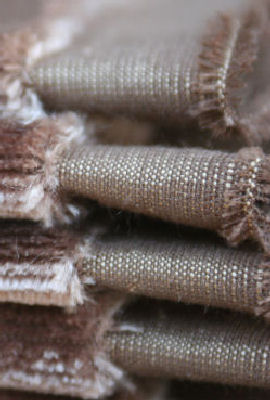
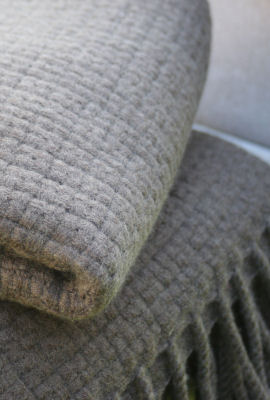
Luxury Cashmere Throws are often used by many designers to add that special finishing touch. The good ones look great and feel fantastic. As well as being aesthetically pleasing a throw can also be functional – keeps you warm!Bearing in mind how often your client will interact with (touch/use) such an item over time it is very important to specify your cashmere throws properly.
Of course you can buy them from very many places. But how do you get a really good one? I mean really good, the best?
We have put together a series of designers’ worksheets. Here is a link to the main one <click here>. The worksheet goes through some of the things you should be looking for when coming to a decision on what to specify.
When looking at specific designs you might then want to look at this worksheet. <Click here>.
Interior Designers can spend hundreds or thousands of pounds/dollars on websites. That CAN be a good investment or it can be a total waste of money.
Not just interior designers, but people from many industries bemoan the fact that no-one is visiting their web site. Then the next (incorrect) step in thinking goes that “well maybe I need to pay someone to get links to my site”… or something along those lines. And so it goes on, more money is spent on technology, on social media, on the web, on the net, on web 2.0 – whatever you want to call it. I’m sure you recognise the picture, perhaps from other designers you know that have these awesome looking websites…with no visitors!
This all-too-typical situation raises a whole raft of questions, points and observations. I’ll try to cover a few of them here.
1. Why on earth should I visit your web site?
I think you, the interior designer, really have to answer this question. Yes I’m sure your site looks great. Yes I’m sure it highlights your services and showcases your past projects (hopefully!). But let’s say I’m a potential customer, really, why Continue reading “Interior Designers: Why does no-one visit my web site?”
Not sure about this as a ‘new trend’, there are a lot of those around at present. However creative design certainly lives on with these great chairs. Awesome job.
a new trend in furniture has started in Kuwait , renovating old vintage furniture using colorful textile . i really loved how "meblogging" changed her old furniture here , making it more vivid and colorful which reminded me of bokja design . Hoda and Maria from Lebanon started a furniture company named "Bokja Design Studio" which was based on renovating old furniture adding colorful textile to it . any item from their collection would make a beau … Read More
Wow, certainly colourful. Whatever happened to 40 shades of taupe?
It seems like every fashion publication's favorite trend of the season is "color blocking." Really? It's all been done before.. or at least I've been color blocking since the beginning of my days and I'm sure all of you have too. But here's an idea: let's do it in our homes! Portuguese architect Pedro Gadanho very successfully does so with this house in Torres Vedras. It's fun, it's eye candy, and you probably need to have the space look impeccab … Read More
Eesh, apparently it now takes creativity to be an interior designer. When will it ever end?
The Interior Design perception has altered over the last several years, in addition to the changing roles for the designers. In the olden days, interiors were deemed to comprise of ceiling fans and lights bulbs with scarce furnishings polish the room off, however there is much more to fret about nowadays, than simply modifying the bulbs. Currently its takes more than having a couple of concepts, to be considered an interior designer, it now takes … Read More
If I get another email from some dodgy company in some foreign country offering to boost my reciprocal links I’ll, I’ll, I’ll….I’ll probably either cry or laugh. You get them too I know.
Here’s how smart Interior Designers get some links without paying or investing too much of their spare time. Oh yes and ways that will actually work for you rather than work AGAINST your website.
A. So google ranks your website HIGHER in your customers searches.
You need to understand that good links ARE important for your business even if you then choose to do nothing about it.
Click To Read More Interior Design Articles
First DO NOT DO THESE TWO:
1. 🙁 Spend a whole weekend of your time posting your web address on various message boards, forums or comments on blogs to do with interior design. This does not work. There is a technical reason why this does not work even though it seems like a good idea. Trust me DO NOT WASTE YOUR TIME DOING THIS (Here’s the technical reason in case you don’t believe me: the html nofollow tag is automatically inserted on blogs/forums to hide it from Google)
2. 🙁 Pay someone to create lots of reciprocal links from sites they control. This works only in a very, very, very, very I MEAN VERY limited way. Don’t waste your money. If you know a little bit about reciprocal links then you will think I am a bit mad as surely all links to your site are good? No, sorry. I can explain why not in detail but it’s quite boring. OK here we are then…a link to your site must be from a good, relevant and genuine site. Google know about this faux strategy of linking and actively penalise against it!
Now you need to think about something.
Why would any potential CLIENT go to your web site? Let’s face it your site is probably pretty boring. It might have a few nice pictures and things saying how great you are. Everyone’s site is exactly the same as yours. So ask why google should want to go to your site. there may well be no good reason other than you would quite like it to because you might get more customers! but that’s talking about YOU and not YOUR CLIENT. And YOUR POTENTIAL CLIENT is the one that Google is trying to help.
So once again we return to the old adage: “Your site must contain genuinely unique and relevant content that is frequently updated”. Apologies for the previous paragraph if you already do this!
Think about it. Someone who is going to spend thousands of pounds on your services and associated products wants to see your work. So yes you have a portfolio but they also want to know how you work. They are probably interested in your opinions and keen to see what things you like. If they go back to check you out a few weeks later, when they are more keen to make a decision, they might want to see some of your even more recent work…not the same static website that actually you put up there 3 years ago and haven’t touched since.
So you need to write a blog as well as having your show piece web site. Then you will have new and hopefully interesting stuff that people, who you neither know nor pay, will be keen to link to.
So start by linking your blog to interesting things (work related). Don’t ask for them to link back, you can but concentrate on writing good stuff. When anyone links to our web site/blog we are automatically notified by wordpress.com and we of course check these people out and may link back. If you want you can get some friends or associates to link back to your blog/web site but only do that about 5 or 10 times. If you do it too much Google at best ignores it at worst penalises you as it ‘thinks’ there is some form of trickery going on (which there is).
Write about your clients and potential clients (nice ones) and link to them if you are operating in the commercial sphere.
Link to your Facebook business page and twitter. Generate contacts and links through your network there.
.edu and .gov links – When you have an intern be nice to them and make sure they link back to your site when they return to their studies.
Embedded links – when you write an article (like this one) and relevant links at the bottom. some of the related links should be to your own website/blog. Also embed links within the text to link to other relevant bits of your site like a picture, video or maybe to Wikipedia to explain a term. These type of links help google rank your writing more highly than it otherwise would be.
Comment on others web site and blogs. But do so genuinely and professionally. On your comments have a very short 3 or 4 line bio of you which links back to your site. remember, above, I said that these links don’t work for Google but they will help people get to know about you a little bit. Don’t waste too much time on this though.
Issue press releases from time to time with links on. eg through PRWEB.com again with links.
Write articles on specific areas of design that you are expert in and get them and your links publicised eg through ezinearticles.com
Luxury Upholstery Velvet is notoriously difficult for interior designers to consistently source. Sourcing a generic velvet is easy enough but often velvets vary greatly in quality with many being relatively cheap and scoring relatively well with Martindale results but they just look ‘cheap’. The look and feel of the velvet are, after all, two of several important reasons why you are specifying it in the first place.
A further problem is composition. When, for example, you say you want a Mohair Velvet that is what you want: a velvet made out of Mohair and NOT lots of other things PLUS a bit of Mohair.
Whilst Mohair velvets are generally very good across the market they too can vary significantly in quality. So even when you buy a Mohair Velvet you are not necessarily getting the durable, luxurious, fantastic-looking product that you hoped for.
Further complications come when looking at Velvets made of a mix of yarns. Well, some of the mixed fibre yarns are actually excellent in quality!
So I guess I’m saying that there really is no sure and fast way of knowing what you are buying without actually seeing the fabric AND being assured of its technical characteristics, notably Martindale as we are considering upholstery here.
Most KOTHEA luxury upholstery velvets have inherent Martindale rub tests of in excess of 20,000 rubs with several collections exceeding 100,000 rubs for contract usage – 20,000 Martindale being eminently suitable for domestic upholstery.
In addition to non-velvet, textured upholstery we have many luxury velvets suitable for upholstery including Italian Silk Velvet (high quality, luxury velvet), Cashmere & Silk Velvet (the ultimate velvet), trevira Velvet (inherent fire retardancy), Mohair Velvet (high quality, luxury velvet),
Most of our velvet is available by the metre with no minimum quantities.
Here are some additional pointers to consider when you are making a curtain using a velvet. Remember that a velvet is just a type of fabric and the fibre(s) that the velvet is made from is important.
So for example, we would always recommend that you line a curtain. This gives a superior appearance but also reduced the amount of light going through the fabric hence limiting as much as possible the effect of any fading.
If the velvet has a pile that can be flattened in one direction then we would recommend that you have the pile going downwards for SHINY velvet fabrics and PATTERNED VELVETS.
If however you make up the curtain with the pile upwards then this will deepen the colour so you could make the curtains this way for cotton velvets and Trevira Velvet and Mohair velvets.
These are general guidelines and it is not necessarily wrong if you make up the curtain ‘the other way’ just so long as you understand the implications to the finished look and performance of the material.
You’ve just ordered a new velvet and unrolled it to admire your purchase. But how do you re-roll it?
When you roll almost any fabric you should have the face on the inside. With a velvet this is the pile so you have the pile on the inside.
Some, but not all, velvet piles stand straight up others will ‘lay down’. for the former it does not matter which way you then roll the fabric (provided the pile is on the inside). However for typically longer pile which lays down (ie you can brush it flat with your hand in one direction only) then you should roll the fabric down the pile as you return it to its roll.
Some background first: As an interior designer you buy and handle many fabrics. You may have wondered why some fabrics come in rolls of up to 100m whereas other come in much smaller lengths. Is this because of their value? The likelihood of them being sold quickly enough? Or perhaps longer lengths of some fabrics would be just to heavy for someone in a warehouse to physically carry or indeed too heavy for a courier to carry? Or perhaps it’s something to do with the thickness of the roll?
Well there is some truth no doubt in all of these reasons and others to. But one very important consideration with a velvet and especially with a Mohair velvets is the weight of the fabric and the weight of the fabric ON ITSELF. Because velvets have a pile they are thicker and heavier than other fabrics as they contain more material; similarly some velvets such as many mohair velvets have a dense pile…again more fabric and more weight.
There comes a point when the sheer weight of the roll of fabric becomes too much for the pile of the first part of the wrapped fabric on the roll and the inherent weight of all the fabric can cause damage to the pile. So velvets and especially mohair velvets have smaller lengths on the roll. Sometimes 25m but sometimes also 40m and 50m per roll.
So the length of fabric on a roll will be impacted by the weight of the fabric per linear metre AND the fact that a pile fabric can be more affected by added weight than other fabric.
So, how to store.
1. Store horizontally
2. Store with no other, external weight applied to the fabric.
3. Covered up to avoid exposure to dirt and dust i the air -especially if stored for long periods
Typically you will find that many of our velvets come to you in special containers where the velvet is on a roll and suspended by special cardboard ends in the boxes. For small volumes of velvet on a single roll there is often no need for these special containers. Where the velvets are supplied in suspended roll containers it is safe to store the velvet in this form. Ideally youwould have a horizontal racking system for rolls of fabric as lengths can easily be cut off as and when you need them but cleary most interior designers do not have this facility.
The safest method of course is to let your supplier hold the stock and order cut lengths from them. It de-risks you damaging the fabric. Unless of course the supplier can specifically reserve entire rolls just for you, you would have the potential problem of dye lot or batch variation of colour with many fabric dyes. There would normally be a charge for an additional service such as this.




 It seems like every fashion publication's favorite trend of the season is "color blocking." Really? It's all been done before.. or at least I've been color blocking since the beginning of my days and I'm sure all of you have too. But here's an idea: let's do it in our homes! Portuguese architect Pedro Gadanho very successfully does so with this house in Torres Vedras. It's fun, it's eye candy, and you probably need to have the space look impeccab … Read More