Pink Linen For Upholstery & Curtains

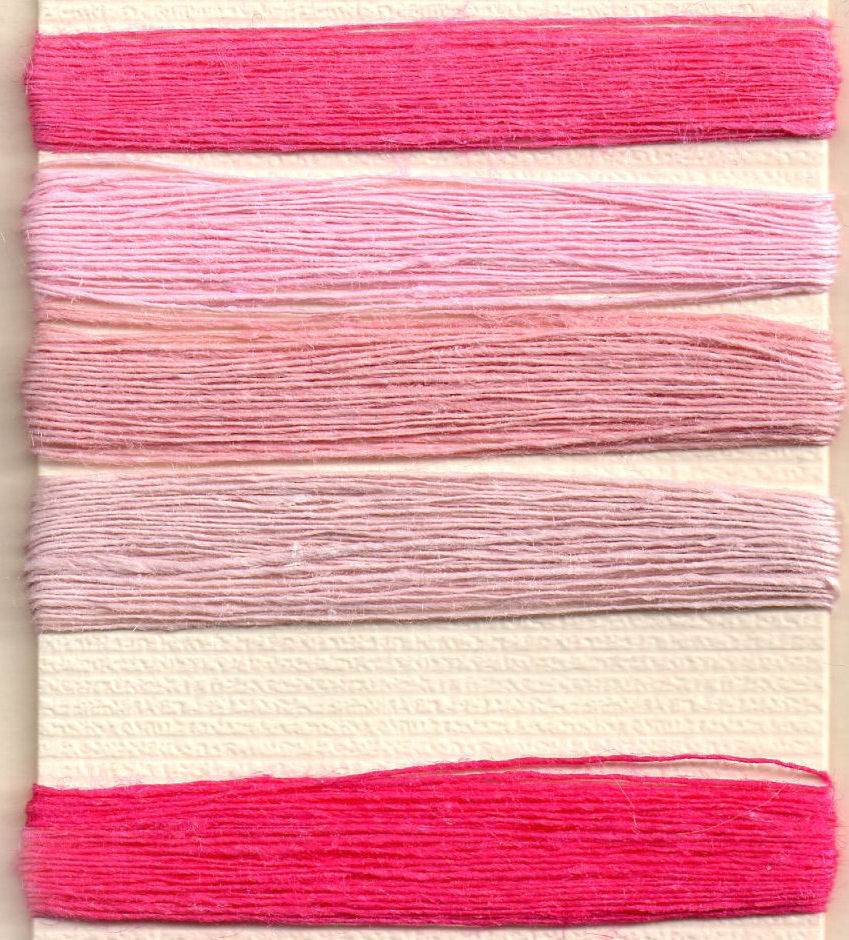
LinenPinksPink linen is a rather rare and unusual flower. Not often specified in your average interior designer’s scheme. I found this scan that we had emailed someone recently for the client to choose for some curtains. We were even able to introduce different pinks into the warp and weft of the linen for an unusual effect. (We can do that with most of our linen colours).

Anyway, I just thought the pink linen image looked nice and I wanted to share it with you!

Silk Velvet – What makes a great upholstery velvet

Decorex Logo
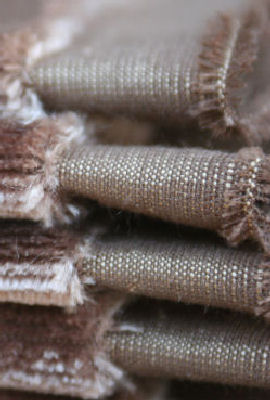
Silk Velvet Upholstery with Fine Italian Silk

Silk Velvet really is one of the great upholstery velvets. It looks great, it feels great and it can be up to the job if your upholstery velvet is chosen wisely.

If your last and only experience of a velvet was sitting on one in the cinema then you really haven’t lived!

Firstly let’s look at silk velvet’s suitability for upholstery. It can have a Martindale Rub Test result of over 20,000 – so it CAN be readily suitable for many upholstery uses.

Composition. Just because it is sold as 100% silk can be misleading and not necessarily relevant. Is this 90% silk velvet better than that 100% silk velvet? You just can’t answer that by simply looking at the composition.

A silk velvet that is sold as being 100% silk may in fact be a 100% silk velvet pile and 100% cotton backcloth. There is nothing inherently wrong with that. If it is the look and feel of the silk that you are looking for then maybe it’s best to just consider the pile (assuming the backcloth is up to the job of course). One of our fine silk velvets has a 100% pile and then a backcloth of silk and cotton – with the cotton being added for strength and the overall silk content being 90%. Compare this to our Italian Silk & Cashmere Velvet which has a 70% silk + 30% cashmere pile.

Next look at the silkiness or the shininess. If you are looking for a silk velvet you will usually want a shine.

Consider too the length of the pile. Again, there is nothing inherently good or bad about a long or short pile. A shorter pile may be more rigid and upright and that could be a characteristic that you are looking for. Alternatively, a longer pile will probably lay better in one direction – and you may well want that characteristic.

The weight of the fabric in grams per metre is often used as a measure of quality. That is not always true and could, for example, easily be distorted by a heavy and poor quality backcloth.

My personal preference would be to get my hand on a sample; feel it and look at it. What I look for and prefer is a slightly more rigid and consistent pile with a very dense weave. I would look carefully at the country of manufacture. I prefer an Italian velvet (mainly because it sounds better!) but if not Italian then I would certainly only consider a velvet produced in mainland western Europe. But don’t copy me, have the confidence to choose what you like – you are going to have to live with it. I would now choose my upholsterer carefully; many years ago a velvet-covered chair came back for me from a local upholsterer and the pile was not running in a consistent direction…it didn’t look great (read ‘awful’). So don’t, like me, assume that all upholsters know what they are doing with velvets, they patently don’t all know. I would then read our guide to upholstering with velvet – a designer’s worksheet and armed with a bit of knowledge quiz your upholsterer carefully.

Faux Leather Martindale Test – What does it look like

Ever wondered what a Martindale rub test looks like?

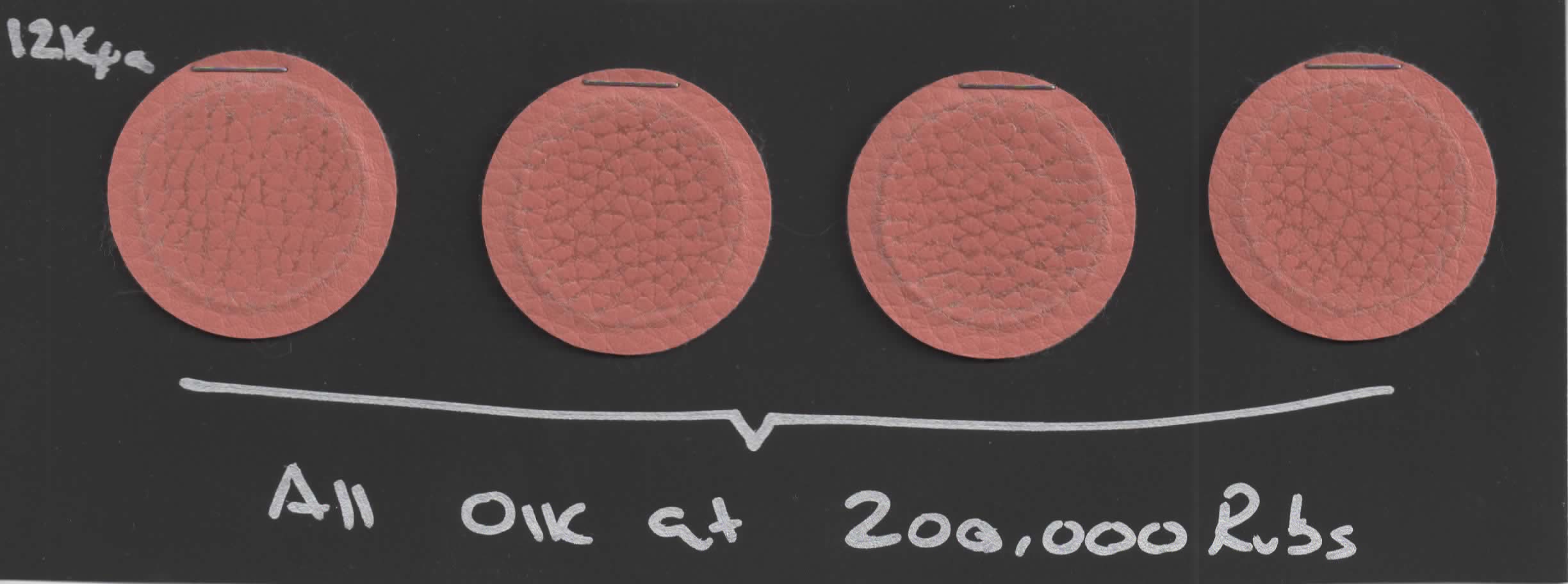
We have already shown a video of the machine in action here. Of some additional interest are the following faux leather samples that recently came back to us from the Martindale testing laboratory.

Faux Leather After Martindale Rub Test

The image above shows the circular cuttings taken of the fabric after being rubbed 200,000 times. As you can see, this faux leather lasted well above the industry standard of 100,000 rubs.

Leatherettes & Fine Faux Leather – More Collections

Leather (Photo credit: orebokech)

Faux Leathers are otherwise knows as leatherette, fake leather and artificial leather. We have a short article on their many benefits for interior designer <here>.

KOTHEA® are the UK’s leading producer of fine, performance faux leathers for the contract market.

We have some of the very highest performance faux leather fabrics with Martindale Rub Test results in excess of 200,000…some of the highest in Europe. You can specify this quality of product knowing that you can totally trust its abrasion resistance characteristics.

We have a broad range of collections covering the varied environmental needs of hospitality (spas, restaurants, hotels), marine (yachts), office and household (apartment, villa) usage. Our technical innovation gives the best fabrics and our designers the best patterns and extensive colour palettes.

Related articles

What is faux leather? When should an interior designer use it?

For a full comparison of PVC, PU and silicone faux leather types across Martindale rub count, fire rating, cleaning compatibility and environmental profile, see our faux leather types compared guide.

English: Leather tanning, Fes, Morocco Français : Tannage du cuir, Fès, Maroc (Photo credit: Wikipedia)

Faux leather looks like leather. It is a fabric made out of materials other than leather. Faux is the French for ‘fake’. So it is fake leather. It is cheaper than natural leather and much easier to work with in many cases. As well as a fabric for interiors it is used in many industries: it could be in your car or could make the case covering your iPAD. In the interior design world you would use it for: upholstery and wall-covering but also to cover, doors, table-tops, bar stools, bars, etc.

Types of Faux Leather

There are two main chemical types of faux leather:  polyvinyl chloride (PVC) and polyurethane (PU). Both types are used in making clothing, upholstery, and product covers; typically KOTHEA use PVC For our faux leathers. We are able to obtain fine faux leathers with amazing properties as a fabric including extremely high Martindale Rub test scores in excess of 200,000 and extremely accurate animal hide pattern copies.

Compared to Real Leather

Sometimes you can’t tell the difference unless you know what to look for. Most obviously natural leather will not have any kind of repeatable pattern. Faux leather will have a degree of ‘repeat’ but might be sufficiently subtle that you do not notice it. Natural leather has visible and irregular pores and rough edges.

Natural leather tends to have a smoother feel whereas some faux leather may well feel like plastic BUT other faux leathers will feel very similar to the natural leather. The ‘smell’ may be chemically but this could be either the chemicals that have been used to treat the natural leather or the chemicals in the faux leather. A VERY chemically smell that sticks to your hand is probably a faux leather – although most faux leathers will not have this property.

Pros and Cons

Faux leather can generally be made to have very good consistency of colour across batches and in theory can be made to any required colour (in sufficient quantity). Similarly texture and pattern can be varied and/or reproduced much more easily than with a natural product.

Care and maintenance of faux leather is greatly superior to natural leather which requires conditioning. Faux leather can be bought by the metre whereas natural leather must necessarily be bought by ‘the hide’ and hence has join, length and width constraints not necessarily found in the faux alternative. Faux leather generally has superior light fastness and durability.

The animal lover will appreciate that faux leather does not require animals to die. But then again many animals die each year to support the meat industry and leather is an abundant by-product that, if used, you might argue avoids waste. KOTHEA do not sell natural leather.

When should I specify FAUX LEATHER for interior design?

There is certainly a kudos surrounding natural leather. It IS viewed a s a more desirable product. However I’m really not sure why; especially when you look at it logically.

Faux leather is much easier to work with; it is much better suited for any kind of long term interior design use – looking at durability and care & maintenance; it can look and feel the same as natural leather. It is made of chemicals but chemicals (often environmentally damaging ones) are used in the natural leather treatment process.

Whilst I might buy natural leather shoes I would only specify faux leather in a contract interior design situation and would probably also specify faux leather in my house with the possible exception of a statement sofa.

Related articles

Fine Faux Leather Upholstery – New Contract Fabrics With High Abrasion Martindale

Fine Faux Leather Blue Upholstery Contract UsageUpholstery faux leathers are one of our many collections being revamped in 2013. We have introduced a new faux leather with a Martindale rub test score exceeding 200,000. This is one of the highest available in the UK.

It still looks great and also has the added comfort factor of the interior designer knowing that it can be a worry-free product to specify for even demanding contract environments. Providing that it is correctly upholstered and specified it will withstand very significant amounts of abrasion.

Interior Designers: Business Bible

Here are all (most) of our articles on “the business” of interior design. Sales and marketing resources for a modern digital world.

Your comments or likes or backlinks are all appreciated as we invest considerable time into producing this content.

  1. business-tips-for-interior-designers
  2. 9-common-interior-design-mistakes-marketing
  3. 9.5-ways-for-interior-designers-to-make-more-money-profit
  4. interior-designers-get-more-customers-on-your-website
  5. Interior-designers-boosting-your-position-in-google-search-results
  6. the-proactive-interior-designer-1-0-1
  7. 6-things-that-interior-designers-do-wrong-on-their-web-sites
  8. interior-designers-5-and-a-half-ways-to-twitter-badly
  9. pitching-winning-managing-business-for-interior-designers
  10. use-pinterest-more-to-generate-interest
  11. facebook-interior-designers-10-steps-to-setup
  12. retail-interior-designers-8-ways-to-sell-more
  13. bad-things-they-say-about-interior-designers
  14. interior-designers-facebook-4-ways-to-correctly-use-it
  15. 7-facebook-mistakes-interior-designers-make
  16. designers-twitter-is-rubbish-use-twitter
  17. interior-design-marketing-2010-predictions
  18. designers-what-to-blog-about
  19. spying-on-competitors-staying-ahead
  20. interior-designer-did-your-web-site-just-popp-up-in-my-search
  21. interior-design-marketing-strategies
  22. facebook-adwords-effective-ad-writing-for-interior-designers
  23. interior-designers-facebook-key-elements-for-your-fan-page
  24. designers-interior-design-links-how-to-get-them
  25. target-markets-for-interior-designers-interior-design-marketing-strategy-2012
  26. interior-designers-an-update-on-using-facebook-linkedin-wordpress-blogs-and-twitter
  27. interior-designers-in-2012-how-do-people-find-you-on-the-web
  28. interior-designers-how-to-specify-a-luxury-cashmere-throw-for-your-client-projects
  29. an-interior-designer-gets-lots-of-web-visitors-but-few-leads-enquiries
  30. interior-designers-ipad-essential-apps
  31. interior-designers-to-houzz-or-not-to-houzz
  32. who-is-the-best-interior-designer-in-the-world
  33. interior-designers-and-their-financially-lucrative-bit-on-the-side
  34. interior-design-marketing-strategy-business-strategies-plan-for-designers-2012
  35. interior-designers-what-should-i-write-about-on-my-blog
  36. pinterest-and-customer-interest-interior-designers-pin-their-boards-to-the-wall
  37. interior-designers-why-does-no-one-visit-your-web-site
  38. marketing-strategies-interior-designers-consider-these-areas
  39. interior-designers-how-good-is-your-brands-colour/
  40. how-to-create-a-bad-digital-first-impression-for-interior-designer/
  41. sponsored-blog-post-by-interior-designers-charge-fair-rates-stop-getting-conned/

For more information on luxury cashmere throws or to request cuttings please visit www.kothea.com.  For black faux leather upholstery fabrics try <here> and for mohair velvet and mohair velvet upholstery fabric please follow the links.  Upholstery Linen is also one of our specialities as are luxury  silk velvet  fabrics.

More Black Faux Leather Upholstery

Faux Leather is great for upholstery. Here is a time lapse video of the full process if you want to know how it is done. We would be happy to point you to a local upholsterer but please remember that we only sell the faux leather upholstery fabric. If you would like samples please drop us an email request <here> (trade only). We have several collections of faux leather in most colourways including base colours (black, brown, green, blue, red, yellow, gold) muted neutrals and metallic finishes.

[youtube=https://youtu.be/E333E2nRke4]

Faux leather Upholstery

Pinterest Picks
Pinterest Picks (Photo credit: CieraHolzenthal)

Recently we have had some detailed enquiries about how to upholster with the fine upholstery faux leather that we sell. KOTHEA are certainly NOT expert upholsterers and those questions should be aimed at your professional upholsterer.

Having said that here is a video (below) by Christopher Nejman showing some techniques for faux leather upholstery.

For more information about our faux leather products and colours click <here> or use the links on the right.

[youtube=https://www.youtube.com/watch?v=gcQfbojcY0w]

Tatami and Raffia Wallcoverings and Fabrics For Interior Designers

Tatami Wallcovering And Upholstery Fabric TextileRaffia and Tatami are often terms that are used synonymously these days by some interior designers.

Tatami are woven Japanese floor mats. Originally they were made from (rice-) straw but now they are made from a variety of materials with better properties for fire resistance, warmth and general comfort. Typically Tatami mats are made to be twice as long as they are wide and they are usually about 2m long.

Raffia (often Raphia in the USA) refers to fibres made from a tropical tree. Specifically raffia is made from the leaves of a specific palm tree called “Raphia ruffia”, which is usually found in Madagascar and more generally in Africa. A different variety in South America is “Raffia taedigera”.

Raffia that is more suited to top market interior design projects will probably often be made from other materials – one of the particular note would be made from high quality cellulose pulp.

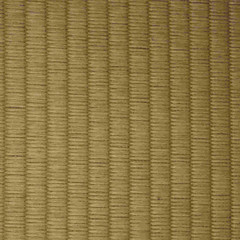
So, often when clients ask for Tatami or Raffia they are really often asking for a straightforward, grass-like, woven fabric similar to that shown in the main image accompanying this article.

Click To Read More Interior Design Articles

Such raffia and tatami fabrics are usually available by the meter and have additional properties making them more superior to traditional variants. For example having high martindale test scores making them suitable for upholstery and coming pre-treated for fire retardancy.

Click <here> to request samples.

Tatami and Raffia by the meter may also be quite flexible allowing it to be fastened around wooden frames and then used as a textured finish for walls and ceiling.

With Wyzenbeek rubs of 40,000 KOTHEA’s 2011 Raffia (Raphia) are also eminently suitable for a wide range of upholstery uses.

Raffias can usually be fire treated to meet a wide range of contract requirements including hotels and marine installations.

This type of raffia weave has been used for thousands of years perhaps most famously as Japanese Tatami mats. They are of course one of today’s modern day design staples for a clean, modern look.

Links: