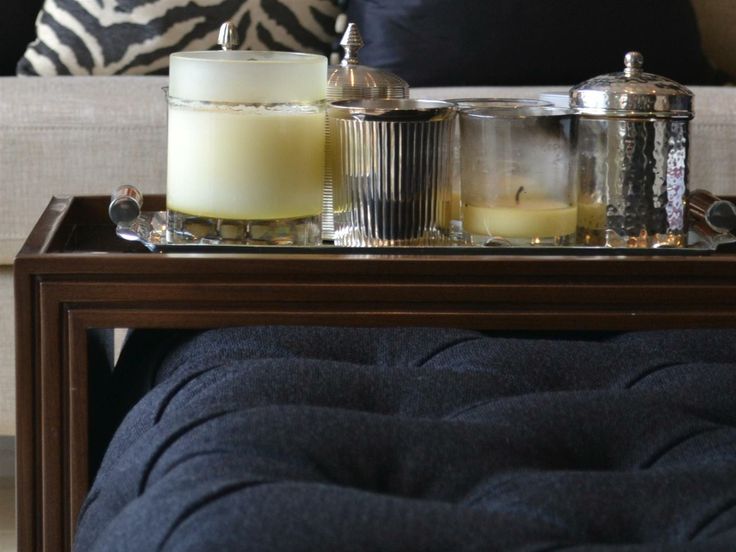
This textured upholstery and details from Ana Barreto adds to the great confidence SW London places on her design skills.

KOTHEA, supplying beautiful, inspiring fabrics and throws to top Designers and Architects since 1999
This textured upholstery and details from Ana Barreto adds to the great confidence SW London places on her design skills.
We love the textured upholstery fabrics in Area Squared’s office space Gallery.
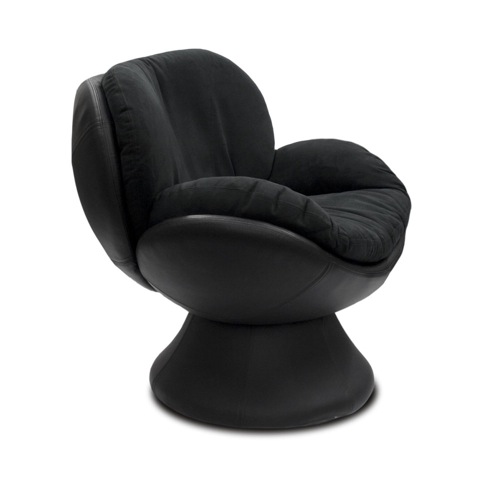
Another great chair from Bass Industries, we really like this one too; especially with the black faux leather upholstery and backing.

Consider faux leather too. Avoids considering the animal issues and has better making-up and cleaning properties (and cheaper usually)

A big thank you to Kiki for our nomination for the Inspiring Blog Award. It’s always great to know that we are reaching out to new generations of Interior Designers.
Following the rules of this award, I have to tell you a little bit about myself.
1. Many years ago I danced with Brad Pitt. Well; I was in the same nightclub and I sort of manoeuvred myself into his general vicinity. That counts right?
2. One of my scariest moments is travelling at over 230kmh in a sports car. I wasn’t driving (luckily someone else was) and you will be relieved to know that we were on a race track.
3. I inadvertently inherited a collection of 1980s vinyl ‘LP’ covers. After years of sitting in a box, I discovered that when framed then made a great art installation next to my work area at home.
4. The first paint I chose was for my own bedroom. Dark green. Hmmm.
5. I like people, dogs and cats. In that order.
6. Most interesting party venues: On a rooftop in Manhattan and some bizarre, mostly uninhabited, island somewhere near Comodo that even now I can’t quite remember the name of.
7. Most stupid question, “Do you like chocolate?”
Inspirational Blogs (I’d like to nominate!): Here are some that I enjoy:
There are a few rules to accepting this blog award…
1. Display the award image on your blog page.
2. Link back to the person who nominated you and ‘like’ the post
3. State seven facts about yourself.
4. Nominate 15 other bloggers for the award.
5. Notify your bloggers of their nomination and link to their posts.
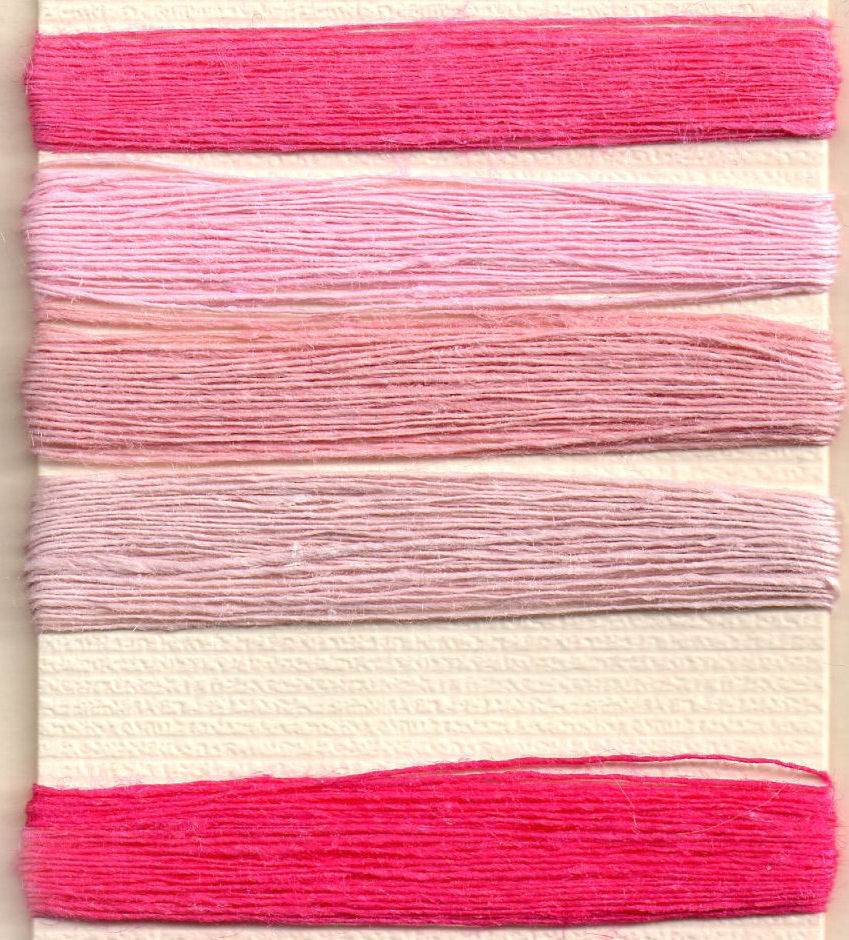 Pink linen is a rather rare and unusual flower. Not often specified in your average interior designer’s scheme. I found this scan that we had emailed someone recently for the client to choose for some curtains. We were even able to introduce different pinks into the warp and weft of the linen for an unusual effect. (We can do that with most of our linen colours).
Anyway, I just thought the pink linen image looked nice and I wanted to share it with you!
The interior design world moves on and so does the way your clients use the internet to find you. Sometimes for the better and sometimes not.
Just after we have spent ages (days! weeks! months!…years?!) trying to figure out what search terms our clients might type into Mr Google, and then incorporate that into our online presences(s), we find they are morphing how they search into something new and far more sinister.
Would you believe it? In the design world, a place based on aesthetics, those darned potential customers are using images to find us. How annoying is that? It seems like only yesterday when we ignored images because we knew that google can’t really ‘see’ them and we balanced that by putting all the right words everywhere. We even got the odd first page google listing for some odd convoluted phrase that one client a year might potentially type!!
So now it seems that we have to go back to what we naively thought was right all along. All we have to do is just put lots of pretty pictures onto our site and the whole world will come flocking to our door.

Well, maybe! I’ll backtrack a little and explain where I’m coming from before everyone gets a little too excited!
I’ll come from one simple factoid. One of my interior design industry based web sites has about 500 hits a day. Not bad, I suppose. I looked into some of the stats a bit more last week and found that by far the most number of hits came from google. Fine. About 85% of the hits in fact. Nothing new there then? No.
But; there’s always a “but”.
When I delved deeper I found that 19% of the google hits were coming from the GOOGLE IMAGES part of the google search site. IE the bit where you type in ‘mohair velvet fabric’ (or whatever) and then find you have loads of pages returned to you, so you click on the images bit on the left hand side and it only shows you (in theory) lots of pretty pictures of mohair velvet fabrics. (As well as lots of other junk of course, but on the whole it’s not too bad).
19%. that’s quite a lot.
So I looked at different time frames and, yes, that 19% was pretty consistent over at least the last 6 months. Maybe 17%, maybe 23%, it varied. That’s still enough of a trend for me to believe it and I’m sure it would hold true if I had bothered to look further back in time.
So what’s going on here then?
Well firstly it showed that I am doing some things right. I am putting images alongside my musings. It makes it easier to read, pretty pictures – some perhaps even relevant – just like a magazine. Also for the images to have been recognised by google then I must also have tagged them (the ALT tag if you want to be more precise in HTML terms). So yes I had images in my musing and they were correctly tagged images. That is, the images had a bit of text manually put on them by me. To make matters better I had also called the images the same thing (broadly) as the tags I intended to use.
Google looks at:
1. The name of your JPEG;
2. The image size;
3. The alt tags you give to the image; and peripherally at
4. The physical colour scale of the image (it can recognise it is mostly green, for example).
The first three of these are very important the 3rd much less so.
So you’ve just done a great design job for one of your better clients. You upload some pics of the rooms to your online portfolio and voila! 100s of people will beat their way to your internet door!…er no.
Let’s say you had this great picture of the main room. So you upload img_1325.jpg to your site and you cleverly ALT-TAG it as “main-room-31-randomstreet-localtown”.
Not good. Assuming it was not a tiny thumbnail image here is something along the lines of what you should have done:
1. Called it “contemporary-modern-home-belgravia.jpg” – or something similarly appropriate; and
2. Tagged it as “contemporary, modern, home, Belgravia” – or something similarly appropriate.
You get the idea? The keywords you have already discovered that work in the text of your writings now also need to be judiciously applied to your images. Get cracking!
1. How to get links to your web site
2. Interior Designers: Why does no-one visit your web site
3. Interior Design Marketing Strategies
4. Effective Ad Writing For Interior Designers on Facebook
5. Five Crucial Bits For Your Facebook Business Page
6. Seven Facebook Mistakes Interior Designers Make
 Interiors: The new bling
In a world far removed from cuts or recession, the super rich are spending like never before – investing their millions in mansions and art. ‘I don’t think there is a higher end,” says John Lees of his work as architect to the super rich. A distinction must be made, he says, between the merely vulgarly rich (ie, footballers of the Cheshire belt or the mere-millionaires of The Bishops Avenue) and the world of obscene wealth that Lees inhabits.
“I don’t think there is a high end”
He creates homes for the Russian oligarchs and Chinese business moguls who run the global economy and who continue to inhabit a land untouched by cuts and recession. In fact, their extreme wealth is buoying the fine-art market: Andy Warhol’s Coke Bottle sold for a record $35m in New York in November, the same month a Chinese vase sold in London for an unprecedented £48m to a Chinese businessman.
billionaires are currently spending “without restraint”
Sources in the art and property markets say these billionaires are currently spending “without restraint”. In response, developers in London are creating a new crop of luxury homes, dripping with original Picassos and swimming pools, to cater for this profligate class, including a vast development in Cornwall Terrace being sold for £29m upwards. Likewise for Lees, business is booming.
“Our big-scale jobs are £40m-£125m,” he says. “I work for private individuals and I’ll be doing their country house, their London house, one in Hong Kong and another in, say, the south of France. We recently did a dacha outside Moscow for £174m, for someone who entertains Putin.”
“On our current job, the accessories budget is £2m,”
Which makes it all the stranger that Lees is sitting in the scruffy offices of Lees Associates, near Borough Market in south London. The stairs are rough concrete, the shelves dusty, but the computer screens rotate with virtual tours of excessive luxury. “On our current job, the accessories budget is £2m,” he says. “That’s teaspoons, glasses, plates. Towels and linen is a separate budget. Each bed costs £20,000. We are a very specialised market at the very highest end.”
So what does an oligarch require in his home? Not the classic markers, such as banks of TVs (“We put some televisions in, but we hide them”), gold-plated taps or swimming pools shaped like a shell. Wealth at the hard-to-imagine end of the spectrum is “subtle”. Creating a truly, deeply wealthy home becomes more about rarity and materials: imported stone, works of art, grand pianos and libraries.
At Cornwall Terrace, Lansdowne’s development of eight mansions, two show homes have just reached the market, luring the super rich with original Francis Bacons, Murano glassware and furniture from Portofino. Everything is bespoke: the paints specially mixed; the hardback books handpicked. Lees is similarly aware of the hunger for provenance. “At that level, your bathrooms will be made of heated, solid stone carved in Brac, an island off the coast of Split in Croatia, which produces a particularly white limestone.”
A spokesman for Knight Frank, an agent operating at the top end of the market, says the super rich “have moved their money away from bank deposits and stock markets into alternative investments such as luxury property and art.
It is increasingly normal for Christie’s to deliver a painting to a potential buyer’s house so the owner can see it on the walls.” These gliding swans of houses, occupying only the best London addresses, have layer upon layer of service floors from the basement down. The traditional family kitchen might be above ground, for coffee or a snack, but below ground there are catering kitchens with a dozen chefs ready to entertain a party of 100. Lees says these subterranean floors “contain all sorts of service departments, catering kitchens, gymnasiums, collections of cars. We’ve made swimming pools where the floors come up to become ballrooms. There’s no noise in the pools and no smell of chlorine. We have projected dolphins on to gymnasium walls – hologram images behind glass. We put a bowling alley in one house.”
Bathrooms have become the most expensive rooms, he says, with their requisite body jet showers, warmed toilet seats and timed bathwater heaters that maintain supply at a specific temperature.
But wealth and power create problems of their own. A house full of staff means no privacy. Owning homes all over the world means a fragmented family life. Lees is asked to, if not solve these problems, then at least mitigate them. “The family kitchen is incredibly important, because they all live dissociated lives. You want to find a home, don’t you? The fundamental thing is the family.”
Children have suites, dressing rooms and all the latest toys. And Lees adds “secrets” for the children to discover: a doll’s house full of make-up or stepping stones in the garden that set off a fountain. “There is a sense of loneliness these children have, and that’s a great shame.”
Does he ever feel contaminated by these monuments to consumption? Or envious? Isn’t it odd to return to life as a working London architect? “Happiness isn’t driven by anything you’ve got. It’s inward. I’m not sure I want all those things myself. It’s the sheer hard work in having them. They need these tools in order to play the public persona. I find it’s bad enough having just one house.”
Super rich must-haves
• Direct access from road to underground parking complex, with lift directly into the residence.
• James Bond-level security including CCTV, infrared scanners, panic room, bomb-proof garage doors, bomb-resistant lift and bulletproof windows.
• A home office complete with a communications system that would please a Royal Navy destroyer.
• A master suite the size of a one-bed flat with his-and-hers ensuites, walk-in dressing rooms, day rooms, exercise area and TV lounge.
• A subterranean basement containing bar, nightclub, hairdressing salon, gymnasium, sauna, spa, swimming pool and private 3D cinema (with seats that move with the movie).
• Staff quarters, separate from the main residence.
• A show kitchen above ground and a basement industrial kitchen that can cater for up to 300.
Surce: guardian.co.uk
 Decorex is here again. This time it’s the 2010 version.
Beautiful logo isn’t it?
For those of you interested in fabric there are many fabric companies here. Not KOTHEA of course! but more of that another time.
Decorex is probably the magazine equivalent of House & Gardens. It competes with 100% Design and Focus (Chelsea Harbour Design Week). 100% Design is probably the equivalent of Elle Decoration.
Personally I’d go just because of the logo.
If you are keen to get new contacts in the world of fabric then there are some interesting companies here. Quite a few new ones as well as some you will have heard of before.
As with all exhibitions of this sort it is a good place to go to get an idea of ‘consensus trends’. Try to figure out where all the manufacturers are heading. Of course they could all be heading in entirely the wrong direction for your particular target market so go having your own opinion as well. Go with that opinion in mind and see if what you find validates it.
Remember as well that the exhibition stands are there to grab your attention. To drag you to talk to a sales rep. Just because the stand looks good and the fabrics on display look good in the exhibition it does not mean they will work in your schemes of course! Although obviously striking designs do sometimes work for some people.
We were tempted to show off some of our new Cashmere Throws and Cashmere blankets but we weren’t quite ready with the full range yet. And we’d like to think that the best quality throws will generate interest through word-of-mouth throughout the industry in the year ahead! (Hmmm)
A little bit of design fun for a Friday afternoon, designed to give you
something to talk about when socialising after work.
Here are what are “probably” July’s Top 10 Interior Design Websites – in reverse order.
10. IKEA HACKER
Someone really has got too much time on their hands as they buy and
then modify many of the IKEA staples.


https://ikeahacker.blogspot.com/
9. ain’t no disco
At number 9 a much more serious site covering some far from run-of-the-mill
office interiors.


8. mydeco
Despite daring to release an unfinished ‘beta’ web site, mydeco give a
creditable room planning tool on their site.


https://mydeco.com/plan-my-room/
7. ACRHITONIC
We would probably prefer the RIBA Product Selector as the tool of product
choice for architects however ARCHITRONIC deliver a packed online library for
designers and architects.


6. INTERIOR DESIGN
The font is a bit similar to World Of interiors I know. Anyway the originally
named INTERIOR DESIGN website does provide a wealth of opinion and sources.


https://www.interiordesign.net/
5. getdecorating
A genuinely good source for inspiration in decoration. Although for a more
comprehensive product list we always recommend The House Directory.


https://www.getdecorating.com/interiors.cfm
4. miraentuinterior
If you like vinyl then look no further.


https://www.miraentuinterior.com/
3. apartment therapy
They aim to be ‘saving the world, one room at a time’. It might take quite a
while.


https://www.apartmenttherapy.com/
2. de zeen design magazine
Continuing the trend for organisations that avoid using capital letters in
their names wherever possible, de zeen design magazine stylishly delivers a
wealth of interiors news.


https://www.dezeen.com/category/interiors-news/
1. Wallpaper*
A great lifestyle magazine we would all agree. Have a look to see if their
online presence is as good as the paper version. And what is that asterisk (*) for anyway? For fabrics we would recommend World Of Interiors.


https://www.wallpaper.com/interiors
A big thank you to: www.design-training.com