Home Decoration Ideas: Perfecting Your Home Office

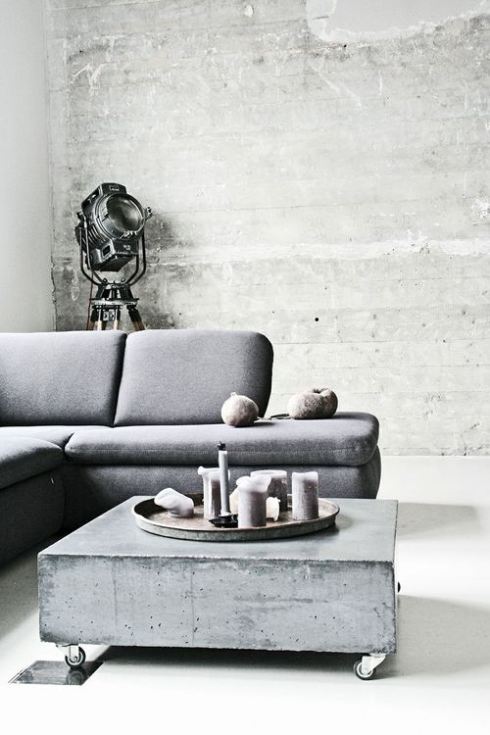
Concrete Table

Your home office is probably a nicer environment than your ‘workplace’ office. You probably have much better espresso for a start. However you’re spending more and more time there both because you love your work and your boss seems to think that working a 40 hour week is de rigeur both from home and in the office workplace.

So if you are going to be spending ALL that time there then it must surely be a great idea to spruce it up a little bit?

Here are six ideas you might find useful.

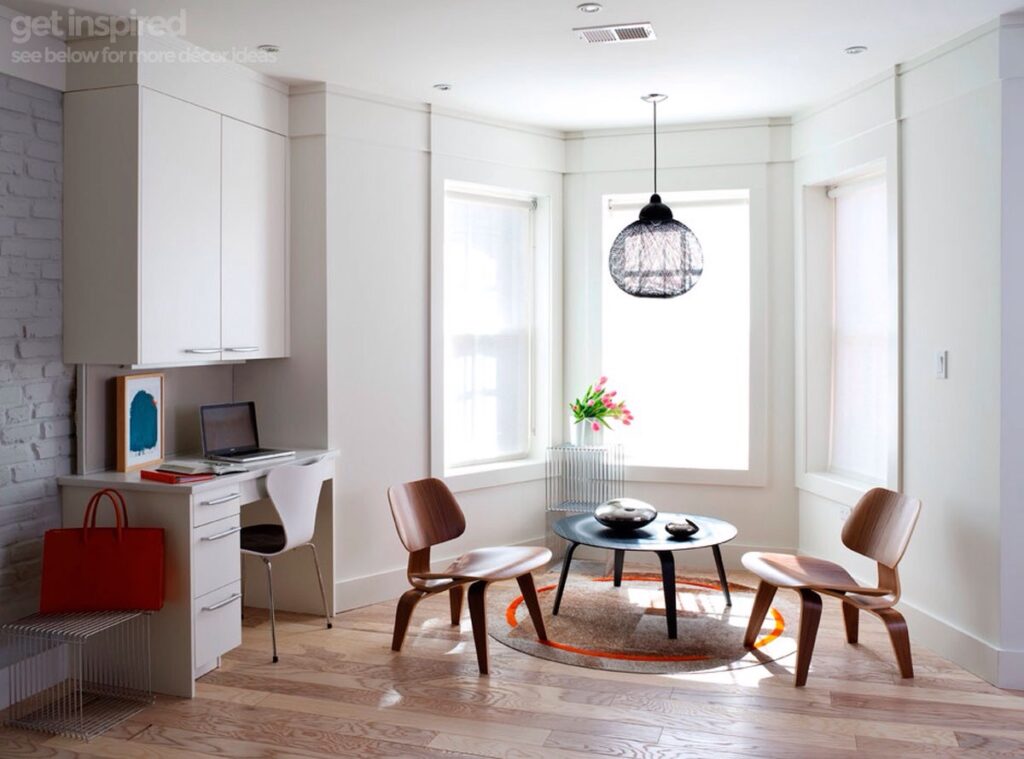
  • Old, but non-vintage, chairs

The great thing now is that even those previously ghastly 1950’s chairs are uber fashion statements. (Yes I Iike them now too!). So pop down to your local charity shop and see if there is ANYTHING there from the pre-IKEA era. something that was made ‘vaguely-properly’ without requiring an allen key.

Actually DON’T go to your local charity shop as that will be expensive. Find one of those areas that other people call dodgy and go to a charity shop there; MUCH CHEAPER. You know you’ve finally made it when you think the charity shops in your area are overpriced!

SLIGHTLY distress (ie rub) any exposed wood sandpaper and wire-wool dipped in beeswax. Replace any fabrics with another piece of the same size – most likely you will only need a heavy duty staple gun. Simple!

If you’re at all unsure follow the link here for some expert advice. The simplicity of the change will amaze you and you’ll have a piece of personalised furniture to while away your creative hours in front of a MAC.

  1. Filing cabinets & Lights

Dull grey metallic filing cabinets are just that…dull and grey. A trip to your local Halfords or John Lewis should be made wearing a baseball cap and paint-covered clothes. The look on the cashier’s face as you stock up on spray paint will be a priceless story at a dinner party when you will be free to exaggerate your ‘day spraying with Banksy’. Get something a bit more colourful than grey but go easy on the vibrancy. I’m probably a bit boring in my choice of TEAL combined with a judicious use of stencils.

For similar interior design ideas there are many online resource available.

If you are lucky enough to have metal anglepoise-type lights then those spray cans will come in handy again. You should be worried if your teenagers start to show an unhealthy interest in what you are doing fro the first time in 5 years. Don’t be flattered. It is the paint they are interested in NOT YOU.

If you’re not lucky enough to have metal lights then you would be surprised about how easy it is to cover a lampshade with some spare linen (be very aware of fire risks and use low wattage LED bulbs).

  1. The desk

Painting your work desk is NOT generally a good idea as it will probably come off unless you chemically cleanse it of all traces of grease and paint. you would then use a very ‘strong’ paint like FLOOR PAINT. You can throw away the cans now.

Faux leather is a great way to cover an office desk and all you need is a good pair of scissors and the aforesaid staple gun. A cushioned faux leather is even better.

If your desk is wooden then you could sand it and, again, use beeswax or varnish to seal it. Please note that a newish desk will likely be only veneered so you can very quickly sand away ALL the wood if you are not very careful.



Reasons to have tiles in your home

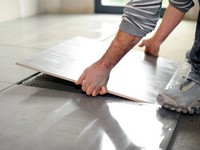
installing floor tiles

installing floor tilesMore and more people are turning to tiles over other materials such as carpet in their homes, and they have very good reason to do so. Not only are tiles modern and sophisticated, they have a whole heap of advantages and pros, and very few reasons not to have them. To list them all would be endless, so below are just a few reasons that we feel everybody should have tiles in their homes.

Let’s start with one of the most important factors that anyone thinks when they are refurbishing their homes. Your budget. One of the joys of tiles is that there is something that will suit all budgets. If you want a carpet that will last, and stay looking great the whole time, the likelihood is that you will end up spending a fair amount of money. Tiles on the other hand are available in such a huge range of materials, that there is something for everyone, regardless of how much you have to spend, and the appearance of these will not alter over time either. For those with a smaller budget, materials like porcelain and ceramic are perfect, and luxurious materials such as marble, and granite are better for those with more time and a larger budget.

Although the exact amount of work needed is different for different materials, in general, tiles require very little maintenance compared with other floor materials. Bear in mind that specialist stones such as marble require more work than others; however, the majority of tiles require simple daily cleaning with soap and water. If you have tiles in wet areas, such as bathrooms, you will need to look into having them sealed if necessary to ensure that they are fully waterproof. Tiles are great for those people who suffer from allergies. Any pet hair and allergens including dust will not get stuck into tiles in the same way that they do in carpets, which means that they can be swept up, and will not irritate those who suffer with certain allergies, particularly pet ones.

Finally, they just look great. Having tiles in a home instantly makes it feel modern and stylish. Many people are concerned that they will make your home feel cold, but this simply is not the case. Not only are some materials actually warmer than others, the majority of tiles can be installed over a heat mat, which will prevent the tiles from feeling cold underfoot, and will actually help warm your whole home. Tiles are available in such a huge array of colours and styles, that regardless of what you are looking for, you will find something that will fit in perfectly with your style.

Twitter for Interior Designers 2016

Keep Calm Interior Designer

Keep Calm Interior DesignerVery many interior designers, but less so architects, use TWITTER to support their business marketing efforts.

Twitter is very hit-and-miss. Some say,

Don’t bother using it, it wastes your time as it’s ineffective

Others say,

It takes time but I got a couple of project leads that way

I guess it takes just ONE large project to make it worthwhile.

the problem is that the way YOU use twitter is ineffective and  you won’t get ANY leads but you WILL waste a lot of time. Well, that’s what I would say to a lot of designers but it probably won’t apply to you. Here’s why…

Twitter can be used in several ways including:

  1. You just tweet something to your ‘followers’.
    • Let’s say you have 500 followers and each of those followers all follow 1,000 other twitter entities. So your generic tweet will be hidden away amongst those of 1,000 other twitterers. the chance of it being read are not great.
    • On the positive side a generic tweet can be automated from your blog or facebook posts, so this could be a ‘no-effort’ action for you.
    • Result: No effort, no REaction, ineffective.
  2. You genuinely tweet to an engaged community. These people are like-minded online buddies of the best order. Unfortunately they are all interior designers or interior designer wannabees rather than clients.
    • Result: Lots of great interactive dialogue, huge amount of time wasted. Wrong target market. Ineffective but a great way to pass/waste your valuable time.
  3. You focus your twitter-efforts on relevant hashtags. Great, assuming that everyone else uses the same hashtag for the same meaning then you could be on to a winner here. eg #INTERIORDESIGN. This is great because you will reach beyond your followers.
    • Result: Still a waste of time. Most trending hashtags are about Prince Harry or Kim Kardashian or something similar. the 5 people who tweet about your targeted hashtags are also interior designers. Complete waste of time
  4. You engage with specific people through twitter. This might be ‘some random person’ or it might be a potential client who has contacted y ou via twitter.
    • This is fine. You are effectively using twitter as an abbreviated email-proxy. If your potential client wants to communicate this way then that’s great. But it’s just really email.
  5. You automate your blogs to also tweet the same headline to twitter with a link in twitter back to the original post. Kinda like I’ve done here in fact. It’s still mostly a waste of time (but you’r reading it aren’t you?) but it took me zero extra time to put the content onto twitter. It also creates a bit of corporate noise on a well-known platform. Someone MIGHT just look at your company and then out of interest have a nose-around your facebook page, linkedin page and twitter feed. If either are empty then they might wonder about the size and scope of your organisation.
    • Result? Mostly harmless!

Anyway. You get the drift. twitter is mostly a waste of time. I blog in some other fields of business and twitter is a bit more important there but it still doesn’t lead to quantifiable business there either.

And yes I did automate this with a tweet. And a youthful emoticon 🙂


Faux Leather Upholstery

Brown Faux Leather Upholstery Banquette

Faux (or fake) Leather offers a great alterantive to leather. With Martindale rubs of over 100,000 this is a very safe choice for high use contract areas. It’s usually made of a pure cotton basecloth with a poly-cotton visible coating. There are many other animal skins that are mimiced in the same way and in many cases the finishes are convincing.

But why not just use leather?

Much leather production has now moved away from the West to areas with less stringent environmental laws and lower wage rates. This is where the problem lies.

Chromium based compounds are used in the tanning and curing process of real leather. They are thought to be carcinogenic as, in some European tanning factories, cancer rates were found to be up to 50% higher in workers than in the population as a whole. Furthermore there were higher incidences of Leukemia in children living in areas near the tanneries. Environmental problems are exacerbated by the siting of factories next to rivers; the significant amounts of discharge that are produced are fed into the water courses and then dispersed over wide areas. In more lowly regulated economies it is not unreasonable to believe that the situation is probably worse.

Moving towards a better leather requires that chromium use is stopped completely and that the water used in production is cleaned and re-used in the factory. Any tanins and dyes uses would preferably be plant based.

Food for thought: If you wear leather clothing on sweaty skin then chromium residues in the leather can rub off and enter the skin.

Faux Leather on doors and walls

Brown Faux Leather Upholstery Banquette

KOTHEA had two recent projects where we had to adhere Faux Leather vertically. This poses a more serious challenge than paper-based wall coverings due to both the weight of the fabric (nearly 1kg per linear metre) and the wear and tear when adhered to a door. Both installations were more involved than domestic ones as we had to consider firstly the use on a yacht in a marine environment and secondly the high levels of usage of a hotel.

So the adhesive needs to be strong.

A further set of issues to overcome are related to how the fabric might react to any chemicals in the adhesive. In both instances our fabric had a 100% cotton back coat with a vinyl mix visible layer. Superfically a conclusion could be drawn that most adhesives would be OK with the surfaces they are fastening to in these instances ie a natural wooden door and inert stone wall combined with the natural cotton back cloth. However the adhesive will almost certainly penetrate the back cloth. Becuase of this the use of a solvent based adhesive, such as Asceton, is most definately not recommended.

So the adhesive needs to be strong and water based.

After performing suitability tests in these instances we chose to use Mapei’s Adheselix VS45 . VS45 is an acrylic adhesive in water dispersion and has been used extensively by Mapei’s customers for PVC/foam wallcoverings and rubber flooring. An alternative of Adesilex G19 was also suggested for areas with more moisture but that was not necessary in these cases.

Interior Design: Getting into the industry with your eyes wide open.

Featured Image -- 5771What does it take to become a great interior designer?
Inspiration? Passion? An eye for detail? Perhaps all these things and more. At KOTHEA we don’t profess to be interior designers however we do deal with many of the top desingers in the UK.

They all share many characteristics.

They are great organisers. Even relatively small interiors projects are complex and involve dealing with many suppliers and tracking the purchasing and installation of products and services from them. So as well as your creative flair you have to be a good project manager, or at least employ someone who is.

They are great salespeople. Starting your own interior desing business is still starting a business. The same rules apply to designers as to successful business people elsewhere. You have to be passionate about what you do and people will want to buy from someone who is both knowledgeable and enjoying what they do.

They have Empathy and Understanding. It’s great innovating amazing new concepts that you love but your client has to like them. Understanding what your client wants and delivering to the brief is vital. The best and cheapest marketing you will ever get will be from word of mouth advertising from delighted cients. When you have grown your international interior design business you won’t need a salesforce if you have 100 delighted cleints on your books.

They excel and focus. Be great at something. Even better, be indespensible. If you are starting at ‘the bottom’ of a large design practice always do a great job but excel at some aspect of it, get noticed, and if that bit you are really good at helps the business grow then make it your area by the knowledge and passion you put into it. If you are going out on your own then try to focus; it can be a big leap in the technical aspects of going from say spas to aircraft to ski chalets. If you’ve just done an underground restaurant-bar focus your efforts on securing another one; the sale will be easier and that next job will be easier to deliver on when you win it. You will make less mistakes and so make more money, even the very best designers still have bills to pay.

They have contacts. Getting started is difficult in any business. If you know the right potential clients and the right people in the industry it will be easier for you. At the very least you will need experience and perhaps that is where the basic training is important. So if you are looking to get a formal training go for it. Get excited about creating wonderful schemes for your expectant clients but don’t forget the business side of what you do.

A comprehensive list of courses is available through the BIDA web site and the 2 better known ones are also listed immediately below. Happy studying and good luck with your future career:

1. BIDA
2. KLC
3. Inchbald


Double Width Sheers

Double width sheer fabric

When considering sheers for window treatments it is often worth bearing in mind that there are many double-wdth sheers available from many suppliers including, of course, ourselves. Double width sheers are worth special consideration as they offer:

1. Cheaper make up costs as there can be less work involved in using a wider fabric;
2. The ability to improve the overall aesthetic look – as there are fewer seams; and
3. The ability to be railroaded (ie made up with the pattern going the ‘other’ or the ‘wrong’ way. A width of 300cm or thereabouts is often sufficient for many drops (lengths) and this can eliminate the need for any seams.

Some of the best ideas are often the simplest.

Bleached Fabric & Environmental Impact

Black Mohair Velvet Contemporary Chair
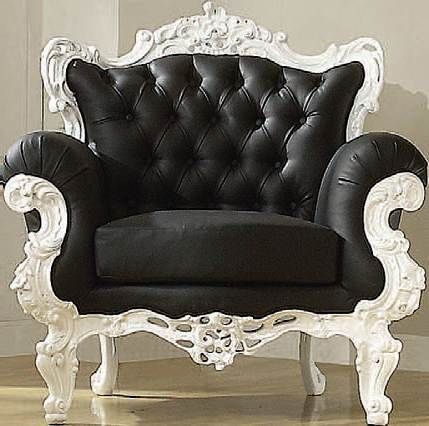
Black faux leather upholstery

Most of us are familiar with household (chlorine-based) bleach, which is sodium hypochlorite. It is a very powerful bleaching agent and, like similar agents used in the industrial bleaching of fabrics, it has by-products that include; dioxins, furans and organochlorides.

An alternative to a chlorine based bleach is Hydrogen Peroxide (H2O2). This has medical uses and domestic uses such as for bleaching hair.

Hydrogen peroxide occurs naturally by the action of sunlight on water and is simply water plus an extra oxygen molecule (2 lots of H20 plus one lot of 02 equals 2 lots of H2o2 for all you chemists). Hydrogen peroxide is quite reactive and so easily gives up some of its oxygen to revert back to water. This act of giving up oxygen to something else, like fabric, causes the fabric or impurities in it to be oxidised. The oxidised parts of the fabric are chemically changed and lose their colour. They remain there but their colour is changed. That’s what makes it a bleach and so the end products are just the oxidised fabric and water.

Natural linen has a light brown or beige colour. To go lighter than this it has to be either bleached, or bleached and dyed.

If your clients are environmentally conscious and concerned about the environmental impact of the products they buy from you, it would be prudent to ensure that your linen is hydrogen peroxide bleached rather than chlorine bleached.

Mohair Velvet for Upholstery

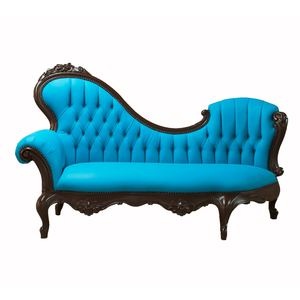
Blue Velvet Chaise
Black mohair velvet upholstery on a regal chair

Mohair velvet is a fabric much sought after by interior designers. It is sold in a wide range of qualities and is sometimes used as a generic term for velvets when, in fact, there are very many differing and sometimes superior compositions available than just those made with ‘mohair’.

Velvet is a type of tufted fabric woven with a warp pile. It has a short dense pile of 3mm or less (‘plush’ has a pile longer than 3mm) and a distinctive feel. During production wires lift the yarn creating small loops which are either cut or left depending on the desired finish. Velvets tend to take colour very well and also tend to be hard-wearing with a high degree of suitability for varied uses; they were typically hard to clean but that problem is mostly solved with modern dry-cleaning.

What’s in a velvet?

Kashmir was probably the birth-place of velvet in the early 1300s but by the 16th Century Bruges had become the leading source of what at the time was a definitive luxury item. Luxury velvets are still made in Europe as well as in Asia.

The original velvets were typically silk velvet. With the passing of time and increasing technical sophistication it has become easily possible to make velvets from many natural and synthetic yarns. At KOTHEA we have velvets at the top end of the quality range made from fine yarns including Linen Velvet, Cashmere-Silk Velvet, Linen Velvet, Cotton Velvet, Wool Velvet and of course Mohair Velvet. Other velvets available in the market have compositions that include polyester, nylon, viscose, acetate or mixtures. Sometimes small amounts of lycra are included to give the fabric stretch.

Curtain Fabric Static

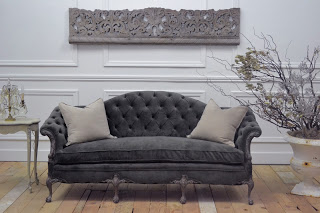
Another grey mohair velvet, luscious upholstery
Grey Mohair Velvet Upholstery

If you are unfortunate enough to have created beautiful curtains that are plagued by static problems then please read on.

Fortunately static is rarely noticed when curtains are hung, this is partly because of the chosen combination of materials and partly also because the weight of the material overcomes the weak power of static electricity. However if you do have this rare problem then you have already invested a lot of time, effort and money into buying curtain material and having them made up and hung. Do you have to start again?

Before answering that dreaded question it is important to understand what causes the problem in the first place. There is little point in re-making the curtains if the same problem is going to happen again.

Static is a natural phenomena. The main way in which static is created is when two materials are rubbed together causing an excess electrical charge on their surfaces. It is not, however, caused by the friction itself and it is not caused because a material is synthetic/man-made.

All materials differ in their propensity to cause static. It takes the properties of TWO materials to cause static; one must be good at giving up ‘electrons’ and the other good at receiving ‘electrons’. The better that each of the materials are at giving/receiving ‘electrons’ then the more static there will be. For any scientists reading, you might remember that this is measured by The Triboelectric Series.

On the Triboelectric Series; hair, wool, glass, nylon and fur are good at giving up electrons. Whereas silk, paper and cotton are at the other end of the scale and are bad at giving up electrons. Conversely; wood, metals, polyester and styrene are bad at attracting electrons whereas at the other end of this side of the scale polyurethane, polyethylene, vinyl/PVC are good at attracting electrons.

Thus a combination of PVC and hair would produce the most static whereas cotton and wood would produce the least. If you think about combing your hair then this should ring true.

Polyester is very similar to gold, platinum, brass, silver, nickel and copper in its static generating properties. Whereas, cotton is one of the lowest materials on the scale.

So the first lesson, bearing in mind the above, is that the choice of materials ie the curtain and the lining are critical. Also any surface that the curtain comes into contact with is important. So the second lesson is to consider the location.

Let’s turn now to how the curtain is made up. An experienced, professional curtain maker should know how to avoid the static problem.

Taking an example of a mixed composition fabric. Let’s say 40% cotton, 40% viscose and 20% polyester. And let’s also say that the material is loosely woven and has movement. Looking at such a fabric an experienced curtain maker would say that the fabric ‘needed taming’ and that a light cotton inter liner should be used. In addition to that the following details should be followed:

• The interlining should be locked in with 3 inch stitches. This should not be knotted;
• At the leading edge the interlining should be serged and locked in;
• The hem should be herring bone stitched. The stitches should not be too large and should not catch the face fabric; and
• Because of the nature of the fabric, the hem should slightly break on the floor.

These are not generic solutions to all curtain static problem. But they should be considered by the curtain maker.

So we have seen that: the choice of material; how the design works when hung; and how the curtain is made up, all have impacts on the creation or dissipation of static.