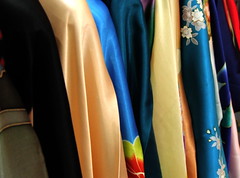
Silk Velvet Upholstery Fabrics For A Contemporary Lounge

Silk
Silk (Photo credit: markb120)

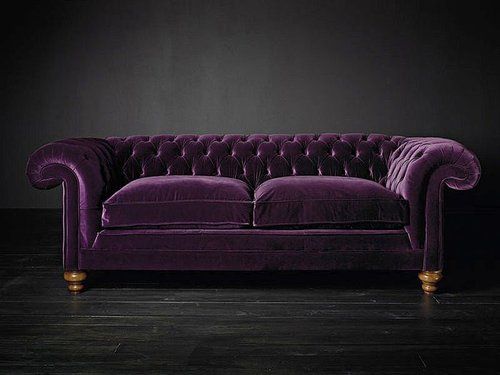
A contemporary lounge chair or sofa attains its contemporary’ status by having the right combinations of ‘form’ and an expertly upholstered, quality finish. Here we will just look at upholstery and, in particular, silk velvet upholstery fabrics.

Contemporary furniture is designed to be striking, with the better examples typified by great craftsmanship. Consequently you will find many designers and upholsterers specifying fabric such as that sold by leading fabric houses including Kravet, KOTHEA and Donghia.

Why?

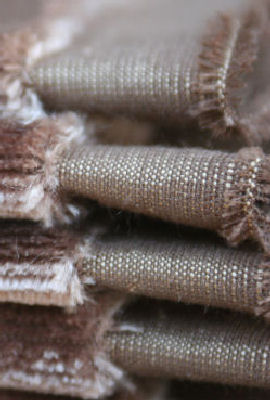
A velvet fabric is one where the fabric is made with very many tight loops of yarn. A cutter then chops off the end of every loop leaving yarn that ‘points’ upwards, tightly packed together. Often you will have encountered this type of fabric in theatres and cinemas – more so now in private theatres. The length of the remaining yarn can vary and this is called the pile; it could be a few mm or several mm long. The longer the pile the more likely it is to ‘fall over’. This, by itself, is neither good nor bad. It depends on what you prefer. The direction in which the pile falls is called the ‘nap’ and when upholstering a high quality craftsman must understand how to correctly work with the nap.

The nap can show some of the side of the individual strands of yarn and the sides can be more reflective than the cut ends. Thus, often, velvets have ‘shine’. Shine also occurs with wear as the pile becomes compressed, exposed and rubbed/polished with usage. People often, incorrectly, associate this solely with ‘silk velvet’ but that is not necessarily always true as many velvets can show more shine with age.

So we have learnt a little about how velvet is made and how it wears. Where does the silk come in?

Well, velvet can be made from many yarns. Cotton, viscose, mohair, linen or sheep’s wool. Silk is a natural substance spun by a silk worm. Silk is commonplace but varies tremendously in quality. Often silk is combined with other yarns to increaser its strength or to achieve other properties. For example one of our most luxurious fabrics is a silk and cashmere velvet. The resulting mohair velvet fabric feels great AND also has much improved durability properties. Cheaper silk will degrade much more rapidly.

So, typically, silk velvet is mixed with other yarns and often has a shine. This makes it great for contemporary furniture


A Chat With Verity du Sautoy – Her Thoughts On Winter Fabrics

Luxury Silk velvet From KOTHEA
Truly beautiful Cashmere Silk Velvet by KOTHEA

KOTHEA Fabric Picks For A Chilly Winter’s Day
With Verity du Sautoy of KOTHEA.

We love the seasons. All have their beauties and all have touched our senses in memorable ways over the years. Winter is no exception: lower, more balanced light; quietness and chaos with both the shopping and the weather; festive celebrations; the cuddle of a loved one; the hope and expectation of early spring flowers grasping for rare and tiny glimmers of light; and, perhaps, the welcomed warmth of a beautiful fabric.

Some of my best memories are centred on family: a warm fire; a little baby; or a bouncing toddler. Then an old children’s classic on the iPlayer watched on my Mac as it balances precariously on an elegant coffee table. I stroke my children’s hair with one hand and rest my other hand on my sofa. A generous cushion is warm, encapsulating and a bit of fun for the little ones to hide under. The curtains are not yet fully drawn but they smooth the boundary to the cold outside and give us tantalising glimpses of the world beyond – should we venture too close to the sheers that offer the final, soft protection from the elements.

Dominika B Tana Lawn

I work for a fabric company. I love fabric. I can’t pretend that it (fabric) is a be-all and end-all to life and that somehow it will make your life complete. It can’t. But what it clearly can do is complete the sensory experiences in the parts of life that, if you choose, you have control over…the parts of your home. Memories are not just photo-like snapshots in your brain; they are stored, multi-sensory splashes of emotion.

Here are my Winter picks. They are actual ‘picks’ that I’ve recently purchased or are about to purchase.

Take my sofa as an example. My sofa isn’t Continue reading “A Chat With Verity du Sautoy – Her Thoughts On Winter Fabrics”

Upholstery Velvet – Sourcing Luxury Velvet (Mohair) in The UK

Luxury Mohair Velvet For Upholstery

Luxury Upholstery Velvet is notoriously difficult for interior designers to consistently source. Sourcing a generic velvet is easy enough but often velvets vary greatly in quality with many being relatively cheap and scoring relatively well with Martindale results but they just look ‘cheap’. The look and feel of the velvet are, after all, two of several important reasons why you are specifying it in the first place.

A further problem is composition. When, for example, you say you want a Mohair Velvet that is what you want: a velvet made out of Mohair and NOT lots of other things PLUS a bit of Mohair.

Whilst Mohair velvets are generally very good across the market they too can vary significantly in quality. So even when you buy a Mohair Velvet you are not necessarily getting the durable, luxurious, fantastic-looking product that you hoped for.

Further complications come when looking at Velvets made of a mix of yarns. Well, some of the mixed fibre yarns are actually excellent in quality!

So I guess I’m saying that there really is no sure and fast way of knowing what you are buying without actually seeing the fabric AND being assured of its technical characteristics, notably Martindale as we are considering upholstery here.

Most KOTHEA luxury upholstery velvets have inherent Martindale rub tests of in excess of 20,000 rubs with several collections exceeding 100,000 rubs for contract usage – 20,000 Martindale being eminently suitable for domestic upholstery.

In addition to non-velvet, textured upholstery we have many luxury velvets suitable for upholstery including Italian Silk Velvet (high quality, luxury velvet), Cashmere & Silk Velvet (the ultimate velvet), trevira Velvet (inherent fire retardancy), Mohair Velvet (high quality, luxury velvet),

Most of our velvet is available by the metre with no minimum quantities.

Fabric Tips #12: Rolling a velvet

Image via Wikipedia

You’ve just ordered a new velvet and unrolled it to admire your purchase. But how do you re-roll it?

When you roll almost any fabric you should have the face on the inside. With a velvet this is the pile so you have the pile on the inside.

Some, but not all, velvet piles stand straight up others will ‘lay down’. for the former it does not matter which way you then roll the fabric (provided the pile is on the inside). However for typically longer pile which lays down (ie you can brush it flat with your hand in one direction only) then you should roll the fabric down the pile as you return it to its roll.

Hopefully that made sense. Good luck.

Fabric Tips #11: Mohair Velvet – How To Store

Image via Wikipedia – Alpaca Wool can be made into luxurious alpaca velvet…if you can find it

How to store Velvet.

The same instructions apply to all velvets.

Some background first: As an interior designer you buy and handle many fabrics. You may have wondered why some fabrics come in rolls of up to 100m whereas other come in much smaller lengths. Is this because of their value? The likelihood of them being sold quickly enough? Or perhaps longer lengths of some fabrics would be just to heavy for someone in a warehouse to physically carry or indeed too heavy for a courier to carry? Or perhaps it’s something to do with the thickness of the roll?

Well there is some truth no doubt in all of these reasons and others to. But one very important consideration with a velvet and especially with a Mohair velvets is the weight of the fabric and the weight of the fabric ON ITSELF. Because velvets have a pile they are thicker and heavier than other fabrics as they contain more material; similarly some velvets such as many mohair velvets have a dense pile…again more fabric and more weight.

There comes a point when the sheer weight of the roll of fabric becomes too much for the pile of the first part of the wrapped fabric on the roll and the inherent weight of all the fabric can cause damage to the pile. So velvets and especially mohair velvets have smaller lengths on the roll. Sometimes 25m but sometimes also 40m and 50m per roll.

So the length of fabric on a roll will be impacted by the weight of the fabric per linear metre AND the fact that a pile fabric can be more affected by added weight than other fabric.

So, how to store.

1. Store horizontally

2. Store with no other, external weight applied to the fabric.

3. Covered up to avoid exposure to dirt and dust i the air  -especially if stored for long periods

Typically you will find that many of our velvets come to you in special containers where the velvet is on a roll and suspended by special cardboard ends in the boxes. For small volumes of velvet on a single roll there is often no need for these special containers. Where the velvets are supplied in suspended roll containers it is safe to store the velvet in this form. Ideally youwould have a horizontal racking system for rolls of fabric as lengths can easily be cut off as and when you need them but cleary most interior designers do not have this facility.

The safest method of course is to let your supplier hold the stock and order cut lengths from them. It de-risks you damaging the fabric. Unless of course the supplier can specifically reserve entire rolls just for you, you would have the potential problem of dye lot or batch variation of colour with many fabric dyes. There would normally be a charge for an additional service such as this.

Mohair Velvet & Other Velvets

For a complete comparison of all velvet types including full specification data, see: Velvet Types Compared: A Complete Specifier’s Guide for Interior Designers and Architects.

Silk Velvet Upholstery Fabric TextileMohair Velvet is a type of fabric made from Mohair Wool. It is usually used for upholstery. A velvet is a fabric that is made in a certain way usually ending up with a pile; importantly it can be made from many different fibres including mixtures of fibres.

Mohair Velvet – A velvet made from natural Mohair Wool. Typically durable with high Martindale rub test results. Natural fibres give a degree of inherent fire retardancy.

Cotton velvet – A velvet made from natural cotton

Linen Velvet – a velvet made from natural linen typically an excellent domestic upholstery velvet.

Silk Velvet – Potentially beautiful and amazing velvet fabric made from silk but a high degree of quality variation across manufacturers.

CS Trevira – Made from synthetic Trevira. Excellent contract velvet.

Cashmere Silk Velvet – Extremely high quality luxury fabric. Mix of two natural fibres ie Cashmere Wool and Silk. Combines beauty with durability.

Vicuna Silk Velvet – Extremely high quality and rare luxury fabric. Rarely available as an interiors fabric.

Cotton & Silk Velvet – A less expensive way to strengthen the beauty of the silk with the strength of cotton. Cotton being cheaper than Cashmere wool for example!

Note also that a velvet is made with a back cloth material. It is not unusual for an extremely fine top market velvet to have a 100% cotton back cloth.