
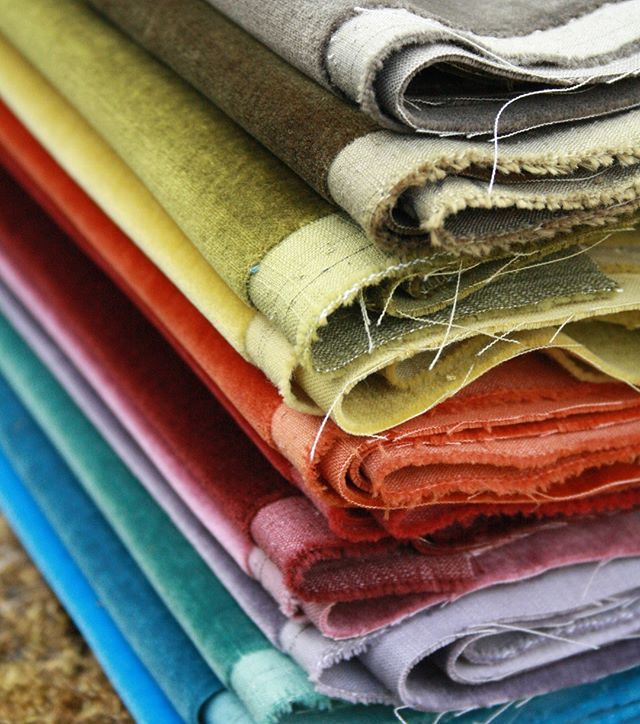
This glossary defines the fabric specification terms interior designers and architects meet across the trade, grouped by subject. Where KOTHEA publishes a full guide on a term, the entry links to it. For the complete specification library, see our fabric buying guide by purpose.
Fibres, natural
Cotton (CO). A cellulose fibre spun from the cotton boll. Soft, breathable, takes dye well, and lower in cost than the luxury fibres, but weaker when wet and prone to creasing.
Linen (LI). A cellulose fibre from the flax plant. Strong, cool, and lustrous with a characteristic slub, but creases readily and has low elasticity.
Wool (WO). A protein fibre from sheep. Resilient, naturally flame-resistant, and good at recovering from crushing, which suits it to contract upholstery.
Virgin wool (WV). New wool that has not been previously spun, woven, or felted, as distinct from recycled or reprocessed wool.
Mohair (WM). A protein fibre from the Angora goat, long, smooth, and lustrous with high tensile strength. Prized for velvet pile and carries an inherent fire rating in correctly certified ranges. See our mohair thermal properties guide.
Cashmere (WS). The fine, soft undercoat of the cashmere goat. Exceptionally soft and warm, used for throws and the softest velvets. The composition code WS is unrelated to the WS cleaning code.
Alpaca. A protein fibre from the alpaca, similar to fine wool, soft and warm with good drape.
Angora (WA). The fine, soft fibre of the Angora rabbit, distinct from mohair. Rarely used in upholstery.
Silk (SE). A protein filament produced by the silkworm. Strong for its weight, lustrous, and takes deep colour, but sensitive to water, abrasion, and light.
Fibres, synthetic and man-made
Polyester (PES). A synthetic fibre valued for strength, abrasion resistance, and colour retention. The base for most contract-durable fabrics and for Trevira CS. An older code, PL, is also seen.
Trevira CS. A brand of inherently flame-retardant polyester in which the fire resistance is built into the fibre, so it meets contract fire standards without topical treatment.
Acrylic (PC, PAN). A synthetic fibre with a wool-like handle and strong resistance to light and weathering, which suits it to outdoor and solution-dyed fabrics.
Solution-dyed acrylic. Acrylic coloured by adding pigment to the fibre before extrusion rather than dyeing the finished yarn, giving very high light and weather fastness for outdoor use. See our outdoor terrace fabric specification guide.
Polyamide, nylon (PA). A strong, abrasion-resistant synthetic fibre, often blended for durability.
Viscose (VI, CV). A regenerated cellulose fibre with a silk-like lustre and good drape, but weak when wet and prone to creasing.
Modal (CMD). A regenerated cellulose fibre related to viscose, with higher wet strength and a soft handle.
Lyocell (CLY). A regenerated cellulose fibre, marketed as Tencel, produced in a closed-loop solvent process. Strong, soft, and more environmentally efficient than standard viscose.
Acetate (CA). A cellulose acetate fibre with lustre and drape, used for linings and decorative fabrics. Heat-sensitive and usually dry clean only.
Elastane (EA). An elastic fibre, also known as spandex, blended in small proportions to add stretch and recovery.
Polyurethane (PU). A polymer used as the coating on PU faux leather and as the base of some elastane. See our PVC vs PU leather guide.
Fibre composition abbreviations. Fabric labels state fibre content in standard ISO 2076 codes rather than full names, so a reading such as 70% CV 30% CA is unreadable without them. The full table is in our fabric care symbols and cleaning codes guide.
Weave and construction
Warp. The set of yarns running the length of a fabric, held under tension on the loom.
Weft. The yarns running across the fabric, woven over and under the warp. Also called the pick or filling.
Plain weave. The simplest weave, each weft passing alternately over and under each warp. Firm, flat, and hard-wearing.
Twill. A weave with a diagonal rib, produced by offsetting the interlacing on each row. Denim and herringbone are twills.
Satin weave. A weave with long floating yarns on the surface, giving a smooth, lustrous face and a duller back.
Jacquard. A weave produced on a Jacquard loom that controls each warp yarn individually, allowing complex woven patterns such as damask and brocade rather than printed ones.
Dobby. A weave producing small, repeating geometric figures, made on a dobby loom, simpler than Jacquard.
Damask. A reversible Jacquard-woven figured fabric where the pattern is formed by contrasting satin and matt areas.
Boucle. A fabric woven or knitted from looped, curled yarn, giving a textured, knotted surface.
Chenille. A fabric woven with a fuzzy, caterpillar-like pile yarn, soft with a slight sheen.
Tapestry. A heavy, figured fabric, traditionally hand-woven, now machine-woven for upholstery, with a woven pictorial or ornamental design.
Velvet. A construction, not a fibre: a pile fabric that can be woven from mohair, cotton, silk, linen, cashmere, or synthetic. Fibre determines performance. See our velvet types guide.
Pile. The raised surface of a fabric, formed by yarn ends or loops standing up from the base. It can be cut, as in velvet, or looped.
Cut pile. A pile whose loops are sheared to leave upright tufts, as in velvet.
Looped pile. A pile whose loops are left uncut.
Face. The right side of a fabric, intended to be seen in use.
Backing. A secondary layer bonded to the reverse of a fabric to add stability, as in knit-backed or foam-backed fabrics. See our knit back fabric backing guide.
Selvedge. The finished, non-fraying edge running the length of a fabric on both sides.
GSM. Grams per square metre, the standard measure of fabric weight. A higher GSM usually indicates a heavier, more substantial fabric.
Weight per linear metre. The weight of a one-metre length at full width, distinct from GSM, sometimes quoted on upholstery data sheets.
Durability, abrasion, and physical testing
Martindale. The UK and European abrasion test, expressed as a rub count. The higher the count, the more abrasion the fabric withstands. Contract grade begins at 40,000 rubs. See our Martindale rub test guide.
Martindale classification. The banding of rub counts into use classes: general domestic from 10,000 to 15,000, heavy domestic from 15,000 to 25,000, general contract from 25,000 to 40,000, and heavy contract at 40,000 and above.
Wyzenbeek. The US abrasion test, expressed in double rubs. Not comparable to Martindale and not interchangeable with it on a UK specification. See our Wyzenbeek vs Martindale guide.
Pilling. The formation of small fibre balls on a fabric surface through rubbing. Graded by ISO 12945-2. Distinct from abrasion failure. See our pilling resistance guide.
Seam slippage. The tendency of yarns to pull apart at a stitched seam under load. A key upholstery failure mode tested separately from abrasion.
Tensile strength. The force a fabric withstands when pulled before it breaks.
Tear strength. The force needed to propagate a tear once started, distinct from tensile strength.
Dimensional stability. A fabric’s resistance to shrinking or stretching in use and cleaning.
Shrinkage. The reduction in fabric dimensions after washing or exposure to moisture, usually quoted as a percentage.
Backing. A layer applied to the reverse of a fabric to stabilise it for upholstery. See our knit back fabric backing guide.
Fire and flame retardancy
BS 5852. The UK fire test for upholstered seating, using ignition sources from a cigarette and match up to timber cribs. Source 5, the timber crib, is the contract benchmark. See our BS 5852 Crib 5 guide.
Crib 5. The common name for BS 5852 Ignition Source 5, the wooden-crib ignition test for contract upholstery. Tests fabric and filling as a composite.
Ignition source. The standardised flame or smouldering source used in a fire test, numbered 0 to 7 in BS 5852, with higher numbers representing more severe ignition.
BS 7176. The specification standard for non-domestic seating that references BS 5852 and adds hazard categories and a water-soak durability stage. Medium Hazard is standard for hotels.
BS 5867. The fire standard for contract curtains and drapes, separate from and not interchangeable with the upholstery standards. Type B is general contract, Type C adds a launderability stage. See our contract curtain guide.
BS 476. The UK standard for fire behaviour of building materials. Part 7 measures surface spread of flame, relevant to fabric wall panels. See our BS 476 Part 7 guide.
BS EN 13501-1. The European reaction-to-fire classification for construction products, used for fabric-covered wall and ceiling systems, with Euroclasses from A1 to F.
BS EN 1021. The European cigarette and match ignition test for upholstered furniture. Part 1 covers the smouldering cigarette, Part 2 the match flame.
NFPA 260. A US test method classifying the cigarette ignition resistance of upholstery furnishings.
CAL 117. The California upholstered furniture flammability standard, revised in 2013 to a smoulder-based test.
IMO FTP Code. The marine fire-test framework for commercial vessels. Part 8 covers upholstery, Part 7 curtains, Part 9 bedding. Crib 5 does not substitute for it. See our marine fabric specification guide.
Inherent FR. Fire resistance that is a permanent property of the fibre, as in Trevira CS or correctly certified mohair, and is not removed by cleaning. See our how FR treatment works guide.
Topical FR. Fire resistance applied as a treatment after weaving, which can degrade with cleaning and may need re-treatment. See our FR treatment and fibres guide.
Back-coating. A flame-retardant or stabilising coating applied to the reverse of a fabric. Solvent cleaning can strip it.
Building Safety Act 2022. The UK legislation tightening documentation and accountability for construction products in higher-risk buildings, including fabric specification records. See our Building Safety Act guide.
Colour, light, and fading
Light fastness. A fabric’s resistance to fading under light, graded 1 to 8 on the Blue Wool Scale (ISO 105-B02). Grade 6 or above is needed for sun-exposed positions. See our light fastness guide.
Blue Wool Scale. The reference scale for light fastness, based on eight blue-dyed wool standards that fade at known rates.
Colour fastness. The resistance of a fabric’s colour to fading or transfer under a defined agency such as light, rubbing, water, or cleaning. See our colour fastness and crocking guide.
Crocking. Colour transfer from a fabric surface through rubbing, tested by ISO 105-X12, assessed dry and wet.
Dye lot. A record of a specific dyeing batch. Colour varies between dye lots, so a large or phased order should be secured from one lot. See our lead times and colour matching guide.
Metamerism. When two colours match under one light source but differ under another. See our colour naming and specification guide.
Piece dyeing. Dyeing fabric after weaving, in the piece, as opposed to dyeing the yarn or fibre first.
Yarn dyeing. Dyeing yarn before weaving, which allows woven colour patterns and generally better fastness than piece dyeing.
Solution dyeing. Adding colour pigment to a synthetic fibre before it is extruded, giving the highest light and weather fastness.
Finishes and treatments
Stain-resist finish. A treatment that makes a fabric resist the absorption of liquid and soil, giving time to blot spills before they set.
Fluorocarbon finish. A common stain and water-repellent chemistry applied as a surface treatment. Subject to increasing environmental scrutiny under REACH.
Water-repellent finish. A treatment causing water to bead and run off rather than soak in, distinct from waterproofing.
Antimicrobial finish. A treatment inhibiting the growth of bacteria and fungi on the fabric, relevant to healthcare specification. See our healthcare fabric guide.
Anti-static finish. A treatment reducing the build-up of static charge, relevant to synthetic curtains. See our curtain fabric static guide.
Moth-proofing. A treatment protecting protein fibres such as wool and mohair from moth larvae damage.
Mercerising. A caustic treatment of cotton that increases lustre, strength, and dye uptake.
Calendering. A finishing process passing fabric through heated rollers to produce a smooth, glazed, or embossed surface.
Coated fabrics and faux leather
Faux leather. A coated fabric imitating leather, in three types: PVC, PU, and silicone. See our faux leather types guide.
PVC leather. Faux leather built on a plasticised polyvinyl chloride layer, robust and chemically resistant, readily certified to Crib 5.
PU leather. Faux leather built on a polyurethane coating, softer and more breathable than PVC but generally less durable. See our PVC vs PU leather guide.
Silicone leather. A newer coated fabric using a silicone surface, valued for durability and a cleaner environmental profile than PVC.
Cold crack. The temperature at which a coated fabric stiffens and cracks. Relevant to exterior and marine use. See our cold crack testing guide.
Plasticiser migration. The gradual loss of plasticisers from PVC over time, causing the coating to stiffen and crack.
Delamination. The separation of a coating or backing from the fabric it is bonded to, a common failure mode in PU leather.
Pattern and cutting
Pattern repeat. The distance before a pattern returns to the same position, measured horizontally and vertically. Drives fabric wastage in cutting. See our pattern matching guide.
Straight match. A pattern that aligns across the width at the same point on each panel.
Half-drop match. A pattern offset vertically by half a repeat on each successive width, needing extra fabric to align.
Railroading. Running fabric horizontally along a piece rather than up the roll, to cover wide seating without seams. Only possible where the fabric has no directional pile or pattern.
Up-the-roll. The standard orientation, with the fabric running vertically on the piece as it comes off the roll.
Directional fabric. A fabric with a pile or pattern that must run the same way on every panel, restricting the cutting plan and raising the quantity needed.
Fabric quantity. The metreage a piece needs, driven by size, fabric width, pile direction, and repeat. See our how much fabric to upholster furniture guide.
Cleaning codes
W. Water-based cleaning is suitable. S. Solvent-based dry cleaning only; water can damage the fabric. WS. Either water or solvent cleaning is suitable. X. Vacuum or brush only; no wet or solvent cleaning. See our fabric care symbols and cleaning codes guide.
ISO 3758. The international care-labelling system of pictograms for washing, bleaching, drying, ironing, and dry cleaning, applied to the fabric as a material and distinct from the upholstery cleaning codes.
Sustainability and compliance
REACH. The UK and EU regulation controlling chemicals in products, including textile finishes and dyes. See our REACH compliance guide.
Oeko-Tex Standard 100. A certification confirming a textile has been tested for harmful substances against defined limits.
GOTS. The Global Organic Textile Standard, certifying organic fibre content and environmental and social criteria through processing.
GRS. The Global Recycled Standard, certifying recycled content and chain of custody.
Responsible Wool Standard. A certification covering animal welfare and land management in wool production. See our cashmere and mohair welfare certifications guide.
Mulesing-free. Wool from sheep not subjected to mulesing, a welfare consideration in merino production.
Sustainability certifications. The range of environmental and welfare marks a specifier may require, compared in our fabric sustainability certifications guide.
Commercial and trade
To-the-trade. Sold only to interior designers, architects, and the trade, not to the retail public. KOTHEA is a to-the-trade supplier.
Cutting. A small sample of a fabric supplied to confirm colour, handle, and quality before ordering. Request cuttings at KOTHEA.com/cuttings.
Memo sample. A larger reference sample lent for presentation, returnable to the supplier.
Show length. A longer length supplied to assess a fabric at scale, such as for draping or a large upholstered piece.
Lead time. The interval between order and delivery, longer for handwoven, made-to-order, and bespoke fabrics. See our lead times and colour matching guide.
Minimum order. The smallest quantity a supplier will sell of a given fabric, often higher for bespoke or treated fabrics.
Bespoke colourway. A fabric woven or dyed to a colour specified for a project, subject to a minimum order and a longer lead time.
Dye lot reservation. Securing a single dye lot to cover a full or phased order, preventing visible colour variation between deliveries.
Contract grade. A fabric meeting the performance thresholds for non-domestic use, defined by test results rather than by building type. See our contract versus residential guide.
Quick answers
What does the Martindale rub count mean?
The Martindale rub count is the number of abrasion cycles a fabric withstands in the UK and European abrasion test before showing wear. The higher the number, the more durable the fabric. Contract-grade upholstery begins at 40,000 rubs, and heavy contract use calls for 100,000 or above. It is not comparable to the US Wyzenbeek double-rub figure.
What do the fabric cleaning codes W, S, WS, and X mean?
W means water-based cleaning is suitable. S means solvent-based dry cleaning only, and water can damage the fabric. WS means either water or solvent cleaning is suitable. X means vacuum or brush only, with no wet or solvent cleaning. The code is set for each fabric and should be matched to the cleaning regime of the environment before specifying.
Is velvet a type of fibre?
No. Velvet is a construction, a pile fabric, not a fibre. It can be woven from mohair, cotton, silk, linen, cashmere, or synthetic fibres, and the fibre determines the durability, fire rating, cleaning, and cost. Choosing velvet on appearance alone, without regard to fibre, is a common specification error.
What is the difference between inherent and topical flame retardancy?
Inherent flame retardancy is a permanent property of the fibre, as in Trevira CS polyester or correctly certified mohair, and is not removed by cleaning. Topical flame retardancy is a treatment applied after weaving, which can degrade with cleaning and may need re-treatment. For contract specification, confirm which applies and require the test certificate for the specific fabric and filling combination.
To request cuttings of any KOTHEA fabric, visit KOTHEA.com/cuttings.
Request Samples
Order cutting samples of any fabric from our current collections. Trade accounts only.
Order CuttingsOr call +44 (0)20 8943 4904 or email info@kothea.com
Our Collections
Mohair Velvet Faux Leather Cashmere Throws Silks Linen Textured Upholstery
Specification Guides
Buying Guide by Purpose Crib 5 Fire Guide Martindale Rub Test BS 5867 Curtains Marine Fabric
