Contract Upholstery Fabric – How to Specify It

For a comprehensive guide to specifying fabric for hotel and hospitality projects, including Martindale thresholds by room type, BS 7176 fire certification, cleaning regime compatibility, and dye lot strategy, see: How to Specify Fabric for Hotel and Hospitality Projects.

A quick guide to specifying contract upholstery fabrics. The main areas to consider are as follows.

1. Determine Use

Is it panelling or seating? For seating you will need to consider flammability (cigarette, match, and Crib 5) and abrasion (Martindale).

2. Fabric Composition

The composition of the fabric including the yarn and weave will affect long-term wear, appearance, and technical performance. Natural fabrics such as wool can be more expensive but generally offer good handle and technical characteristics including natural flame retardancy. Man-made fabrics are usually easier to maintain but require careful selection to achieve the right aesthetic.

3. Flammability

The standard for contract seating acceptable throughout the EU is EN 1021 Parts 1 and 2 (cigarette and match). Higher-level standards in the UK are BS 5852 Crib 5 and BS 7176. The standard for vertical surface fabrics is BS 476 Part 7. For a full explanation see our complete guide to BS 5852 Crib 5.

4. Abrasion

Check the Martindale rub count for the fabric. For contract seating in hotels, restaurants, and offices, a minimum of 40,000 Martindale rubs is the standard threshold.

5. Environmental Considerations

Natural fibres such as wool generally have better environmental credentials than synthetic alternatives. Nylon in particular has a high environmental impact.

6. Care and Maintenance

Contract fabrics typically deteriorate from dirt accumulation rather than abrasion. Follow the manufacturer’s cleaning instructions. Remove stains promptly and vacuum regularly.

Request Samples

Order cutting samples of any fabric from our current collections. Trade accounts only.

Order Cuttings

Cashmere Production In Mongolia

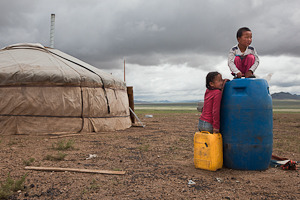
Photo: Jeffrey Lau I have been reading an interesting article on CNN.com about the high cost of CASHMERE. Take a look….

There are some amazing photos by Jeffrey Lau which  add definitive realism to the lives that many of us are fortunate enough not to lead. It also raises again the issue of the environmental cost and environmentally friendly products; on the one side cashmere production in this area has economically benefitted many people yet at the same time the area is probably at, or beyond, the limit of what can be realistically sustained.

Do we in the affluent west have a right to make these people live the poor but ‘worthy’ lives they used to lead? Or can they exploit the enviroment like we in the west have done over the last few hundred years?

Fabric Tips #10

Interior Designers are sometimes asked for the environmental credentials of their specification. Here are some figures that give you an idea of the greenness of different yarns used in fabric production. The figures show the energy consumption (per kilo in KWH) required to make the fibres. Of course this is far from the total carbon footprint of the finished delivered and fully made up cushion or sofa or curtain. But it is a starting point often covering the more energy intensive part of the process.

17 Wool
27 Viscose
32 Polypropylene
35 Polyester
69 Nylon

Clearly natural wool wins hands down!

As a side note, the “Campaign For Wool” should start to get media coverage throughout the rest of 2010 with the patronage of HRH Prince Charles. The society of British Interior Design are planning to give wool a big push “All we are saying is…give fleece a chance”. Their tagline. Great! Well it made me laugh!

Bleaching :: The Environmental Impact Of Fabric

We were recently asked about the impact of fabric bleaching on the environment.  We covered this in January <here>.

Basically, try to use unbleached fabric if you are concerned about environmental impact. The natural colour of some fabrics such as linen can be aesthetically pleasing but also variable. If the fabric is dyed it may also be bleached first. if it has to be bleached the best option is for hydrogen peroxide bleaching.

How to Lighten Fabrics

We were asked how to lighten fabrics.

We would not advise any of our customers to do this themselves as the results are unpredictable.

Essentially though to lighten a fabric you have to bleach it. Some yarns and some dyes can be significantly affected by bleach others very little. Sunlight too has a bleaching effect and its effect depends on the degree of colour fastness of the fabric.

KOTHEA sells a hydorgen peroxide bleached linen. We have already made a few posts about that <here>. this bleaching is the most environemtnally way of bleaching fabrics during production. This bleaching is used mostly to remove the natural colour from linen.

Dyes and Pigments in Fabric

A Brief History of Natural Dyes (Mordants)

A dye is a substance that gives colour to the fabric. Usually in a way such that washing, heating or lighting does not change the colour greatly.

Dyes tend to be carbon-based (ie organic in a chemical sense) whereas pigments are very fine powders ‘dissolved’ in a liquid. Pigments generally give brighter colours and are man-made.

Dyes have existed for at least 4000 years and, before 1850, were almost entirely from natural sources such as plants, trees and lichens but also sometimes from insects. Here are some natural dyes, rarely used today, and their sources:

1. Yellow
Seeds, stems and leaves of the weld plant
The inner bark of the North American oak ‘quercetin’
Dried petals of false saffron (safflower)

2. Red
Crushed insect bodies from Coccus (cochineal) or it’s distant relation Kermes.

3. Blue
From indigo or woad

4. Purple
From the medium-sized predatory sea snail ‘commonly’ known as Murex.

5. Black
From the middle wood of the Logwood tree. This is still used today to dye silk and leather and is combined with Chromium. I have written other articles about how this ‘natural’ dye is one of the most damaging to the environment because of the use of chromium.

The art of the dye was historically a closely guarded secret with practitioners having their formulae to produce the colours and to retain them by the addition of various metal salts.

Cotton could not be directly dyed whereas wool and silk could. To add a dye to cotton the cotton had to be first treated with salts made from aluminium (red), magnesium (violet), tin, calcium (purple-red), copper, barium (blue) and iron (black-violet) and then dyed. These salts are called mordants.

The Start Of Synthetic Dyes

In the 1850s Chromium was found to give superior dye retention and so started the decline of the natural dye. Chromium mordants are still widely used for wool and less so for silk and nylon.

More precisely, the first commercially successful dye was ‘mauve’ discovered in England in 1856 and taken to market the following year. It was only sold for about 7 years but that was sufficient to start the dramatic decline of natural dyes and the investment in the science for newer and better dyes.

The Chromium discovery meshed well with the Industrial Revolution. The massively growing textile industry in Europe required a cheap and predictable manufacturing process. Natural dyes and mordants could require up to 20 steps in production, the colour could be variable and the dyes had to be transported unreliably from around the world. Because of these factors and the development of chemical science, it is easy to see how by-products of coal tar extraction & coke production, abundant in Europe, became the foundation of the modern dye industry.

By 1900 nearly 90 per cent of industrial dyes were synthetic.

Pre-war (WWI) Germany dominated the commercial dye market accounting for 90% of all output. Many German scientists worked with distilled chemicals from coal tar, an abundant by-product of the industrial revolution at the time. The German success was probably due to their investment in the scientific method and in training scientists themselves. Some further ‘by-products’ of the research include aspirin and saccharin.

After WWI the industry gravitated to Britain (ICI), the USA and Switzerland, also moving away from coal tar to petroleum-based research.

Perhaps only now with the ‘green’ movement are we seeing a resurgence of interest in natural dyes. KOTHEA cautions the environmentally-conscious reader to look carefully at claims of dyes to be natural. Whilst they may well be made from natural materials the processes used along the way can be VERY damaging to the environment.