Fabric Tips #12: Rolling a velvet

Image via Wikipedia

You’ve just ordered a new velvet and unrolled it to admire your purchase. But how do you re-roll it?

When you roll almost any fabric you should have the face on the inside. With a velvet this is the pile so you have the pile on the inside.

Some, but not all, velvet piles stand straight up others will ‘lay down’. for the former it does not matter which way you then roll the fabric (provided the pile is on the inside). However for typically longer pile which lays down (ie you can brush it flat with your hand in one direction only) then you should roll the fabric down the pile as you return it to its roll.

Hopefully that made sense. Good luck.

Fabric Tips #11: Mohair Velvet – How To Store

Image via Wikipedia – Alpaca Wool can be made into luxurious alpaca velvet…if you can find it

How to store Velvet.

The same instructions apply to all velvets.

Some background first: As an interior designer you buy and handle many fabrics. You may have wondered why some fabrics come in rolls of up to 100m whereas other come in much smaller lengths. Is this because of their value? The likelihood of them being sold quickly enough? Or perhaps longer lengths of some fabrics would be just to heavy for someone in a warehouse to physically carry or indeed too heavy for a courier to carry? Or perhaps it’s something to do with the thickness of the roll?

Well there is some truth no doubt in all of these reasons and others to. But one very important consideration with a velvet and especially with a Mohair velvets is the weight of the fabric and the weight of the fabric ON ITSELF. Because velvets have a pile they are thicker and heavier than other fabrics as they contain more material; similarly some velvets such as many mohair velvets have a dense pile…again more fabric and more weight.

There comes a point when the sheer weight of the roll of fabric becomes too much for the pile of the first part of the wrapped fabric on the roll and the inherent weight of all the fabric can cause damage to the pile. So velvets and especially mohair velvets have smaller lengths on the roll. Sometimes 25m but sometimes also 40m and 50m per roll.

So the length of fabric on a roll will be impacted by the weight of the fabric per linear metre AND the fact that a pile fabric can be more affected by added weight than other fabric.

So, how to store.

1. Store horizontally

2. Store with no other, external weight applied to the fabric.

3. Covered up to avoid exposure to dirt and dust i the air  -especially if stored for long periods

Typically you will find that many of our velvets come to you in special containers where the velvet is on a roll and suspended by special cardboard ends in the boxes. For small volumes of velvet on a single roll there is often no need for these special containers. Where the velvets are supplied in suspended roll containers it is safe to store the velvet in this form. Ideally youwould have a horizontal racking system for rolls of fabric as lengths can easily be cut off as and when you need them but cleary most interior designers do not have this facility.

The safest method of course is to let your supplier hold the stock and order cut lengths from them. It de-risks you damaging the fabric. Unless of course the supplier can specifically reserve entire rolls just for you, you would have the potential problem of dye lot or batch variation of colour with many fabric dyes. There would normally be a charge for an additional service such as this.

Raffia Wallcovering

Raffia adds texture as a wallcovering. As a natural product it has many benefits for the interior designer including a degree of thermal insulation and the ability to be adhered directly to wall surfaces or fastened to wall surfaces or ceiling when wrapped around wooden panels.

With Wyzenbeek rubs of 40,000 KOTHEA’s 2011 Raffia (Raphia) are also eminently suitable for a wide range of upholstery uses.

Raffias can usually be fire treated to meet a wide range of contract requirements including hotels and marine installations.

This type of raffia weave has been used for thousands of years perhaps most famously as Japanese Tatami mats. They are of course one of today’s modern day design staples for a clean, modern look.

Links:

Mohair Velvet & Other Velvets

For a complete comparison of all velvet types including full specification data, see: Velvet Types Compared: A Complete Specifier’s Guide for Interior Designers and Architects.

Silk Velvet Upholstery Fabric TextileMohair Velvet is a type of fabric made from Mohair Wool. It is usually used for upholstery. A velvet is a fabric that is made in a certain way usually ending up with a pile; importantly it can be made from many different fibres including mixtures of fibres.

Mohair Velvet (see our mohair velvet upholstery ranges) – A velvet made from natural Mohair Wool. Typically durable with high Martindale rub test results. Natural fibres give a degree of inherent fire retardancy.

Cotton velvet – A velvet made from natural cotton

Linen Velvet – a velvet made from natural linen typically an excellent domestic upholstery velvet.

Silk Velvet – Potentially beautiful and amazing velvet fabric made from silk but a high degree of quality variation across manufacturers.

CS Trevira – Made from synthetic Trevira. Excellent contract velvet.

Cashmere Silk Velvet – Extremely high quality luxury fabric. Mix of two natural fibres ie Cashmere Wool and Silk. Combines beauty with durability.

Vicuna Silk Velvet – Extremely high quality and rare luxury fabric. Rarely available as an interiors fabric.

Cotton & Silk Velvet – A less expensive way to strengthen the beauty of the silk with the strength of cotton. Cotton being cheaper than Cashmere wool for example!

Note also that a velvet is made with a back cloth material. It is not unusual for an extremely fine top market velvet to have a 100% cotton back cloth.

An interview with KOTHEA’s founder

Notting Hill Carnival 2007 (London, UK) (Photo credit: Wikipedia)

London based Lisa Parsons supplies fabrics to the hippest and most exclusive UK designers. The founder of KOTHEA, her Spring2011 collection-in-progress is about to take Velvet to a new level of opulence.

With no time to think I would paint my walls with … Kelly Hoppen’s “Perfect Taupe”. Her colours are fantastic and, in this case, it does what it says on the tin.

My favourite piece of furniture is … an old chair I picked up in a local junk shop and I had it recovered in one of my fabrics; LeapFrog.

The car’s almost full in that small space I would pack … The Kite Runner by Khaled Hosseini, I’ve just started it and a spot of holiday reading beckons.

Guests to my house are intrigued by … this bizarre surveying tool I have in the corner of my lounge. It’s a measuring stick used with a theodolite and it adds a bit of height and interest to a corner of my room. It also detracts from a piece of my husband’s artwork which, although good, I have to compromise on putting on show from time-to-time.

I am … passionate about my fabrics and design; I am always inspired by many of today’s amazing yacht interiors, Terence Disdale is fantastic.  I would love to be in a position to commission him.

The hardest thing about work is … keeping my beautiful fabrics at home clean whilst having three children and their 30 sticky fingers. Gulp.

In my spare time … I just said I have had a third child; what spare time! I do love yoga though, with headstands being my forte. I have also designed and made many pieces of jewellery. Chris Farrow made this one up to my design, it has 3 rotating rings with a semi-precious stone on which rotate around a larger holding ring also with a set stone.

The trendiest colour is … hmm, trendy. Difficult one, KOTHEA operates at the top end of the market and I would have to say that the desirable colours there have varied little over the last ten to 15 years. Lower down the market it is different.

My favourite designers are … well I’ve mentioned a few already. I would certainly look at Gotham (Notting Hill) for furniture. John Hutton did amazing chairs and I was privileged enough to sell a few when I worked at Donghia in the 90s. Nick & Christian the famous Candy brothers have done some amazing things just look at One Hyde Park.

The best technology is … I suppose I should say Apple but I love my Blackberry as it helps me stay in touch with everyone and everything.

The most iconic British designer is … without a doubt, Terence Conran. His massive influence has probably been understated.

A plug for your company?…We mostly deal with the very top interior designers; not all of them but many of them. That’s the market we are in and intend to stay in. We know it pretty well and we like to think our fabrics meet their needs. A case-in-point is our new velvet collection. Opulent Cashmere and Italian Silk velvet.

Most interesting use of your products? … Some of the yachts they are specified on are pretty interesting! We’ve supplied some pretty interesting pop stars and celebrities (if you are into that sort of thing). One interesting client came through a Mayfair yacht broker and temporarily wanted his ‘fishing boat’ fitted out wall-to-wall with faux leather. All I can say is that it must have been a pretty large fishing boat and certainly not what I had in mind when I think about fishing boats!

Upholstery Linen – Sourcing Luxury Upholstery Linen in the UK

Upholstery Linen
Upholstery Linen

Upholstery Linen is notoriously difficult for interior designers to source. Sourcing linens for curtains is easy enough but often linens are not woven with sufficient strength to score Martindale results that are high enough to warrant using the fabric for upholstery.

Some suppliers can be a little evasive and will quote the weight of the linen as a measure of the linen’s quality. The implication is that the higher the weight the better suited the fabric will be for upholstery. There is some truth in that implication but you cannot say for certain that high-weight linen is inherently suitable for upholstery. Get the Martindale!

Most KOTHEA luxury upholstery linens have inherent Martindale rub tests of around 20,000 rubs with one range further strengthened to 85,000 rubs for contract usage – 20,000 Martindale being eminently suitable for domestic upholstery.

Furthermore, when buying upholstery- (or curtain-) linen you need to know whether or not it will shrink when washed. Linen ALWAYS shrinks. So what you have to find out is whether or not it has been pre-shrunk before you buy it. A common way of pre-shrinking linen is through the sanforisation process.

Click To Read More Interior Design Articles

Here are the details of our new 2011 upholstery linens that are named Recline, Relax and Restful. We have many others, these are just the new ones:

Name: Recline

Usage: Luxury Contract Upholstery

Colourways: 24

Width:   135cm

Comp:  54% Li 35% Co 11% Pa

Weight: >350g/m2

Notes:   Martindale >85,000

Request Samples

Name: Relax

Usage: Luxury Domestic Upholstery

Colourways: 24

Width:  135cm

Comp: 100% Li

Weight: >265 g/m2

Notes:   Martindale >15,000

Request Samples

Name: Restful

Usage: Heavyweight Luxury Domestic Upholstery

Colourways: 4

Width:  135cm

Comp: 100% Li

Weight: >470 g/m2

Notes:   Martindale >45,000

Request Samples


Contract Upholstery Fabric – How to Specify It

For KOTHEA’s contract ranges, with rub counts and fire ratings, see our contract upholstery fabric page.

For a comprehensive guide to specifying fabric for hotel and hospitality projects, including Martindale thresholds by room type, BS 7176 fire certification, cleaning regime compatibility, and dye lot strategy, see: How to Specify Fabric for Hotel and Hospitality Projects.

A quick guide to specifying contract upholstery fabrics. The main areas to consider are as follows.

1. Determine Use

Is it panelling or seating? For seating you will need to consider flammability (cigarette, match, and Crib 5) and abrasion (Martindale).

2. Fabric Composition

The composition of the fabric including the yarn and weave will affect long-term wear, appearance, and technical performance. Natural fabrics such as wool can be more expensive but generally offer good handle and technical characteristics including natural flame retardancy. Man-made fabrics are usually easier to maintain but require careful selection to achieve the right aesthetic.

3. Flammability

The standard for contract seating acceptable throughout the EU is EN 1021 Parts 1 and 2 (cigarette and match). Higher-level standards in the UK are BS 5852 Crib 5 and BS 7176. The standard for vertical surface fabrics is BS 476 Part 7. For a full explanation see our complete guide to BS 5852 Crib 5.

4. Abrasion

Check the Martindale rub count for the fabric. For contract seating in hotels, restaurants, and offices, a minimum of 40,000 Martindale rubs is the standard threshold.

5. Environmental Considerations

Natural fibres such as wool generally have better environmental credentials than synthetic alternatives. Nylon in particular has a high environmental impact.

6. Care and Maintenance

Contract fabrics typically deteriorate from dirt accumulation rather than abrasion. Cleaning requirements vary by fabric. Contact KOTHEA for the cleaning code for the range you are specifying, and see our guide to upholstery cleaning codes.

Request Samples

Order cuttings from our current collections. Trade only.

Order Cuttings

Alternatively call +44 (0)20 8943 4904, email info@kothea.com, or message on WhatsApp

What Is BS 476 Part 7 Class 1 ( BS476 )

BS476 Part 7 Class 1 is the FR / Fire Retardancy test for contract wall covering.

In the case of fabric wall coverings, the fabric is held vertically and subjected to a flame. If the rate of spread of any flame falls below a certain level the test is passed.

The test is a severe one. It is appropriate for example, in hotels and offices.

When organising treatment for your fabric ask for it to be treated so that it passes this standard test and inform the treatment company that the fabric will be subsequently tested.

What is BS5867 / BS 5867 part 2 type B? type C?

For the full guide to BS 5852 Crib 5 fire standards for contract upholstery, see: BS 5852 Crib 5: A Complete Guide for Interior Designers and Specifiers.


BS 5867 Part 2 Type B is the contract fire retardancy standard for curtains.

As an interior designer you do not need to understand the technical details of the test. However you are responsible for the project and must:

  • Confirm what standard is required for your project.
  • Specify fabric that meets that standard.
  • Prove that the fabric installed complies.

Here is what to do:

1. Determine the fire retardancy standard required. This may involve contacting the local fire officer. Confirm what documentation you need to provide.

2. Confirm with your fabric supplier whether the fabric inherently meets the standard or requires treatment.

3. On purchasing the fabric, specify the treatment required. Say to the fabric company: treat this fabric to BS 5867 Part 2 Type B and provide documentation confirming this has been done.

4. A treatment certificate confirms the fabric has been treated to the standard. It does not confirm the fabric has passed the test. For larger projects, arrange for your specific batch of fabric to be independently tested after treatment at a UKAS-accredited testing laboratory (not the treatment house). At the end of that process you will receive documentation confirming the fabric meets the standard.

Related: fire retardancy for contract upholstery, Crib 5 and BS 7176. For specifying contract curtains overall, covering light control, lining, fullness, and fabric quantity alongside this fire standard, see our contract curtain fabric specification guide.

Test Details

Test method

A sample of the fabric, vertically held, is exposed to a small flame. For Type B (hotels and similar) the ease of ignition is observed. It is noted whether the flame reaches any edge of the specimen and whether any burning pieces fall. For Type C (NHS environments) the fabric is further assessed for behaviour once the flame is removed but when the fabric may still be smouldering. The fabric is tested before and after laundering: Type B requires 12 wash cycles at 40 degrees; Type C requires 50 wash cycles at 40 degrees.

Type B performance criteria: The edges must remain completely intact and no burning debris should fall.

Quick answers

What is BS 5867?
BS 5867 is the British Standard for the flammability of fabrics used as curtains and drapes. Part 2 covers the fire performance of curtain and drapery fabrics in buildings. It is a separate standard from BS 5852, which covers upholstery: a Crib 5 upholstery certificate does not qualify a fabric for curtain use. BS 5867 Part 2 has two relevant types, Type B for general contract environments and Type C for healthcare.


What is the difference between BS 5867 Type B and Type C?
Both test a vertically held fabric against a small flame, before and after laundering. Type B, for hotels and general contract environments, requires 12 wash cycles at 40 degrees. Type C, for NHS and healthcare environments, requires 50 wash cycles at 40 degrees and additionally assesses the fabric once the flame is removed while it may still be smouldering. Type C is the more demanding standard and applies where curtains are laundered frequently.


Do contract curtains need to be fire treated?
Most decorative curtain fabrics need topical FR treatment to meet BS 5867 Part 2. Some inherently fire-resistant fabrics, such as certain Trevira CS constructions, meet the standard without treatment. As the designer you are responsible for confirming the required standard with the fire officer, specifying fabric that meets it, and proving the installed fabric complies with an independent test certificate from a UKAS-accredited laboratory.

Request Samples

Order cuttings from our current collections. Trade only.

Order Cuttings

Alternatively call +44 (0)20 8943 4904, email info@kothea.com, or message on WhatsApp

New images on the KOTHEA web site.

Perhaps not the most exciting news you will read today I know! We have been aware for a few months that our web site images needed to improve. We re-used the same images again and again. So we have finally acquired a new image for just about every page, all reflecting the product we offer in the relevent area! Well, at least you can sleep soundly tonight knowing that we are happy. I joke of course.

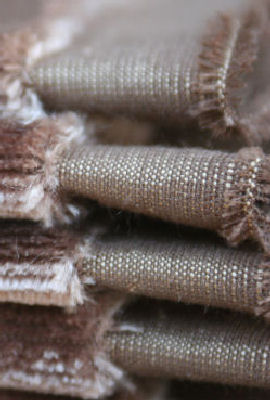
Coming from the designer/producer/supplier of fabrics angle makes it a little tricky for us. We do not feel it is our job to stage our fabrics on a photo set in a room of our liking. We are not the interior designers, that’s your job! We may see one of our fabrics in a certain way – for example I always associate our faux leathers with bar stools (misspent youth). However you may well see many other angles: wall covering, cushions and so on. So we try not to second-guess you. the interior designer. So, our challenge is to show some of the fine detail of our products without you being able to either see it in 3D yourself or feel it. Tricky. Have a look.

Anyway, we hope you enjoy the photos (along with the parts of the new collections on flickr) and any comments will be greatly appreciated.