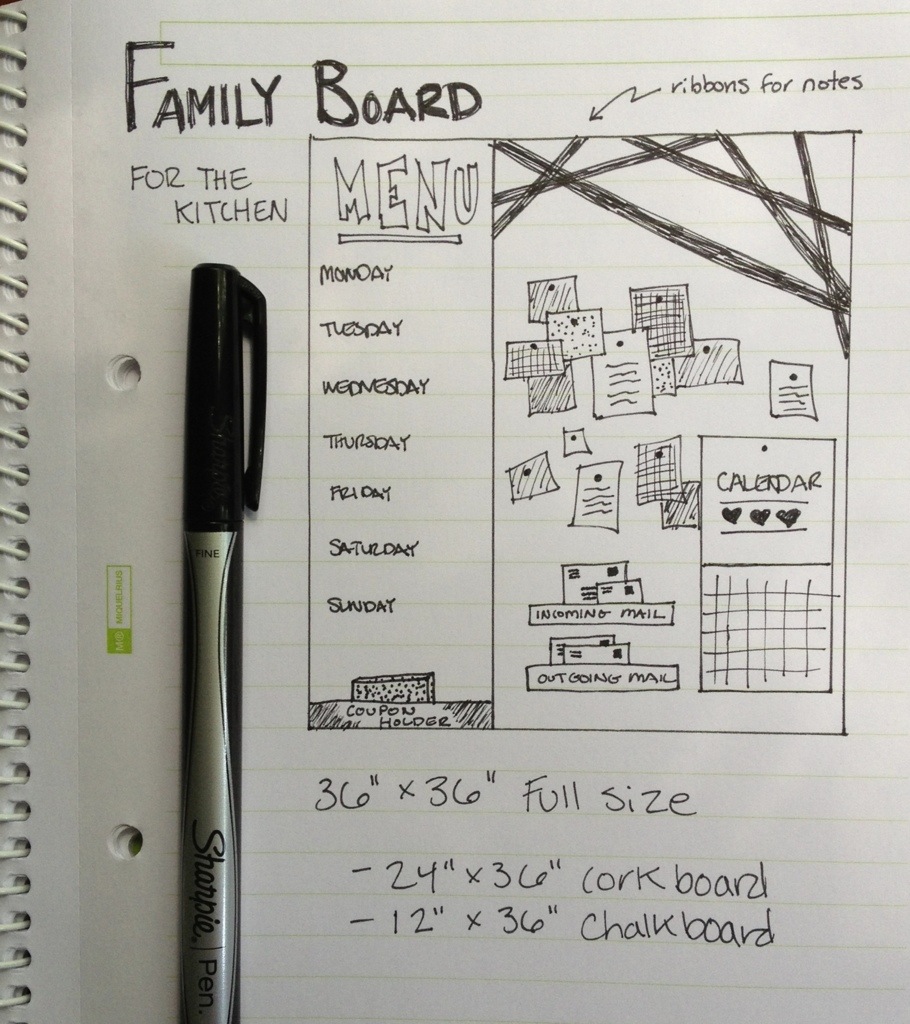
Hitchcock Creative: Designing a family board for the kitchen
Designing a Family Board

Passionate About Fabrics
Hitchcock Creative: Designing a family board for the kitchen
[youtube=https://www.youtube.com/watch?feature=player_embedded&v=2WFoWQy-unk] Mixing Patterns – A video from an interior designer. You other interior designers should start making videos like this…great way to get new clients (sometimes)

Why hire an interior designer – thoughts from an interior designer


I was recently looking at the stats on one of my other Interior Design sites. I noticed that people who came to it tend now to *NOT* visit other pages like they used to. Lowering their engagement with my site and the likelihood of that leading to something more fruitful.
Why?
I think perhaps many of us in our industry have become more sophisticated at getting the information we are looking for. Perhaps we don’t click around as much as we used to. Also, perhaps, the ubiquitous use of clickable text to meaningless or bland URLs on websites has often disappointed many of us.
However what I have found to work better is the careful use of banners for navigation. IE a simple JPEG or GIF file with a meaningful image that prompts a further action.
So: what banner? What GIF or JPEG do you need?
There are a few options and things to consider.
Firstly you need to work out what navigation you are trying to get the visitor to use. Secondly you have to work out what image or text will help that and consider how that can be incorporated onto an image file. Consider also the fit with your site’s aesthetics and general style. For example, this blog has a top-right image on each post; those images vary considerably and so the one you can see on this post is as good as any and, in the case, relevant to the content of this post.
Then you can try and find a suitable image on Google. However we found that was time consuming, probably infringed copyright and also the images were never quite right. In the end we commissioned discountbannerprinting.co.uk to produce a few for us. Sorted.

Interior Designers can be lucky enough to be paid to publish articles by other companies on their own site. You could get several hundred dollars/pounds a year by doing this without being too detrimental to your readership. If you are good you could then even get asked to paid to write on other blogs…but let’s not get ahead of ourselves!
You may well already have been approached several times by annoying emails asking you to host a guest blog post from another company. Most of these you probably ignored. Fair enough, we all do that. However from my experience they are NEARLY ALL genuine. Now, I’m not saying they are genuine MONEY-MAKING opportunities for you! BUT they are at least genuine enquiries.
The problem, which if you have responded to any of these emails, is that most essentially want you to host a free advertising-like article for another company. They pretend to be offering you ‘free’ content. Usually such an article is written by an independent blogger or ad agency who is being paid to get content on other websites/blogs. Ones like yours and mine!
Yet they want this for free 🙁 [Big unhappy face for that one!] I don’t like using emoticons but 🙁 is DEFINATELY appropriate here. I mean, what a cheek! You may well have spent years building up your blog and readership and now somebody wants to piggy-back on your success FOR FREE. I don’t think so! That’s really very, very (and I’ll say it again VERY) cheeky.
Click To Read More Interior Design ArticlesSo what I do first of all is to try to sort the wheat from the chaff. I reply and send a very short email with MY advertising rate card attached (click on the link to my advertising rate card and you can copy, change and use it yourself). This then gets rid of 80% of the original respondents who really were just looking for a freebie. Maybe there are lots of suckers out there?
But what about the remaining 20%? Well they are real, genuine enquiries who WILL pay you some money in return for a post and an image and a back-link. Easy money for you. BUT how much should you charge? And how easy will it really be in terms of the time required by you to either write, edit or publish it?
A sponsored blog post is a blog post which you are paid publish on your blog. It may be written by you, an agency or another blogger. Effectively it is an advert pretending to be an article and it will usually contain at least one backlink and one image.
To be honest with your readership and to comply with laws in some countries you should include a footer line clearly stating that Company X has sponsored this post.
There are many rate cards or charts out there. Most try to come up with a figure of what you should be paid based on some complicated technical algorithm. In the end it will come down to what the buyer/advertiser is willing to pay AND the number of people in the chain of command taking a cut on this ie AT LEAST an agency and a writer and you need to get paid for this.
The amount will depend very much on the industry you are in.
Let’s look at the interior design industry. Over the years manufacturers (like us, KOTHEA) have paid THOUSANDS of pounds for full page colour ads in House & Gardens, World of Interiors and the like. If you also add in the cost of photographing and producing the image and managing the advertising process then you are talking about a very significant amount of additional cost ie MANY thousands of pounds. In the case of a fabric company, you have to sell a LOT of fabric to break-even on that – probably an amount equivalent to the profit from one of your BEST customers over a whole year.
Niche interior design industry manufacturers can’t afford that kind of cost. So they have historically, typically paid for small, ineffective ads on the back pages of the abovementioned publications. Still, these small ads cost hundreds of pounds.
So most manufacturers/sellers DO HAVE an advertising budget. That’s the point.
The issue with advertising on blogs is that the readership is often MUCH smaller than a renowned international magazine. The readership is potentially no more or less relevant than your readership just that there is more of it. Your blog is potentially attractive, however, because it is impossible to produce true statistics to see who actually saw and remembered those expensive colour ads in the press – whereas you DO have the stats for your followers, subscribers and visitors. KOTHEA’s blog has many hundreds of followers, a blog like DesignMilk has probably got many thousands. Yours might have NO followers.
So if that were the only way of valuing a paid-for blog post on your site you would get paid nothing. And I wouldn’t get paid that much!
But that clearly is NOT the full story. Your wider readership is MUCH wider than your followers of your blog. It includes the followers on your FB page, your Twitter feed and of course many people will ‘just’ arrive at your blog after a generic internet search. So the overall traffic you receive is also important as is the amount of time and number of pages the average visitor spends on your site as is technical considerations like PAGERANK. The latter of which plays a role in determining the likelihood of someone arriving on your page after a generic Google search.
So manufacturers DO HAVE a budget. But it will be spread over many media types and the amount allocated to blogs will also be spread according to the perceived effectiveness of that blog in reaching the manufacturers target audience. And it will be spread over LOTS of blogs.
Who is your target audience? Is it other designers or is it potential customers for you or is it people who want to learn about interior design or someone else? None of those are essentially ‘good’ or ‘bad’, just different. Different manufacturers will want to target different kinds of customers.
Anyway, what I’m trying to say in this section is that the Interior Design industry does have money to spend on paid for blog adverts BUT that it is at lower levels to that found in other industries (from my experience). So some of the rate cards you see elsewhere are too high for you to achieve…unless you run DesignMilk or one of the blogs with LITERALLY millions (plural) of unique hits a year.
I have limited contacts in ad agencies. But I do have some.
From what I can gather the ‘top dollar’ rate paid by a advertiser will be US$/GBP1,600. The agency will get broadly half that and you or I would, again, get half of that half. (A quarter for all you maths genius types out there). So you might get US$/GBP400 if you are lucky. I’ve managed GBP200 from M&S on KOTHEA’s site, and larger amounts outside the Interior Design industry.
You might be able to get 4 ads a month at GBP/US$50. But then do you want Jo’s Roman Blinds and Petra’s Porcelain Cornicing advertising on your site? They were totally fictitious companies but you get my drift that the companies that pay top-dollar are more likely to be top brands that you want on your site rather than local unknowns.
Here are my suggestions on what bloggers should charge for sponsored blog posts.
I’m using two metrics here, unique visitors per month and Google PageRank as a measure of authority.

So you’ve seen a generic guideline as low as US$50. That might put you off. Then again you might think that you offer more value to a potential advertiser and that may well be true. If it is true then the rates are more flexible so consider:
1. Develop your portfolio
Just get started at lower rates and build up a portfolio of ads. You can then use that track record to raise your rates later.
2. Understand your true value
Read this article closely and develop a charging structure that genuinely reflects your influence and writing skills. You’ll get found out, or exploited, soon enough.
3. Get payment
Get paid, then write. In that order. Or ‘take down’ the ad/post if payment is not made within 24 hours (eg to you by paypal). Agencies WILL pay that quickly.
4. Be professional
Start with my rate card and some of the points on that. Expand it to include the following points stating the process you will follow:
Insist that you have final say of the copy of the advertiser writes the copy.
5. Quality not price
I am pushed for time and generally I only accept a sponsored post written by someone else and approved by me. If you have more time then on some occasions you can get paid MORE for writing the copy.
Many companies don’t really mind either way as long as what you say is positive AND that you link back to their site. Many of these companies are just paying for glorified back-links to improve their position in Google ranking.
More enlightened companies will be looking at building the buzz or conversation around their brand. They will be looking for someone to push their brand to your engaged readership. These enlightened companies are the ones that will pay more but then you might need to deliver more than just an article. So you might additionally agree to post a few links back to your article on forums or on twitter or other sources.
6. Be honest with your readership
When you start writing sponsored blog posts let your readers know what you are doing and why. Be honest.
7. Ask for more
Some advertising agencies will be able to offer you multiple payments for multiple posts. You might want to give a discount for this.
Let your client know when the article is published and tell them any extra things you have done such as automatically posting it to Twitter.
8. Follow the Google guidelines
Google frowns on sites that sell text links too frequently. 4 times a month isn’t going to cause any problems. If you plan to do it more than that then make sure you do some more research. (look on google for rel=nofollow)
9. Blog advertising agencies
There are apparently agencies that can direct opportunities towards your site. I only found one (can’t remember it’s name) but I never had any joy with it.
10. Build your brand
It’s fine to use all of this as a side line. Don’t get too carried away as you will end up wasting too much time and diluting your brand.
Don’t sell yourself short. Don’t give away things that have a value for nothing.
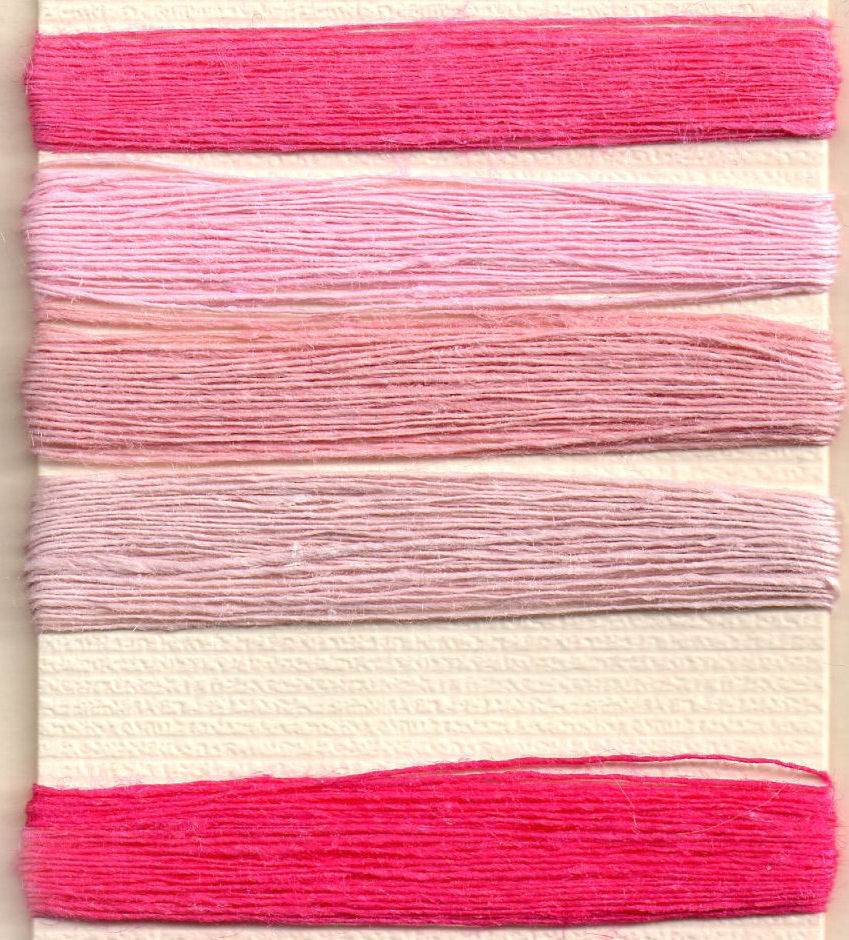 Pink linen is a rather rare and unusual flower. Not often specified in your average interior designer’s scheme. I found this scan that we had emailed someone recently for the client to choose for some curtains. We were even able to introduce different pinks into the warp and weft of the linen for an unusual effect. (We can do that with most of our linen colours).
Anyway, I just thought the pink linen image looked nice and I wanted to share it with you!
I was wondering just “Who is the best interior designer in London?”. I recently wrote about who was the best interior designer in the world and got some rather unexpected results.
You could, and of course, probably did, do that same Google search to find London’s “best interior designer”, just like you’ve probably also googled your own name at some point.
And yet here you are.
Maybe you are one of those top interior designers wondering why your name didn’t appear on Google’s first page like Blanchard, Helen Green, Tollgard and Robin Moore Ede did?
Is it really important? For example, I’m writing this in 2013 and Victoria and David Beckham have just, apparently, commissioned Kelly Hoppen to do their London pad. Do you think they did that Google search? Probably not, in fact certainly not, as I am sure they were influenced by many other factors. So even if you target ‘rich people’ then you might argue that your target market will never make that search.
Maybe.

I bet some of them do though. I bet some of those responsible for recent influxes of property investment in recent years do as they are based out of London. Perhaps they did have one or two recommendations but perhaps they also wanted a few new faces to present fresh ideas. & you weren’t on that list!
So how do you get on that list? Well, this blog page probably did get on or near the top of that list. So you might wonder why? Well if you look at the first paragraph you will see that I use ‘who is the best interior designer in London’ near the start of my article (google likes that) Oooh and look I’ve just included it again in the previous sentence. Google likes that too. But I will stop putting it in as if you do it too many times Google does NOT like that. & now take a look at the title, the name of the page and the excerpt…do you see a pattern emerging? 🙂
So the lesson is that you actually have to put the words into your website that people might type (keywords). That’s an art in itself. Covered elsewhere on this blog. Of course, now you know the trick you will all do it and I will get bumped further and further down the listing…giving me a reason/excuse for not being on the first page when you finally get around to reading this!
Then, of course, you actually have to have a good website and I ‘m sure you’ll agree that those companies that come up do have amazing looking websites. We deal with some of them and they certainly ARE at least amongst the very best designers in Europe, let alone London. And yet if you have the time to check their technical google ranking or ‘pagerank’ (I’ve done it for you!) you will find that most are 3 or 4; which is not so great. Certainly no higher than this blog. So you DON’T have to have a really high pageranking to get on that first page. You have to have the right content (as well as an OK pagerank).
Now here’s how you can cheat. Search instead for a generic “interior designer in London“. Different results. And you will see that maybe your adwords advert for those keywords appears on the right-hand side (you don’t use adwords? why not?). You will maybe also see that you need to have a google business/places listing to get put there as well a perhaps a listing in Yell.
So you can cheat by paying for a position on the ads on the right-hand side. It might cost you a bit though. And if you get a lot of ad clicks then google will promote you to the ads at the top of the search (because your ad generates more revenue for them). And you will see that those ads at the top don’t always look like ads and then kind of blend into the normal search results. And people kind of think that they are the first results of the search…and click them. Good clicks if you can get them maybe?
Maybe a listing in Yell is a good idea and getting a Google Places/Business listing IS DEFINITELY a good idea.
So who is the Best Interior Designer in London? Well Google’s first page for that search shows designfinder.co.uk and their listing says that www.forsterinc.co.uk are the best designers…so it must be true.

9 Ways for interior designers to create a bad impression – digitally of course!
When you first present to your newest prospect I’m pretty sure that you will be wearing your best ‘business’ clothes. When you first speak to a new client I’m sure you will make a real effort to do your best. When you send out a brochure or some other paper based literature I’m sure you will have it looking good. Hopefully too you take first emails seriously. And yes I’m sure your website looks great as well.
So all is hunky dory right? you can stop reading now and move on 🙂
Well firstly, before I get into the meat of the subject matter that drew you here, I suggest that one exercise you can do on a Friday afternoon is to write down EVERY single TYPE of point of contact that you make with clients. I’ve gone through a few of them in the opening to this post. No rocket science there. However what I suggest you do is really think if they all present a coherent view, when taken together, of you and your business. Do they look similar enough and do they say similar things and present similar images?
Click To Read More Interior Design ArticlesJust like that fine evening wear you have to impress on really special occasions and turn heads as you walk in the room all these points of contact between your business and your potential client are the same thing FOR YOUR BUSINESS (business? you know that thing that pays for the evening wear).
Well I’m going to talk a little about how to create a BAD digital first impression focussing on your website. So You need to look at the first page that people most often go to. In techie terms these are ‘landing pages’; they might include your home page or any special page that Google Adwords points to on your site or any page of yours that ranks particularly highly and get a lot of ‘hits’.
So to create a BAD first impression here’s what your landing pages need to do:
Am I perfect? No! Do I make these mistakes? Yes of course. It does provide some food for thought though.

Faux Leathers are otherwise knows as leatherette, fake leather and artificial leather. We have a short article on their many benefits for interior designer <here>.
KOTHEA® are the UK’s leading producer of fine, performance faux leathers for the contract market.
We have some of the very highest performance faux leather fabrics with Martindale Rub Test results in excess of 200,000…some of the highest in Europe. You can specify this quality of product knowing that you can totally trust its abrasion resistance characteristics.
We have a broad range of collections covering the varied environmental needs of hospitality (spas, restaurants, hotels), marine (yachts), office and household (apartment, villa) usage. Our technical innovation gives the best fabrics and our designers the best patterns and extensive colour palettes.
Related articles
 Upholstery faux leathers are one of our many collections being revamped in 2013. We have introduced a new faux leather with a Martindale rub test score exceeding 200,000. This is one of the highest available in the UK.
It still looks great and also has the added comfort factor of the interior designer knowing that it can be a worry-free product to specify for even demanding contract environments. Providing that it is correctly upholstered and specified it will withstand very significant amounts of abrasion.