OK let’s focus on sales. Without further ado here are 8 suggestions for ways to sell more. Hopefully, at least one will be something new to try. Change is good:
1. One for the owners and managers: interact on the sales force with your staff and your customers. Be visible and foster relationships.
2. The retail world moves forwards changing all the time. Don’t look back to the glory days. Innovate, take a view on the future.
Click To Read More Interior Design Articles
3. Browsers. For all those people who just can’t be engaged by your sales people get the sales people to give these ‘browsers’ a flyer. The flyer (terrible word) can be a discount voucher, an unadvertised promotion or a brief look at a new product, anything of value. Keep it succinct.
4. On weekends when you are particularly busy ensure that a senior staff member greets entering customers and tries to engage with leaving ones (who have not purchased) to ask them what they were looking for that they could not find.
5. Make sure your best sales people are selling on busy days. Ensure they are properly incentivized to SELL. Customer service is great but you want the money, right?
6. Consider a promotional event that is invitation only for your best customers (and anyone they want to bring along). Make sure there is genuinely something in it for the attendees.
7. Ask your salespeople what can be done on a practical day-to-day level to sell more. More products? Better layout? Different incentivisation or promotion?
8. Work your networks. Through Facebook; through staff, friends and family, email list.
LONDON, England. 07-DECEMBER-2009 11.30 AM: KOTHEA today announced it has expanded its extensive contract faux skin collections by the addition of KOFAUXLEATHER. KOFAUXLEATHER is a high durability, faux leather: a superb contract fabric with a very high Martindale result. It simply and effortlessly delivers longstanding elegance in all the right bars, hotels and marine environments both as upholstery and as a wall or door covering. It looks great.
This article looks at the very narrow area concerning how to make your Facebook URL for your interior design business appear professional. Specifically how to create a proper ‘vanity URL’ for your business fan page.If you have already done that then here are some more useful additions to the business side of your Facebook page.
Many Interior Designers who sell to the general public see Facebook as just one way of lead generation – to some it is more important than others.
Ok here goes. This is a real life example where KOTHEA’s MD set up her personal username on Facebook incorrectly, there was already a Fan Page for KOTHEA. This article takes you through the steps we had to take to get the ‘vanity’ url correct both for the individual and for the company. Our MD inadvertently set her personal username (vanity URL) as ‘KOTHEA‘. So if anyone typed www.facebook.com/kothea it took them to her personal page rather than to the ‘proper’ company page. This situation got progressively messy as she started to use Facebook more for personal matters with business messages appearing in the same place as her personal ones. The result was that many of her friends kept seeing fabric related articles when they were not interior designers. Hopefully you get the picture!
as the original name for the company as it was assigned by Facebook. Note for this all to work you must already have created a business page or FAN PAGE for your business.
What we want to do is threefold:
Release the facebook.com/kothea name so that it can be re-assigned to the business page
Change her vanity url/username name to something more like what it really is
Assign the proper company name to be KOTHEA.
Before we get started in earnest there are five critically important points: firstly, the person making these changes must be an administer of the business page and logged in to that page via THEIR PERSONAL ACCOUNT; secondly, you can only make changes to names once so be very, very careful; thirdly you must have at least 25 fans of your business page; fourthly, your business page must have been created as a Facebook PAGE not a group or anything else, it must be a page!; and finally Facebook sometimes requires that your personal account has been verified by mobile phone before any of these changes are allowed to be made.
If you are creating a page for the first time BE VERY CAREFUL some Facebook Fan Page setting CANNOT BE CHANGED (Jan 2010).
Here are the steps to go through:
Check to make sure what settings have already been made
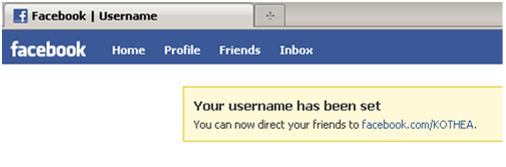
Type in this exactly: www.facebook.com/username ie do not put in your username put in the word ‘username’. You will get a message like the one below.
This confirms that KOTHEA is my MD’s username.
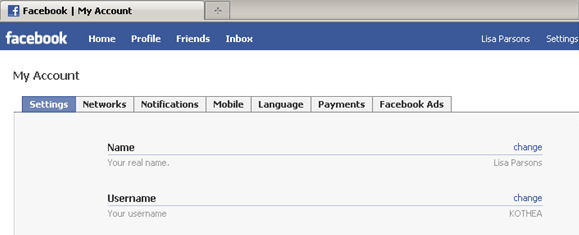
2. From the facebook menu go to SETTINGS and then to “ACCOUNT SETTINGS”. You will see something like the following where we now want to change the Username NOT the name.
3. Click on the word “change” the one next to USERNAME. ie the one above the word KOTHEA in my example. You are then prompted for a new username. It must be unique and there are various limitations to what you can have (sorry I don’t know all the restrictions but Facebook seems to disallow certain names even though they might be unique – for example i think only one ‘full stop’ is allowed). Be very sure what new username you want. Continue reading “Facebook Fan Page & Vanity URL For Your Interior Design Business”
Project 365: January Mosaic (Photo credit: Greg McMullin)
I have worked on, sold, and managed many projects in the corporate and interiors worlds. It strikes me that the nature of ‘projects’ is very similar across all industries.
How you propose to engage with the client to tackle the project will win you the business. Price and competence are essential.
New clients might not trust you enough to feel they can commit to your services for the entire project, so bear that in mind.
Sometimes, risk elements in the project are high or unknown – you must deal with these in your proposal/pitch.
(Nugget 1: Highlighting risks where others haven’t could win you the project on the risk issues alone).
Anyway, the point of this article is to summarise different approaches to charging for projects. You’ve probably heard of most of them, but maybe not all:
1. The design fee
“I’m an interior designer, and I provide a fantastic service. I charge you for my skills, and you benefit from me being able to buy things for you at trade price; I don’t profit from the things I buy for you”.
This is a fair and honest pitch. Well done, I’d think about buying from you. It probably won’t differentiate you from anyone else, though.
2. The markup
“I’m an interior designer, and I provide a fantastic service; I’m going to do it for free for you, though. I have to make a profit, so I’ll make that on the difference between trade and retail prices for the things I buy for you.”
I don’t like this, but I know it is widely used in the industry. Firstly, your service is so good that you are giving it to me for free? Really? Things given away for free are generally valued very lowly in business. However, this approach might appeal to a cash-strapped buyer, so don’t dismiss it.
Secondly, can I trust you to charge the fair and correct margin? Probably not (I don’t know you; how can I trust you?). You probably won’t have any transparency into your purchases and their actual retail and trade prices. Besides, a savvy client can get many things at trade price anyway; buying is easy (ish) – selecting and creating is more the art, where the value lies.
This is the best way to make money. Read on, I know you don’t believe me!
Many of the world’s top consulting companies manage their fixed-price projects carefully and in great detail. They win the projects essentially because of their low price, which is conditional on many conditions. Once the client cannot meet those conditions, the price increases (a lot). After committing to a company, the client finds it difficult to withdraw later and switch suppliers. In any case, they share the blame for incorrectly specifying the project at the outset, so that is not a reason to think of ditching the new supplier.
(Nugget 2:) To make lots of money, you must understand what you must deliver in detail. You have to know all the risks, where things can go wrong, and how you will handle those eventualities. You have to be clear about what is and isn’t included. (Of course, add-ons for what was not included initially will cost a LOT later when the client changes their mind!)
This relies on you being organised and the client being less organised. In the corporate world, many buyers are now very organised, so this approach to projects is becoming less profitable. These projects often become acrimonious unless one side gives in over points of contention that arise, “I thought XXX was included” – you’ve been there.
Remember that when extracting every ounce of $/£ out of your client, at least be nice, polite, and friendly about it. Seriously.
Of course, if you’re new to the industry, you might go for this approach to win the business, and you MIGHT strike it lucky based on little or no detailed preparation. Or you might not.
4. Phased Approach
This works best where unknowns that the client appreciates exist; it’s a good and fair way of making money.
You identify the phases of the project: scope, functional design, technical design, aesthetic design, etc, whatever you choose to call them is unimportant. You come to a financial arrangement for each phase before it happens. When the first phase finishes, you accurately quote for the subsequent one. You might have indicated the cost of all phases earlier, but you should clarify upfront that you can revise prices as risks become more apparent. The great things about this approach are inertia, deliverables and risk.
‘Inertia’ is due to clients’ unwillingness to change suppliers unless they are annoyed. In this case, it’s probably a good time to move on, as you’ve messed up and lost their trust.
‘Risk’ because you MUST plan for all risks in this approach. Your prices include the risks, and you say you are charging a lot for phase H because of risks X, Y and Z.
‘Deliverables’ are used when you revise (typically up) the cost of a subsequent phase because the client has changed the deliverables (no matter how small the change).
Oh, and of course, it’s easier for the client to commit to small sums than the whole thing.
5. Mentoring
Here’s one you probably haven’t considered.
Sometimes, you know that a client is fishing for ideas for their project. You know they are going to do it themselves. (Nugget 3:) If you know that, why not tailor your proposition to that fact? “Look, Mr X, here are the 8 phases of an interior design project; you can probably do much of them yourself, but you are not experienced. I am. Let me work with you half-daily to help you in the various stages. If there’s one bit you are not happy with, like instructing builders or architects, I can do that bit for you.”
“I like this approach,” says client A. “I’m not a designer, but one day I might like to be; it can’t be that hard, and yes, I know I don’t yet have all the skills, so having someone to help me along would help.”
Of course, many clients will find their projects too time-consuming or their skills lacking. That’s fine, though, because they will already commit to you when they realise that, so you will be there to take over and finish it. At a price, of course!
The secret of this one is to snare the project that others have no chance of winning because of their approach.
6. Selective Phase Bidding
I wouldn’t say I like this one.
You essentially bid only on the phases you are an expert in. Essentially, if you do this, you will rarely win.
Many clients do not want to deal with multiple suppliers and prefer a single monthly invoice.
Yet you might not feel comfortable handling all aspects. The solution is a partnership with another supplier. Partnerships are fraught with danger but can sometimes work out well. (Nugget 4:) Make sure you work with someone you trust, and that they know that the partnership involves reciprocation, i.e., they have to get you involved in their next project.
[polldaddy poll=2242449]
7. Capped Price
“I will charge you based on my time and the cost of the materials. However, you have a budget, so I promise I will not exceed it.” Crazy, don’t get involved in this type of project unless you are desperate. How do you benefit when taking on all the risk? This could cost you thousands. It could bankrupt you.
8. Floor Price
This sounds more like it! A minimum price! However, it would help to sweeten this with discounted rates above the floor price. Hence, the client understands that if the floor is exceeded, you will make much less than you usually do and will strive to avoid that situation, as you want only to do the profitable part of the job.
This one can work well; get your numbers worked out before you start.
9. Time Boxing
This is an excellent approach for the creative bits of a project, but less so for converting your designs into their built-and-installed reality, where potentially huge sums are involved.
You accept a fixed time limit and budget to deliver anything from a colour scheme to a concept apartment. You identify all phases of a project where such an approach is sensible. The great thing is that deadlines are met and budgets are adhered to for your client. Your client might not get quite as much as they wanted, or you might have had to throw more resources at the project than you would have liked, but in either case, the loss will probably not be that great in the grand scheme of things. This works well if you have a genuinely trusting relationship with the buyer.
Make sure you combine this with a LIMITED list of ‘must-haves’ for the time box you are working on. This must-have list places a risk on you, but in this scenario, I think that is fair.
It’s also quite an innovative way of managing projects, so it is a good differentiator when pitching for work. It gives you an aura of managerial competence just for knowing about such an approach (maybe!).
10. Risk Sharing
You identify the risks in a project, and if a risk materialises, you agree to share the risk burden beyond the costs already agreed. I wouldn’t say I like this approach. Avoid it by arguing for a separate piece of work to assess the risk in detail so it can be adequately bid for. The real problem with the approach is that you will get a financial hit for something you have little knowledge of or control over. It’s probably unfair on you, but it is acceptable if the risks are small as a goodwill gesture.
Interior Designers need to understand their whole marketing strategy and how each of its 7 constituent tactics work together to grow the business.
This article is a checklist. Go through each of the points I’ve listed and apply it to your sales and marketing in your business. My opinion on what are particularly important marketing communications for interior designers are highlighted in bold and might differ if you target business rather than the public. Let me know your thoughts: The checklist contains links to other resources and there are further articles referred to at the end of this article.
1. Search Marketing – Get your prospect at the time of their decision-making.
And as a PS I will follow this up with 2 more articles; one about different ways of engaging (financially) with clients; and a second about using facebook for an interior design business. The first comment, below, reflects a theme running through many questions posed to me: website designers (techies) and ad agencies (space sellers) are trying to get you to part with your hard earned design fees; I would read a book on digital marketing that comes more from the marketing end rather than the technology end eg “Mastering Web 2.0 bu Susan Rice Lincoln”, that’s a good way to start. DON’T SPEND £10k/$15k on a new web site think about your customers and how they behave, your marketing communications need to latch into their behavioural characteristics.
LONDON, England. 05-OCTOBER-2009 11.30 AM: KOTHEA today announced it has expanded its panelling collections with the addition of KORAFT. Like KOTHEA, KORAFT is, well, just a little bit different and in the nicest possible way. KORAFT is just one of those products where you desire what you see – the very highest quality, beautifully textured raffia-like wall panelling also suitable for domestic upholstery.
Reference: 01-009-410
Colour Shown: Natural
Other colourways: 1
Width: 138cm
Repeat: none
Composition: 73% Cotton, 27% Viscose
Primary Usage: Panelling and upholstery, contract & domestic.
Twitter Meta Moo! too far? (Photo credit: Josh Russell)
Love it or loathe it Twitter is here to stay.
Many interior designers just can’t take Twitter seriously as a business tool. Until recently I was a dissenter too; I’ll tell you about my epiphany in a moment, but it just seemed plain wrong that the self-obsessed media could be right about something they love, for once. And it just made matters worse when Oscar Wilde’s famous phrase “The Witterings Of A Wit” could oh so easily be changed to “The Twitterings Of A Twit”. And then I was further annoyed because everyone says that that was an Oscar Wilde quote and yet Wikipedia said it wasn’t (so it can’t be one of his). And then, really anyway, it should be the “Tweets Of A Twit” and that’s just silly.
And then I calmed down a bit and thought rationally.
Twitter is just a bit of technology with a silly name, we must all agree on that as a starting point. But if, for little or no cost and effort, I can get more potential clients to visit my blog or my web site by using Twitter occasionally then who is the Twit…my competitor who uses it? or me, who doesn’t?
Click To Read More Interior Design Articles
Then Ceil Petrucelli commented on one of my blog posts saying that one of her friends had tweeted my post and here she was reading it and, in the post-modern vernacular, loving it. She’d never heard of KOTHEA fabrics before. So some other kind person had been doing my marketing for me, which is great, but I felt that maybe I should be making more of an effort myself. And then I realised that I was writing yet another blog post and I was anti-blogs a year ago! Did that make me a Twitter-blog tweeting, blogging hypocrite? (My surname is Seuss, by the way).
But is it easy? Well, from a technical viewpoint I’m sure you can automatically generate a tweet from most blog posts or from within Facebook. So we can probably all produce Twitter output SOMEWHERE in our digital marketing without any ongoing additional effort. (In fact this post has been automatically tweeted, apparently).
So I’m going to make an effort and start to use the KOTHEA Twitter Feed/Page thing that I had already set up some months ago; just in case I might need it. In fact I’m already doing it because, as I said, I made it automatic.
Having done my extensive research on how to Twitter and how not to, I thought I would share it with you and also tell you what the “Lazy Marketer” would do to get the most ‘bangs for the least bucks/time’. So now you too can avoid the “5 & A Half Ways That Interior Designers Twitter Badly”. Without further ado they are:Continue reading “Interior Designers: 5.5 BAD Ways To Twitter And NOT Make Money”
Great Web Sites are important for Interior Designers. Often they are just too great-looking and neglect to do a proper all-round job.
As an Interior Designer you have a web site for numerous reasons, those reasons will almost exclusively be related to sales & marketing.
Your web site must personify your brand at its highest level, it should probably showcase your work and maybe it should showcase some of the talents of your most trusted and valued staff. It must look wonderful.
So far so good?
Click To Read More Interior Design Articles
I can show you many sites where Interior Designers have done just that. They have produced the most amazing works of art almost.
But why? I’m not saying it is wrong to do that I ‘m just asking why have you focused all your efforts on creating a work of art? Who exactly is going to see it? Where is the audience to your work of art? Who is the audience? What is the purpose?
Often the web design agency have made matters worse. Their creative staff have wanted to do just that; be creative. There is much merit in creativity but only as part of what your customers are looking for.
Maybe the web site has to look good to make your staff or management proud of working in your organisation. That’s a valid reasons too, in part.
Has anyone considered your potential customers? Your existing customers? Has anyone considered at what moments in the customer’s decision making process they are likely to look at any given part of your web site? Definitely not in many cases.
Ask: “How have your (potential-) customers got your web site address?” If it is from your business cards then the role your web site should play at that time is to support the image, the brand journey you have already started to create with them. If the customer is a longstanding one then they may visit your web site as a sort of post-purchase gratification – maybe they want the project you did for them showcased to the world? If it is a potential customer, that you have not yet even contacted, then they have probably got your web address from a search engine. They will need some degree of showcasing BUT these potential new clients are looking for information, something to make them more interested in your company and they need something to make them be reassured of, and desirous for, your services.
So you’ve probably done a lot right in creating a tool to help the sales process along but you have probably not also created a marketing tool that plays a significant enough role in new lead generation.
What, in detail, have you done wrong then? (not you, sorry, those other interior designers!). Most of these are really very important points and not just designed to make up a list:
1. Publically invisible – there are a lack of quality inbound links to your website;
2. Picture rich, Word poor – insufficient content/information on your web site, instead you have too many nice images;
3. Gorgeously bland – if you changed the name of your company on your web site to that of your biggest competitor would anyone really notice? Do you share their language? When you write in media-speak you do not differentiate your company from anybody else. You are marketing yourself in the same way as everyone else, if that is true then you are trying hard to be average!;
4. Lost in space – your site should be easily navigable, leading visitors from one thoughtful insight to the next breathtaking interior (or at least to the contact page). On several interior designer sites I have visited the first page presented has no obvious form of navigation to suggest where to go next;
5. Even the IT guy got confused – lack of meta-tag and headings, too much flash-content that search engines cannot see at all; and
6. Hide and seek – lack of search functionality. Without search on your site you are making it as hard as possible for your potential customers to find what they want. They will be used to using a search engine for finding information – just like you are.
There are more things interior designers do wrong with their web sites but those are ones that should be rectified ASAP.
So what exactly should you do? I’ll answer that by answering the ‘mistakes’ listed above:
1. Get quality inbound links. This is a traditional PR exercise but applied to digital media rather than print media. You want links from sites with a higher page rank than your site’s page rank NOT reciprocal links. Find out what pagerank is and put some time into creating inbound links, at first play catch up by seeing what some of your best competitors do (not KOTHEA, we are not a competitor)
2. More content: describe what you do and how you do it and why you do it. Google rates your site based on this type of content rather than pretty picture content.
3. Speak in plain, conversational English. You are not a management consultant, although your client might be.
4. Get your friends or kids (even better clients) to work through your site and watch them do it without helping. Getting around should be intuitive. Also think about the term “call to action”, wherever your potential client is on your site there should be an obvious call to action, an obvious thing for them to do next such as sending you an email or telephoning you for a brochure or appointment.
5. Keep the nice flash bits if you have them but get your IT guys to talk to you about meta tags/keywords, titles, sitemaps, and h1/h2 tags. (Actually get them to JUST talk to you about those first of all and as soon as they mention web 2.0 just glaze your eyes over and pretend you don’t want to understand! That’s next month’s marketing job for you, don’t let them distract you!). Look puzzled and concerned when they tell you why some of these technical bits are just not possible on your site (they are not being fully truthful) and then ask them why the site was designed and implemented like it was as surely that is the cause of the problem. with the exception of inbound links, all of the things on this list really should have been done when your site was designed and built, I would almost say that if they were not done then they should be corrected for free if they were done by a paid ‘expert’.
6. Introduce site search. This can cost thousands or it can be free. It depends who you talk to!
I hope that helps. These really are genuine, important problems with many sites and not just an excuse for me to write another list. You can read more of my articles on the business of interior design <here> the articles tend to be about sales and marketing issues rather than technology though I answer questions on either!
PS: This following link is written by Google, it covers related areas of interaction between you and your potential online customer. It is more geared towards selling over the web but you will get the idea of what you should be doing by inference: https://www.google.co.uk/intl/en/landing/conversion/ebook.html
Think about it. When YOU are looking for something on the internet what do you do?
You probably use Google (if you are in the UK as Bing or Yahoo are seldom used) and you probably normally click on results that appear on the left hand side and you probably do not click on one of the adverts on the right hand side. You probably also usually only click on things from the first page and perhaps only occasionally from the second or third page if there is something really hard to find. Well most people are like you in how they search!. That’s the good news.
Click To Read More Interior Design Articles
So you want to get your company website listed as high as possible on the left hand side part of the main results, right?
Well here is the bad news; so does everybody else.
Even worse news, it’s not easy.
But the good news is that it is not rocket science. You CAN get better results with a little bit of effort and time.
You can pay people to do this for you. Be careful though many of them are not reputable organisations who can deliver.
So what do you need to do?
1. Have great relevent content on your web site. If there is lots and lots of good and up-to-date info about your services as an interior designer then google will rank you highly. Having bland media-speak sentences that could apply to any of your competitors WILL NOT WORK. The relavent content will include repeated uses of the keywords that people will be using to find interior designers eg “Interior Designer“, your ‘location’, your style “contemporary/traditional”, your projects “villa, hotel, private residence” and so on.
2. Have a properly constructed web site. All the techy bits need to be right. For example, each page needs to have the ‘correct’ title and the right ‘meta’ keywords in the page (meta bits cannot be seen by users but are seen and used by Google). There are several other technical bits that need to be working properly too.
3. Get your site listed in lots of places. Some of these you will have to pay for but choose wisely – most of the paid for site listings are a waste of money. However, thehousedirectory.com, bida.org and touchlocal.com are good places to start.
I won’t want to go into too much detail in this article about what to do in points 1. and 2. from above. I’ll let you know if you contact me directly from your work email address as I do not want to share this information with MY competitors! They will eventually figure it out but I want them to take as long as possible!
For point 3. , you will probably hear about reciprocal links. This is where some company says “if you put me on your site I will put you on mine”. This used to work but now Google will PENALISE you for doing this. So, don’t do it. Don’t worry about it if you’ve done it once or twice but do not use this as a strategy, it will not work.
What you need is links TO your site FROM good, reputable sites. So if you get links from the bbc or timesonline then that will boost the reputation of your site (from Google’s point of view) a lot. But of course that is hard to do.
Q. How do you know what a good site to be linked from is?
A. Download the ‘google toolbar’ into your web browser, it tells you the PAGERANK of the site you are currently on. Pagerank is a mark out of 10, for example the bbc.co.uk is 9/10. your web site is probably 2 0r 3 out of 10. Which is not as bad as it sounds! The most a smallish company is likely to score is 5/10. If you get listed on a site whose pagerank is higher than your then that boosts your page rank.
Pagerank information is only updated every few months so you will have to wait to see if you are being successful.
As a tip: most of the reputable fabric houses have a stockists page. That would be a good place to be listed, of course you actually have to be a stockist!
Briefly how pagerank works: when a user types “Interior Designer London” into Google then the Google search engine will find all occurances of those terms over the whole internet. It will order them based on what it thinks most appropriate. Sites with a higher pagerank get a higher position, pages with a high occurance of the searched for words get a higher position, and so on through several other factors.
English: Nina Petronzio, head interior & furniture designer of Plush Home, Inc. (Photo credit: Wikipedia)
This article is targeted at the smaller interior designers in the UK and consider how to get potential new customers on your web site.
We assume you already have a web site up and running. We will just now look at how to let the world know about what you already have.
There are two things you can do. Firstly you can advertise, that costs money. Secondly you can publicise your web site, that mostly takes time. Today we’ll look at advertising. “Internet advertising 101” for interior designers!
In the UK, as things stand in October 2009, Google are the only advertising search engine to use that is worth your while using. Use Google AdWords. There are other interior design sites where you can advertise, we’ll look at those another time, we’ll just look at advertising through the google search engine this time.
Click To Read More Interior Design Articles
If you type in Google “Interior Designer London” I’m sure you are familiar with the results. The bit on the right hand side is paid-for advertising. It’s simple to use and I think reasonably effective – just one tool in your marketing arsenal.
How do I get my company name on the advertising on the right hand side? I’m nervous and don’t want to spend too much money.
It’s not too difficult. Open a Google AdWords account. Write a mini advert that points to your site. Create an “online advertising campaign” in AdWords; IMPORTANTLY set a budget for the campaign, say £1 per day, then you will not expose yourself to costly mistakes.
Now here is the tricky bit. You have to ‘know’ what words your customers will type into the Google search engine when looking for an interior designer. Hmmm. If anyone KNOWS the answer to this of course they would be rich. You will get many companies calling you up claiming to know the answer – trust me NONE of them do. Use your common sense or even better ask a client or friends. What the potential client types in are called keywords or key-phrases; you pick individual words or phrases, probably the latter is best; such as “Interior Designer London”.
You can fine tune your campaign for days of the week, time of the day, location, etc. etc.. But do that when you are more familiar with what is going on.
Once you have created your ad campaign then the ad appears for FREE (good for your brand awareness even if there is no click!). You are only charged when someone clicks on your advert. The click takes them to your site (you told the ad how to do that when you created it in the campaign). That click might cost you 5p or it might cost you £5. So you now need to give some consideration to how much you want to bid for various keywords.
Let’s go back to the Google user who typed in “Interior Designer London”. Everyone else interested in that 3 word phrase, including you, will already have had to bid what they wanted to pay for a click after the ad has appeared. Generally, whoever bids the most comes up first in the list (Google will fine tune it so if people click you more often they will put you higher as they will get more total revenue ). Simple enough. It might cost you 50p per click for that phrase but if you want to be less specific and bid for “Interior Designer” it might cost you £3. So you have to be specific – would you really want someone contacting you from Aberdeen ie if they had types “Interior Designer Aberdeen”? And that is important. You have to be really specific and really target people who realistically will be your customer, you have to get in their minds and figure out how they will look for an interior designer to commission their next project with.
I gave you the example of being specific by the area where you operate. That will work in many cases but not always in larger towns or cities. In fact it probably won’t work too well in London. Why? Because there are a lot of interior designers in London, literally thousands, all trying to do exactly the same thing as you which means that to appear on the top of the list for “Interior Designer London” you might have to pay £1 per click. You will need to weigh up the many numbers of people who will type that who will never be a client against the profit from winning one such client. So try instead to choose keywords/phrases that match the kind of projects you do eg “traditional country homes interior designer” or “contemporary docklands interior designer” or “minimalist interior designer”. If you are in London then try, something like: “Interior Design Bayswater Traditional”, that would be specific enough. Then you need lots of other combinations too.
You will need to review what you do at least monthly. Remember also that even if by doing using AdWords you put yourself ahead of your competitors they WILL catch up sooner or later. You have to innovate and stay one step ahead.
That’s about it really. Give it a try, a couple of hours should be enough to get things running.
As a closing thought; think how much time and money it would have taken historically to produce an advert for your local glossy magazine or for a 1/8 page in the back of one of the national interior design magazines. With those you operated on ‘faith’, you would never really know if anyone even saw your ad. It would take days and the artwork would cost you AT LEAST hundreds of pounds. AdWords is different it IS fair and honest and open, you only pay for what your business needs ie you only pay for someone to look at your ultimate advert which is your web site.
Please ask questions through the comments section below, if you are one of our clients we will gladly discuss (in private if you wish) any details of promoting your interior design business on the web.





 Think about it. When YOU are looking for something on the internet what do you do?