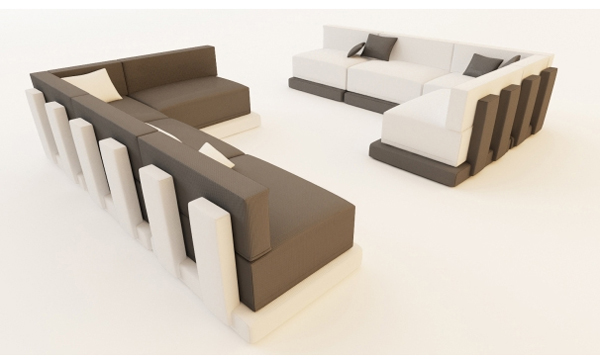
I need one as well. Will we get a discount for 2? These look pretty good. Even better with our velvets on 😉 A nice bit of kid mohair perhaps.
Modern brown and white faux leather corner sofa

KOTHEA, supplying beautiful, inspiring fabrics and throws to top Designers and Architects since 1999


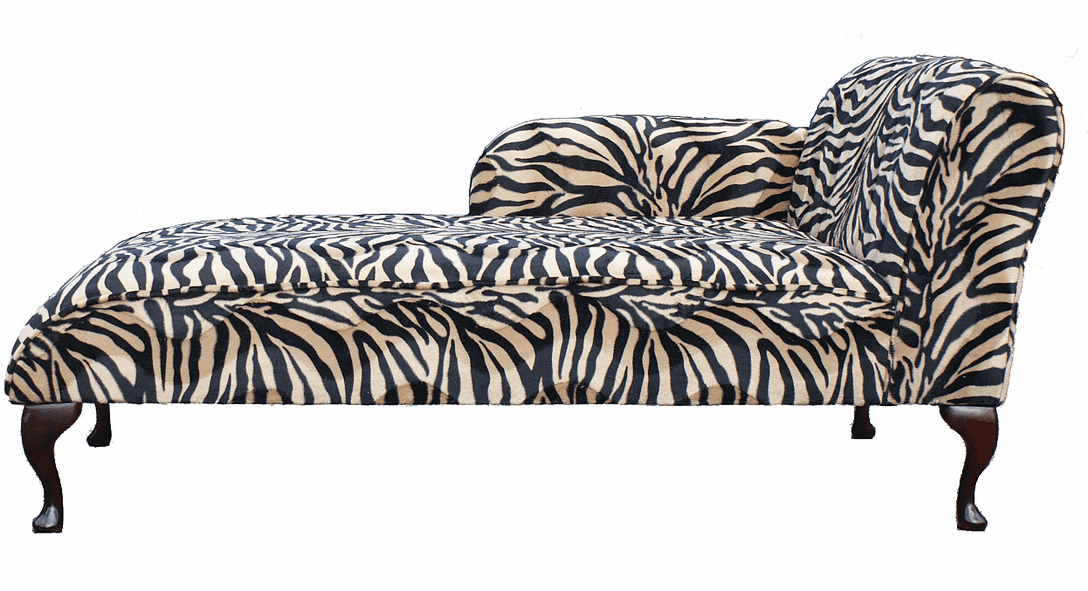
I need one as well. Will we get a discount for 2? These look pretty good. Even better with our velvets on 😉 A nice bit of kid mohair perhaps.

9 Ways for interior designers to create a bad impression – digitally of course!
When you first present to your newest prospect I’m pretty sure that you will be wearing your best ‘business’ clothes. When you first speak to a new client I’m sure you will make a real effort to do your best. When you send out a brochure or some other paper based literature I’m sure you will have it looking good. Hopefully too you take first emails seriously. And yes I’m sure your website looks great as well.
So all is hunky dory right? you can stop reading now and move on 🙂
Well firstly, before I get into the meat of the subject matter that drew you here, I suggest that one exercise you can do on a Friday afternoon is to write down EVERY single TYPE of point of contact that you make with clients. I’ve gone through a few of them in the opening to this post. No rocket science there. However what I suggest you do is really think if they all present a coherent view, when taken together, of you and your business. Do they look similar enough and do they say similar things and present similar images?
Click To Read More Interior Design ArticlesJust like that fine evening wear you have to impress on really special occasions and turn heads as you walk in the room all these points of contact between your business and your potential client are the same thing FOR YOUR BUSINESS (business? you know that thing that pays for the evening wear).
Well I’m going to talk a little about how to create a BAD digital first impression focussing on your website. So You need to look at the first page that people most often go to. In techie terms these are ‘landing pages’; they might include your home page or any special page that Google Adwords points to on your site or any page of yours that ranks particularly highly and get a lot of ‘hits’.
So to create a BAD first impression here’s what your landing pages need to do:
Am I perfect? No! Do I make these mistakes? Yes of course. It does provide some food for thought though.


Colour (color) really does matter. As an interior designer you don’t need me to tell you that. I think sometimes though we know what good colours are and what good colour combinations are and we know what feels right to us and to our clients in the spaces we inhabit.
However…
Many of us are not graphic designers and perhaps our own branding may have suffered because of colour choices we would make in our day job.
Apparently if you look more closely at the infographic on the right then you will see that their research shows that more than 90% of the world’s top 100 brands use either red, blue or grey as the primary branding colour and more than 90% of those same companies use at most 2 colours. So there’s very much a ‘keep it simple’ line coming out for brand colours. No big surprise there I suppose.
41% only use text – so that will be the brand name and/or ‘strap line’ ie there will probably be no logo as such.
Colours considered suitable for companies in ‘the home’ are green and yellow. This doesn’t necessarily apply to the colour YOU should have for your branding as an interior designer.
Indeed their research shows that ORANGE & BROWN are questionable colours for companies in the interiors space. With our Pantone 464 I suppose we fall foul of that.
Then again it is interesting to read that people associate ‘vibrant and fun’ with Orange. It is also interesting to read that the colour is the first thing that potential clients perceive about your brand.
Yet the safest choice appears to be shades of grey. If we all had grey houses and grey business and grey clothes I guess the world would necessarily be a greyer place. And I’m not sure it would be a better place for that.
Summary: Conform or stand out. It’s up to you. You can probably make most colours work as a brand but maybe a myriad of colours won’t work. Is this all stating the obvious?

The content Marketing Institute created that nice little image up there that shows what a content mix might be.
This image has been bandied about on various websites as THE correct mix. It isn’t THE correct mix but it’s a good starter to make you think. It might make you think you are entertaining your potential clients too much or it might make you think you are being a bit boring talking about kitchen worksurfaces a little too much.

For a start it’s saying that you should blog 6 times a week or at least create content 6 times a week. For small businesses that just ain’t gonna happen in the real world.
However it certainly DOES give you ideas about what to write next.
Provide relevant information: Perhaps contribute to a thread somewhere telling people about some of the great things you learnt with a particular product on your last project.
Teach: Show you really know what you are talking about. Share some knowledge in an authoritative way on how you do your job.
Start a conversation: Perhaps on a LinkedIn group or your Facebook business page.
Inspire: others to do better. This could be on a forum or your could write something.
Entertain: Never hurts to make someone laugh.

Who is the best interior designer in the world? blimey that’s a question and a half.
I’m writing this post in wordpress and I use this thing called Zemanta which suggests images and articles to do with the subject, with suggestions changing as I compose the article. So the first designer that appears will get put in the picture on the right and that will be the person you are looking at now!
I’ll probably not know the person that is suggested (we’ll see it still hasn’t appeared yet!)
Ooops there she is: Tanya Gyani.Congratulations Tanya.
Now of course there probably really is no ‘best interior designer in the world’ that we can all agree on. But the point of my post was to go one of two ways. I was either going to come from the angle of saying that YOU should be the best interior designer in terms of how you market yourself to your target niches OR that whoever comes up and gets put in my picture is the best interior designer in the sense that they are the best at getting their image shown against a generic search for “the best interior designer in the world”.

Maybe Tanya will now go on to global fame? Who knows? If she does I certainly hope she will start specifying some of our fabrics on her projects as she hasn’t done so yet! (as far as I know).
No; really YOU should be positioning yourself as the best interior designer at what you do. But rather than saying you are “the best at XYZ” it is probably more appealing and more humble for you to phrase it as “I am the only Interior Designer In XXX who does YYY”. Use that sort of angle A LOT in your client communications (written or verbal) and you give your potential clients A REASON TO CHOOSE YOU and a REASON FOR YOU TO JUSTIFY YOUR PRICING. Make sure it’s true of course. For uniqueness is priceless (well almost!!)
Remember of course that it should not all be about price. Your client wants a great job most of all. Cost might be a factor but so also is the risk of who the client chooses. Find a way of exuding confidence and competence to lower that perceived risk.
Good luck you and good luck Tanya (there she even gets a link to her website).
Related articles

Should an interior designer really use Houzz.com?
“Oh no not another online directory!” you cry.
“Surely a waste of space!” you bemoan.
“Wrong!” I say with gusto (whatever that is).
As an interior designer you’ve probably been attracted to houzz.com to look at the many high quality interiors images there. And there are literally tens of thousands of high quality images. We’ll come back to those in a minute but first we’ll look at some other benefits for you being in that online space.
Houzz.com *IS* a popular web destination. It is used by your competitors and also possibly by future residential clients of yours. It’s always good to hang out with clients right? You keep telling me networking is important so I guess you are with me so far?
Click To Read More Interior Design ArticlesThere are lots of discussions initiated by potential residential clients. If you buy into how social media works then you will already know that.
Of course if you haven’t bought into social media then you’ll think it’s a load of nonsense and you probably should stop reading this now as I’m surely wasting your time!
You can create “idea books” on Houzz. So you can pull together some of your images and perhaps somebody else’s images. You can then use these as part of a presentation to your client, for example. Or you could get your client to pull together an idea book and review that after they’ve finished. The danger there of course is that the client has control of the ‘digital capital’ and may tout around his/her likes and dislikes to your competitors. One issue with doing this on Houzz is that sometimes images are incorrectly tagged and so sometimes you are presented with the wrong images and/or you can’t find the right ones. Another potential issue with Houzz, which I have not verified, is that some images on Houzz become copyrighted by Houzz (I’m not quite sure how they manage that legally but that’s another issue, just be aware).
Any idea books you create stay on houzz and may be seen and liked by other potential customers or copied by competitors or taken to competitors by less discerning clients.
If you put together a pretty coherent theme then that could be seen as giving away your creative work to other people or it could be seen as you being a confident and competent designer worthy of considering for a client’s next project. So it could get you the chance of winning some business.
There are ways to embed “idea books” back onto your website/blog. This is good in that someone else is managing the hosting and techy stuff behind the display of your images and ideas. HOWEVER, and this is importnat, such embedded bits of digital stuff will encourage people to click back to houzz. So you will inadvertently be encouraging a potential customer (or existing customer) back to houzz and potentially out of the eager creative grasp of your web site or blog.
So I’d think carefully about that.
You can of course use houzz as yet another online directory. It’s probably better than most because of the aesthetics and wealth of quality images.
Why not, go for it! See how it works out? It’s free after all.
On sites that you think MAY turn out to be useful I would always recommend using a special link to your web site on that site directory listing/profile of you. That way you will be able to track the number of hits your site receives from houzz. eg you will have index.htm so create an identical copy of that called index-houzz.htm or index1.htm something like that. I hope that makes sense without gettign too technical. Don’t bother doing this if you are sceptical of houzz.
What i like about houzz is that it draws the user into it. It makes the user (your potential customer) stay there and play around. This is an important thing to bear in mind as most potential cients that go to your site will say there between 10 and 60 seconds (if you are lucky). So anywhere that encourages people to stay is POTENTIALLY a good place for YOU to establish a profile.
If you are a designer who needs a bit of inspiration from time to time then you can get that on houzz. But again you’ll probably just be going there for product inspiration, right? As you would never want to (ahem) match/copy/change-a-bit someone else’s interior design ideas! Would you?
Houzz has the idea of region or metro area. That’s nothing amazing but it does help potential clients find a local designer.
I think the main draw is the huge volume of images with relatively straightforward ways of getting to that information and, importantly, an EASY way to then copy or “cut and paste” those ideas into an idea book. That’s what houzz fundamentally is built upon CONTENT and ORGANIZATION…photo-content, how they are indexed and displayed and how easily you can copy and create custom content.
Summary: It’s good! Wish I’d thought of it.

KOTHEA Fabric Picks For A Chilly Winter’s Day
With Verity du Sautoy of KOTHEA.
We love the seasons. All have their beauties and all have touched our senses in memorable ways over the years. Winter is no exception: lower, more balanced light; quietness and chaos with both the shopping and the weather; festive celebrations; the cuddle of a loved one; the hope and expectation of early spring flowers grasping for rare and tiny glimmers of light; and, perhaps, the welcomed warmth of a beautiful fabric.
Some of my best memories are centred on family: a warm fire; a little baby; or a bouncing toddler. Then an old children’s classic on the iPlayer watched on my Mac as it balances precariously on an elegant coffee table. I stroke my children’s hair with one hand and rest my other hand on my sofa. A generous cushion is warm, encapsulating and a bit of fun for the little ones to hide under. The curtains are not yet fully drawn but they smooth the boundary to the cold outside and give us tantalising glimpses of the world beyond – should we venture too close to the sheers that offer the final, soft protection from the elements.
I work for a fabric company. I love fabric. I can’t pretend that it (fabric) is a be-all and end-all to life and that somehow it will make your life complete. It can’t. But what it clearly can do is complete the sensory experiences in the parts of life that, if you choose, you have control over…the parts of your home. Memories are not just photo-like snapshots in your brain; they are stored, multi-sensory splashes of emotion.
Here are my Winter picks. They are actual ‘picks’ that I’ve recently purchased or are about to purchase.
Take my sofa as an example. My sofa isn’t Continue reading “A Chat With Verity du Sautoy – Her Thoughts On Winter Fabrics”