Interior Designers: Why does no-one visit my web site?

Interior Designers can spend hundreds or thousands of pounds/dollars on websites. That CAN be a good investment or it can be a total waste of money.

Not just interior designers, but people from many industries bemoan the fact that no-one is visiting their web site. Then the next (incorrect) step in thinking goes that “well maybe I need to pay someone to get links to my site”… or something along those lines. And so it goes on, more money is spent on technology, on social media, on the web, on the net, on web 2.0 – whatever you want to call it. I’m sure you recognise the picture, perhaps from other designers you know that have these awesome looking websites…with no visitors!

This all-too-typical situation raises a whole raft of questions, points and observations. I’ll try to cover a few of them here.

1. Why on earth should I visit your web site?

I think you, the interior designer, really have to answer this question. Yes I’m sure your site looks great. Yes I’m sure it highlights your services and showcases your past projects (hopefully!). But let’s say I’m a potential customer, really, why Continue reading “Interior Designers: Why does no-one visit my web site?”

An interview with KOTHEA’s founder

Notting Hill Carnival 2007 (London, UK) (Photo credit: Wikipedia)

London based Lisa Parsons supplies fabrics to the hippest and most exclusive UK designers. The founder of KOTHEA, her Spring2011 collection-in-progress is about to take Velvet to a new level of opulence.

With no time to think I would paint my walls withKelly Hoppen’s “Perfect Taupe”. Her colours are fantastic and, in this case, it does what it says on the tin.

My favourite piece of furniture is … an old chair I picked up in a local junk shop and I had it recovered in one of my fabrics; LeapFrog.

The car’s almost full in that small space I would pack … The Kite Runner by Khaled Hosseini, I’ve just started it and a spot of holiday reading beckons.

Guests to my house are intrigued by … this bizarre surveying tool I have in the corner of my lounge. It’s a measuring stick used with a theodolite and it adds a bit of height and interest to a corner of my room. It also detracts from a piece of my husband’s artwork which, although good, I have to compromise on putting on show from time-to-time.

I am … passionate about my fabrics and design; I am always inspired by many of today’s amazing yacht interiors, Terence Disdale is fantastic.  I would love to be in a position to commission him.

The hardest thing about work is … keeping my beautiful fabrics at home clean whilst having three children and their 30 sticky fingers. Gulp.

In my spare time … I just said I have had a third child; what spare time! I do love yoga though, with headstands being my forte. I have also designed and made many pieces of jewellery. Chris Farrow made this one up to my design, it has 3 rotating rings with a semi-precious stone on which rotate around a larger holding ring also with a set stone.

The trendiest colour is … hmm, trendy. Difficult one, KOTHEA operates at the top end of the market and I would have to say that the desirable colours there have varied little over the last ten to 15 years. Lower down the market it is different.

My favourite designers are … well I’ve mentioned a few already. I would certainly look at Gotham (Notting Hill) for furniture. John Hutton did amazing chairs and I was privileged enough to sell a few when I worked at Donghia in the 90s. Nick & Christian the famous Candy brothers have done some amazing things just look at One Hyde Park.

The best technology is … I suppose I should say Apple but I love my Blackberry as it helps me stay in touch with everyone and everything.

The most iconic British designer is … without a doubt, Terence Conran. His massive influence has probably been understated.

A plug for your company?…We mostly deal with the very top interior designers; not all of them but many of them. That’s the market we are in and intend to stay in. We know it pretty well and we like to think our fabrics meet their needs. A case-in-point is our new velvet collection. Opulent Cashmere and Italian Silk velvet.

Most interesting use of your products? … Some of the yachts they are specified on are pretty interesting! We’ve supplied some pretty interesting pop stars and celebrities (if you are into that sort of thing). One interesting client came through a Mayfair yacht broker and temporarily wanted his ‘fishing boat’ fitted out wall-to-wall with faux leather. All I can say is that it must have been a pretty large fishing boat and certainly not what I had in mind when I think about fishing boats!

Upholstery Linen – Sourcing Luxury Upholstery Linen in the UK

Upholstery Linen
Upholstery Linen

Upholstery Linen is notoriously difficult for interior designers to source. Sourcing linens for curtains is easy enough but often linens are not woven with sufficient strength to score Martindale results that are high enough to warrant using the fabric for upholstery.

Some suppliers can be a little evasive and will quote the weight of the linen as a measure of the linen’s quality. The implication is that the higher the weight the better suited the fabric will be for upholstery. There is some truth in that implication but you cannot say for certain that high-weight linen is inherently suitable for upholstery. Get the Martindale!

Most KOTHEA luxury upholstery linens have inherent Martindale rub tests of around 20,000 rubs with one range further strengthened to 85,000 rubs for contract usage – 20,000 Martindale being eminently suitable for domestic upholstery.

Furthermore, when buying upholstery- (or curtain-) linen you need to know whether or not it will shrink when washed. Linen ALWAYS shrinks. So what you have to find out is whether or not it has been pre-shrunk before you buy it. A common way of pre-shrinking linen is through the sanforisation process.

Click To Read More Interior Design Articles

Here are the details of our new 2011 upholstery linens that are named Recline, Relax and Restful. We have many others, these are just the new ones:

Name: Recline

Usage: Luxury Contract Upholstery

Colourways: 24

Width:   135cm

Comp:  54% Li 35% Co 11% Pa

Weight: >350g/m2

Notes:   Martindale >85,000

Request Samples

Name: Relax

Usage: Luxury Domestic Upholstery

Colourways: 24

Width:  135cm

Comp: 100% Li

Weight: >265 g/m2

Notes:   Martindale >15,000

Request Samples

Name: Restful

Usage: Heavyweight Luxury Domestic Upholstery

Colourways: 4

Width:  135cm

Comp: 100% Li

Weight: >470 g/m2

Notes:   Martindale >45,000

Request Samples


Fabric Abbreviations and Textile Label Codes: A Complete Reference for Interior Designers

Fabric Abbreviations and Textile Label Codes: A Complete Reference for Interior Designers

Two separate systems: Fabric labels carry both fibre composition abbreviations (WO for wool, CO for cotton, PES for polyester) and cleaning code abbreviations (W, S, WS, X). They are different systems with different purposes.
Most searched: WS, WV, WP, PA, CV, EA — these are fibre composition codes, not cleaning codes. WS means cashmere goat; it is not the cleaning code for water-soluble cleaning.
Cleaning codes: W means water-based cleaning. S means solvent or dry cleaning only. WS means either method. X means vacuum or brush only — no liquid cleaning.
European standard: ISO 2076 defines the standard fibre abbreviations used across the EU. Some Italian and European variants differ from the ISO codes.

Fabric labels on upholstery textiles, curtain fabrics, and soft furnishings carry two distinct types of abbreviated code: fibre composition codes declaring what the fabric is made from, and cleaning codes declaring how it should be maintained. Understanding the difference between the two systems, and knowing what each code means, is a practical daily requirement for any interior designer or specifier. This reference covers both systems in full.


Fibre Composition Abbreviations

Fibre composition abbreviations on fabric labels follow ISO 2076, the international standard for textile fibre names. The codes below are the standard abbreviations used across the UK and EU. All EU fabrics must carry a label declaring fibre content by percentage using these codes.

Natural Protein Fibres

WO — Wool. Fleece of the domestic sheep.

WV — Virgin wool. Wool that has not previously been processed into a textile product. Distinct from recycled or reclaimed wool. Also written as New Wool on British labels.

WP — Alpaca wool. Fleece of the alpaca. In some Italian labelling WP also indicates baby alpaca specifically.

WL — Llama wool.

WS — Cashmere. Fibre from the undercoat of the cashmere goat, known in German as Kaschmir and in French as Cachemire. WS appears on cashmere fabric and cashmere throw labels as the fibre composition code. It is not a cleaning code.

WM — Mohair. Fleece of the Angora goat. Used in mohair velvet upholstery fabric and mohair knit fabrics.

WK — Camel hair.

WA — Angora wool. Fibre from the Angora rabbit. Distinct from WM (mohair, which is from the Angora goat).

SE — Silk. Natural protein fibre produced by the silkworm. In German the word for silk is Seide, hence SE.

Natural Cellulosic Fibres

CO — Cotton. The most widely used upholstery and curtain fibre globally.

LI — Linen (flax). Bast fibre from the flax plant. Also known by its German name Leinen or French lin.

HA — Hemp. Bast fibre from the cannabis plant. In German Hanf.

JU — Jute. Bast fibre, typically used in hessian and backing fabrics.

SI — Sisal. Leaf fibre from the agave plant.

CR — Coir. Coconut fibre used in matting and some backing applications.

Man-Made Fibres from Natural Sources

CV — Viscose (also known as rayon). Regenerated cellulosic fibre made from wood pulp. Widely used in fabric linings, velvet piles, and blended upholstery fabrics. Also written as VI on some Italian labels.

CMD — Modal (also known as polynosic). A modified form of viscose with higher wet strength.

CLY — Lyocell. Regenerated cellulosic fibre produced in a closed-loop solvent process. Sold under the brand name Tencel by Lenzing AG.

CA — Acetate. Cellulose acetate, a semi-synthetic fibre with a silky handle. Not suitable for FR treatment at significant proportions.

CTA — Triacetate. Similar care and treatment limitations to CA.

CUP — Cuprammonium (cupro). Used in some luxury linings and smooth-handle fabrics.

Synthetic Fibres

PES — Polyester. The most widely used synthetic fibre globally. Trevira CS is a permanently flame-retardant variant of polyester.

PA — Polyamide (nylon). In some European labelling also appears as NY.

PAN — Acrylic (polyacrylonitrile). Not suitable for FR treatment. Solution-dyed acrylic such as Sunbrella is the standard for outdoor and marine upholstery. In Italian labelling sometimes abbreviated as PM.

PP — Polypropylene. Not suitable for FR treatment.

PUR — Polyurethane. Used in stretch fabrics and as a bonding layer in coated or laminated textiles.

EL — Elastane (also known as spandex or Lycra). Also written as EA on some Italian labels.

MT or ME — Metallic fibre.

AF — Other fibres not otherwise classified.

Common Italian and European Label Variants

VI — Viscose (equivalent to CV in ISO standard).

EA — Elastane (equivalent to EL in ISO standard).

PM — Acrylic or polyester (context-dependent in Italian labelling).

PC — Acrylic (polyacrylonitrile, equivalent to PAN).

PBT — Polybutylene terephthalate, a form of polyester used in some technical fabrics.

WP — Baby alpaca in some Italian labelling.


Cleaning Code Abbreviations

Cleaning codes appear on upholstery fabric data sheets and on care labels attached to finished upholstered pieces. They are a separate system from the fibre composition abbreviations.

W — Water-based cleaning. The fabric can be cleaned using water-based cleaning agents and foam upholstery cleaners. This code does not mean the fabric is waterproof — it means water-based products can be applied to the surface without damage.

S — Solvent-based cleaning only. The fabric should be cleaned using dry-cleaning solvents only. Water applied to an S-coded fabric will typically cause watermarks, pile distortion, or shrinkage. Most velvet fabrics — including mohair velvet, cotton velvet, and silk velvet — carry an S code. This is the single most important cleaning code for interior designers to communicate to clients and housekeeping teams.

WS — Either water-based or solvent-based cleaning may be used. Note that WS as a cleaning code is entirely distinct from WS as a fibre composition code (cashmere). The context — care label or fibre content label — determines which meaning applies.

X — No liquid cleaning. The fabric should only be maintained by vacuuming or brushing. No water-based or solvent-based liquid cleaners should be applied.

P — Professional dry cleaning only (used on garment care labels following GINETEX international care symbols).

F — Professional dry cleaning with petroleum-based solvent (GINETEX care symbols).


Understanding WS, WV, and WP: The Most Commonly Confused Abbreviations

Three abbreviations cause consistent confusion because they look like cleaning codes but are fibre composition codes.

WS is cashmere. WV is virgin wool. WP is alpaca or baby alpaca. All three are fibre composition abbreviations defined by ISO 2076. They appear on fabric content labels alongside the percentage of each fibre present — for example, 90% WS 10% SE means 90% cashmere and 10% silk. They have no connection to cleaning instructions.

When a fabric data sheet or care label shows WS followed by a percentage, it is always a fibre content declaration. When WS appears alone on a care instructions line or inside a cleaning care symbol, it is always a cleaning code.


Quick Reference List

  • AB — Abaca
  • AF — Other fibres
  • CA — Acetate
  • CLY — Lyocell / Tencel
  • CMD — Modal
  • CO — Cotton
  • CR — Coir
  • CTA — Triacetate
  • CUP — Cuprammonium / Cupro
  • CV — Viscose / Rayon
  • EA — Elastane (Italian variant of EL)
  • EL — Elastane / Spandex / Lycra
  • HA — Hemp
  • JU — Jute
  • LI — Linen / Flax
  • ME / MT — Metallic fibre
  • PA — Polyamide / Nylon
  • PAN — Acrylic
  • PBT — Polybutylene terephthalate
  • PC — Acrylic (Italian variant)
  • PES — Polyester
  • PM — Acrylic or polyester (Italian variant)
  • PP — Polypropylene
  • PUR — Polyurethane
  • SE — Silk
  • SI — Sisal
  • VI — Viscose (Italian variant of CV)
  • WA — Angora wool
  • WK — Camel hair
  • WL — Llama wool
  • WM — Mohair
  • WO — Wool
  • WP — Alpaca / Baby alpaca
  • WS — Cashmere
  • WV — Virgin wool

Cleaning codes:

  • W — Water-based cleaning safe
  • S — Solvent / dry clean only
  • WS — Water or solvent cleaning safe
  • X — Vacuum or brush only. No liquid cleaning

For fabric care symbols and international care label icons, see our fabric care symbols guide. For cleaning codes by fabric type including mohair velvet and faux leather, see our fabric hand and tactile properties guide. For mohair velvet and upholstery fabric ranges, visit the mohair velvet upholstery page. .

Request Samples

Order cutting samples of any fabric from our current collections. Trade accounts only.

Order Cuttings

New images on the KOTHEA web site.

Perhaps not the most exciting news you will read today I know! We have been aware for a few months that our web site images needed to improve. We re-used the same images again and again. So we have finally acquired a new image for just about every page, all reflecting the product we offer in the relevent area! Well, at least you can sleep soundly tonight knowing that we are happy. I joke of course.

Coming from the designer/producer/supplier of fabrics angle makes it a little tricky for us. We do not feel it is our job to stage our fabrics on a photo set in a room of our liking. We are not the interior designers, that’s your job! We may see one of our fabrics in a certain way – for example I always associate our faux leathers with bar stools (misspent youth). However you may well see many other angles: wall covering, cushions and so on. So we try not to second-guess you. the interior designer. So, our challenge is to show some of the fine detail of our products without you being able to either see it in 3D yourself or feel it. Tricky. Have a look.

Anyway, we hope you enjoy the photos (along with the parts of the new collections on flickr) and any comments will be greatly appreciated.

KOTHEA 2010 Fabric Collections

Finally! Our summer collections have been decided and we will begin to introduce the new designs and colourways throughout the remainder of this year. We have been inundated with new work in the first part of this year causing our blog posts to be curtailed and our ‘spring’ collection to nearly be an autumn/fall collection. Not that we really do seasonal collections in any case.

I will return later in another post to KOTHEA’s awesome sales figures for the financial year just finished. Most surprising, especially considering we are in the midst of a recession. We had our best ever year and by quite a large margin.

We expect some coverage of the new collections in World of Interiors and Elle decoration but, again, more on that at another time.

Where can you see our collections? Well, we are as elusive as ever but we are starting to digitize some images to our flickr feed (click the images on the right or here). The flickr update is ongoing, there is information on flickr now but some of the images are not final and some images do not have full associated descriptions / product details but we are woking on that this week. Our usual clients will receive the new collections in due course starting in late summer; if you need them more urgently for pressing projects of course we will be happy to oblige. Please get in contact in the usual way.

Not all are in production yet but most sampling is available now.

As a very broad summary we have:

1. New colours of several existing ranges including faux leather;

2. More velvets including patterned and crush;

3. Striped, double-width linens;

4. Upholstery weight linen; and

5. A few more interesting one-off designs in limited colourways like the one heading up this blog post.

What is UK FR treatment BS7176 BS5852 Crib Test?

For a complete guide to specifying fabric for hotel and hospitality projects, including BS 7176 fire certification, cleaning regime compatibility, and Martindale thresholds by room type, see: How to Specify Fabric for Hotel and Hospitality Projects.

For a comprehensive guide to BS 5852 Crib 5, including what the test is, the three-stage procedure, the difference between inherent and topical certification, and how to specify correctly, see: BS 5852 Crib 5: A Complete Guide for Interior Designers and Specifiers.


Summary: for contract upholstery in the UK, the full test is a water-soak plus Crib 5 plus cigarette test plus match test. Read on for the detail on how to get the treatment done correctly.

For contract upholstery fabric in the UK your fabric normally needs to be treated to pass BS 5852 Source 5 (Crib 5). When getting a fabric treated, ask for it to be treated to that standard. As a designer that is all you should normally have to do.

Treatment must be undertaken at a UKAS-accredited company. There are various ways of treating fabrics to meet the standard. You do not need to know them all; that is the job of the treatment house. Tell them what standard the fabric needs to achieve, that you will be getting it tested independently afterwards (that encourages them to do it properly), and that the fabric will be subject to a water-soak test.

The reason for specifying the water-soak is that some older treatment methods are permissible within the standard but can fail the water-soak stage. These treatments can contain phosphorous-based chemicals that wash out. If a fabric is not inherently fire retardant, part of the test involves soaking it in water, which can remove the treatment and cause the test to fail.

Some treatment houses do not have the machinery required for the more advanced treatment methods and simply immerse fabric in a bath of fire-retardant chemicals. Specifying that you will be testing afterwards, including the water-soak, motivates the treatment house to use the correct process.

As part of the treatment process, some companies will carry out an indicative test and issue a certificate of treatment. This means the fabric should pass the Crib 5 test. However the crib test itself has not been carried out at this stage. Check with your client and fire officer whether an indicative certificate is acceptable, or whether they require the full independent Crib 5 test to be completed, which takes longer and costs more.

Fire regulation must be taken seriously. The repercussions of non-compliance are significant.

As a minimum, when commissioning FR treatment:

  • Use a UKAS-accredited treatment company.
  • Specify: treat this fabric to pass BS 5852 Source 5 (Crib 5).
  • Specify: it will be water-soaked and tested independently afterwards.
  • Ask for an indicative test at the end of treatment and a certificate of treatment.

BS 7176 and Hazard Categories

Most UK fabric companies and designers work to Crib 5. There is a higher level of testing and certification called BS 7176, which includes the Crib 5 test, the cigarette and match tests, and the water-soak, and additionally requires the test to document the specific end-use environment and the exact foam to be used in the installation. This means the test mimics your specific project’s conditions as closely as possible.

When specifying a BS 7176 test you need to state how the fabric will be used: in a hotel, a restaurant, a hospital, a prison, an offshore installation, and so on. These end-use environments determine the hazard category of the test.

The treatment applied to achieve BS 7176 Medium Hazard is the same as for Crib 5. The difference lies in the documentation and the scope of the test. Specifying BS 7176 Medium Hazard is advisable for complex or sensitive contract projects, and for furniture manufacturers who wish to label their products as suitable for specific commercial environments.

For a full explanation of BS 7176 hazard categories and when to use them, see our complete guide to BS 5852 Crib 5.

Request Samples

Order cutting samples of any fabric from our current collections. Trade accounts only.

Order Cuttings

Faux Leather Skin – Heavy Contract Upholstery Walling

LONDON, England. 07-DECEMBER-2009 11.30 AM: KOTHEA today announced it has expanded its extensive contract faux skin collections by the addition of KOFAUXLEATHER. KOFAUXLEATHER is a high durability, faux leather: a superb contract fabric with a very high Martindale result. It simply and effortlessly delivers longstanding elegance in all the right bars, hotels and marine environments both as upholstery and as a wall or door covering. It looks great.

KOFAUXLEATHER

Reference: 04-003-378

Colour Shown: Marle

Other colourways: 18

Width: 140cm

Repeat: none

Composition: 100% Cotton basecloth, 94% vinyl 6% polyester coat.

Martindale: 100,000++

Primary Usage: Heavy contract upholstery and walling.

Type of fabric: Faux Leather / Faux Skin

About KOTHEA.

KOTHEA are a Continue reading “Faux Leather Skin – Heavy Contract Upholstery Walling”

7 Marketing Strategies for Interior Designers

Photo Credit: McVitty

Interior Designers need to understand their whole marketing strategy and how each of its 7 constituent tactics work together to grow the business.

This article is a checklist. Go through each of the points I’ve listed and apply it to your sales and marketing in your business. My opinion on what are particularly important marketing communications for interior designers are highlighted in bold and might differ if you target business rather than the public. Let me know your thoughts: The checklist contains links to other resources and there are further articles referred to at the end of this article.

1. Search Marketing – Get your prospect at the time of their decision-making.

2. Online PR – Create Awareness of your brand by getting it mentioned.

  • Industry Portal Representation (eg Thehousedirectory.com)
  • Social Media (blogs, feeds, communities)
  • Media Alerting Services
  • Brand Protection
Click To Read More Interior Design Articles

3. Online Partnerships – Link your brand WITH OTHERS IN YOUR INDUSTRY

4. Offline Communications – You should know these.

  • Advertising
  • Personal selling
  • Sales promotion
  • PR
  • Sponsorship
  • Direct Mail
  • Exhibitions
  • Merchandising
  • Packaging
  • Word-of-mouth (your old clients are your best and cheapest salespeople)

5. Interactive Ads

6. Opt-in Email

  • House list emails (your clients and prospects) – look at mailchimp.com
  • Cold (rented lists) – not normally a good idea
  • Co-branded (share the marketing load wisely and boost your brand image)
  • Ads in 3rd party newsletters

7. Viral Marketing – Electronic variants of traditional ‘word of mouth’

What do you think?

And as a PS I will follow this up with 2 more articles; one about different ways of engaging (financially) with clients; and a second about using facebook for an interior design business. The first comment, below, reflects a theme running through many questions posed to me: website designers (techies) and ad agencies (space sellers) are trying to get you to part with  your hard earned design fees; I would read a book on digital marketing that comes more from the marketing end rather than the technology end eg “Mastering Web 2.0 bu Susan Rice Lincoln”, that’s a good way to start. DON’T SPEND £10k/$15k on a new web site think about your customers and how they behave, your marketing communications need to latch into their behavioural characteristics.

Photo Credit: McVitty (Designer)

For more information on luxury cashmere throws or to request cuttings please visit www.kothea.com.  For black faux leather upholstery fabrics try <here> and for mohair velvet and mohair velvet upholstery fabric please follow the links.  Upholstery Linen is also one of our specialities as are luxury  silk velvet  fabrics.


Upholstery Curtain Cushion Domestic Textured Weave

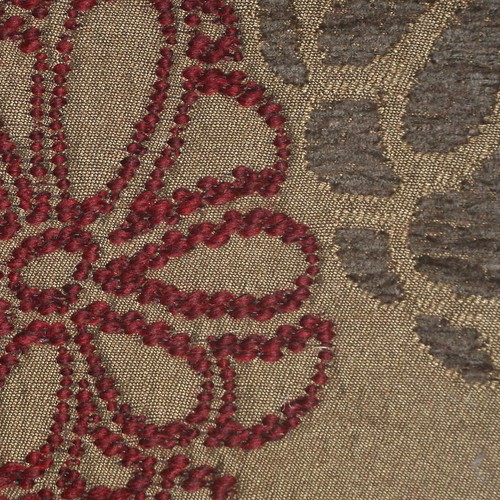
LONDON, England. 02-NOVEMBER-2009 11.30 AM: KOTHEA today announced it has expanded its collections of residential textured weaves to include KOSHAZAM. KOSHAZAM has a striking and complex design which challenges the aesthetic intellect of the most discerning designers.

KOSHAZAM
Reference: 03-037-262
Colour Shown: Red Flower
Other colourways: 4
Width: 138cm
Repeat: 72cm
Composition: Mix
Primary Usage: Domestic curtains and
upholstery.
Type of fabric: Textured weave

About KOTHEA.

KOTHEA are a top-market fabric house based in Continue reading “Upholstery Curtain Cushion Domestic Textured Weave”