Finally! Our summer collections have been decided and we will begin to introduce the new designs and colourways throughout the remainder of this year. We have been inundated with new work in the first part of this year causing our blog posts to be curtailed and our ‘spring’ collection to nearly be an autumn/fall collection. Not that we really do seasonal collections in any case.
I will return later in another post to KOTHEA’s awesome sales figures for the financial year just finished. Most surprising, especially considering we are in the midst of a recession. We had our best ever year and by quite a large margin.
We expect some coverage of the new collections in World of Interiors and Elle decoration but, again, more on that at another time.
Where can you see our collections? Well, we are as elusive as ever but we are starting to digitize some images to our flickr feed (click the images on the right or here). The flickr update is ongoing, there is information on flickr now but some of the images are not final and some images do not have full associated descriptions / product details but we are woking on that this week. Our usual clients will receive the new collections in due course starting in late summer; if you need them more urgently for pressing projects of course we will be happy to oblige. Please get in contact in the usual way.
For a complete guide to specifying fabric for hotel and hospitality projects, including BS 7176 fire certification, cleaning regime compatibility, and Martindale thresholds by room type, see: How to Specify Fabric for Hotel and Hospitality Projects.
Summary: for contract upholstery in the UK, the full test is a water-soak plus Crib 5 plus cigarette test plus match test. Read on for the detail on how to get the treatment done correctly.
For contract upholstery fabric in the UK your fabric normally needs to be treated to pass BS 5852 Source 5 (Crib 5). When getting a fabric treated, ask for it to be treated to that standard. As a designer that is all you should normally have to do.
Treatment must be undertaken at a UKAS-accredited company. There are various ways of treating fabrics to meet the standard. You do not need to know them all; that is the job of the treatment house. Tell them what standard the fabric needs to achieve, that you will be getting it tested independently afterwards (that encourages them to do it properly), and that the fabric will be subject to a water-soak test.
The reason for specifying the water-soak is that some older treatment methods are permissible within the standard but can fail the water-soak stage. These treatments can contain phosphorous-based chemicals that wash out. If a fabric is not inherently fire retardant, part of the test involves soaking it in water, which can remove the treatment and cause the test to fail.
Some treatment houses do not have the machinery required for the more advanced treatment methods and simply immerse fabric in a bath of fire-retardant chemicals. Specifying that you will be testing afterwards, including the water-soak, motivates the treatment house to use the correct process.
As part of the treatment process, some companies will carry out an indicative test and issue a certificate of treatment. This means the fabric should pass the Crib 5 test. However the crib test itself has not been carried out at this stage. Check with your client and fire officer whether an indicative certificate is acceptable, or whether they require the full independent Crib 5 test to be completed, which takes longer and costs more.
Fire regulation must be taken seriously. The repercussions of non-compliance are significant.
As a minimum, when commissioning FR treatment:
Use a UKAS-accredited treatment company.
Specify: treat this fabric to pass BS 5852 Source 5 (Crib 5).
Specify: it will be water-soaked and tested independently afterwards.
Ask for an indicative test at the end of treatment and a certificate of treatment.
BS 7176 and Hazard Categories
Most UK fabric companies and designers work to Crib 5. There is a higher level of testing and certification called BS 7176, which includes the Crib 5 test, the cigarette and match tests, and the water-soak, and additionally requires the test to document the specific end-use environment and the exact foam to be used in the installation. This means the test mimics your specific project’s conditions as closely as possible.
When specifying a BS 7176 test you need to state how the fabric will be used: in a hotel, a restaurant, a hospital, a prison, an offshore installation, and so on. These end-use environments determine the hazard category of the test.
The treatment applied to achieve BS 7176 Medium Hazard is the same as for Crib 5. The difference lies in the documentation and the scope of the test. Specifying BS 7176 Medium Hazard is advisable for complex or sensitive contract projects, and for furniture manufacturers who wish to label their products as suitable for specific commercial environments.
LONDON, England. 07-DECEMBER-2009 11.30 AM: KOTHEA today announced it has expanded its extensive contract faux skin collections by the addition of KOFAUXLEATHER. KOFAUXLEATHER is a high durability, faux leather: a superb contract fabric with a very high Martindale result. It simply and effortlessly delivers longstanding elegance in all the right bars, hotels and marine environments both as upholstery and as a wall or door covering. It looks great.
Interior Designers need to understand their whole marketing strategy and how each of its 7 constituent tactics work together to grow the business.
This article is a checklist. Go through each of the points I’ve listed and apply it to your sales and marketing in your business. My opinion on what are particularly important marketing communications for interior designers are highlighted in bold and might differ if you target business rather than the public. Let me know your thoughts: The checklist contains links to other resources and there are further articles referred to at the end of this article.
1. Search Marketing – Get your prospect at the time of their decision-making.
And as a PS I will follow this up with 2 more articles; one about different ways of engaging (financially) with clients; and a second about using facebook for an interior design business. The first comment, below, reflects a theme running through many questions posed to me: website designers (techies) and ad agencies (space sellers) are trying to get you to part with your hard earned design fees; I would read a book on digital marketing that comes more from the marketing end rather than the technology end eg “Mastering Web 2.0 bu Susan Rice Lincoln”, that’s a good way to start. DON’T SPEND £10k/$15k on a new web site think about your customers and how they behave, your marketing communications need to latch into their behavioural characteristics.
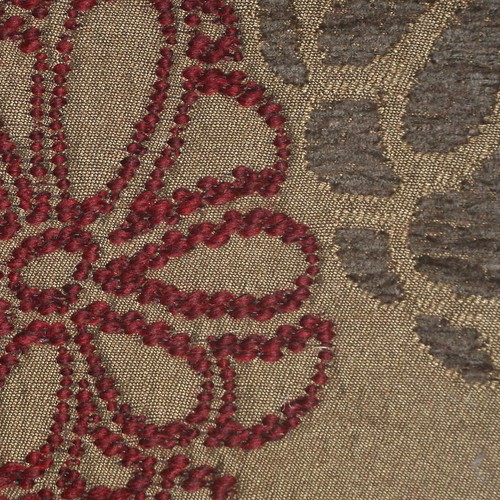
LONDON, England. 02-NOVEMBER-2009 11.30 AM: KOTHEA today announced it has expanded its collections of residential textured weaves to include KOSHAZAM. KOSHAZAM has a striking and complex design which challenges the aesthetic intellect of the most discerning designers.
KOSHAZAM
Reference: 03-037-262
Colour Shown: Red Flower
Other colourways: 4
Width: 138cm
Repeat: 72cm
Composition: Mix
Primary Usage: Domestic curtains and
upholstery.
Type of fabric: Textured weave
LONDON, England. 05-OCTOBER-2009 11.30 AM: KOTHEA today announced it has expanded its panelling collections with the addition of KORAFT. Like KOTHEA, KORAFT is, well, just a little bit different and in the nicest possible way. KORAFT is just one of those products where you desire what you see – the very highest quality, beautifully textured raffia-like wall panelling also suitable for domestic upholstery.
Reference: 01-009-410
Colour Shown: Natural
Other colourways: 1
Width: 138cm
Repeat: none
Composition: 73% Cotton, 27% Viscose
Primary Usage: Panelling and upholstery, contract & domestic.
Following on from my last article I’m continuing the trend of unusually numbered lists. So, today’s list is: “Nine and a half ways for interior designers to make more money.” The list is at the end of the article so you can skip the next few paragraphs if you want but the list is not a summary of what I am writing about so you will miss some pearls of wisdom by so doing!!
Isn’t profit a terrible word for some people? They’re almost ashamed to use it. In some design companies staff are angered about large profits. Well its profits that pay your wages, even if you work in the voluntary sector your funding comes from someone else’s profits and even if you work for government your salary comes from taxes which in turn come from profits. So now we’ve got the socialist utopianism off our chests let’s talk money.
Click To Read More Interior Design Articles
Here it is in simple terms: “You have to sell more and spend less” and you might want to make your profits more certain by “reducing risk”. However you dress it up that, pretty much, is business. Customer service is important but it is just a way of cross-selling more products and increasing customer retention. Fun is nice, but you rarely get paid for having fun.
So moving into a little more detail but still keeping it at quite a high level.
For starters, you know your business better than I do. But I’ll bet it follows the Pareto Rule – that’s the one that very many businesses follow regardless of the industry they are in. It’s not really a ‘rule’ but it essentially says that 80% of your ‘stuff’ or outputs usually comes from 20% of inputs. So 80% of your sales will probably come from 20% of your customers, 80% of your overall costs will probably come from 20% of your cost items and 80% of your business risk from 20% of your activities and so on. Use this ‘rule’ to focus your activities when you try to improve your design business.
So, with that at the front of our minds, we go on for some ‘quick wins’. Focus on the big ones, the easy ones, if you like.
A. Sales: Cherish, nurture and retain your biggest customers, they need great levels of service and must not be taken for granted. BUT event the richest client will run out of houses for you to work on after a while…you have to have an additional strategy in place for bringing on the new large customers of the future. These will be the ones that drive the profitability of your business tomorrow. You should be able to analyse your customers/prospects by their size in terms of profitability to you and their growth potential as a client. Ideally, you need a nice balanced mix o present day ‘cash cows’ and future ‘rising stars’ for you to class your business as healthy. Next make sure you organise your sales resources to squeeze all revenues from and make profit on those mature accounts; allocate proportionately more sales and service on the growth accounts and maybe on those small, futureless accounts you just say thank-you, goodbye and re-direct the time you have freed up. If your mix of customers is not well-balanced then you have highlighted a risk to your business. Make a plan to change and innovate.
B. Costs. Your building and staff are probably your biggest costs. Maybe also transport, utilities and some marketing expenses like exhibitions. Reducing costs is tricky, made more tricky if you are a nice person who doesn’t put the business first. Your building lease has a fixed term so you probably can’t renege on that too easily and save money and even if you could there would be the costs and disruption associated with moving, your business landlord will also know that and will of course try to make rents higher at renewal. That’s your first dilemma.
More tricky still are your staff costs. It’s always best to lead by example and set expectations of high levels of delivery from everyone in your organisation. People need to be more productive whilst being creative. If your business is growing set the expectation of harder work rather than hiring new recruits. New recruits: increase overheads; require management, require training-u; and are a risk of being an unknown quantity. If your business is stable or declining take a realistic look at where you are at today and then you might try outsourcing and sub contracting as a means of reducing headcount and overheads, it could make your business more straightforward to run and more agile in its response to opportunity. Sometimes you have to let people go, yes even the people you like who don’t contribute as much as those you like less. It can be a hard world sometimes but harder for you if your business goes under.
C. Risks. Few people in the design industry systematically review risks. Take a ‘risk register’ of what you think the major risks to your business are. Clients or suppliers going bankrupt? Key sales people leaving? Web site being hacked? Losing your prospect database? Specific fixed price projects? and so on. Most risks have two general elements 1. the likelihood of them happening and 2. the impact of them if they do happen. So an asteroid falling on your office is catastrophic…but unlikely. I would focus firstly on the most likely ones and work out what you might do if that risk materializes. Review your risk register, say on a quarterly basis. ,You will probably not catch-all the risks but you will at least have the right mindset for methodically thinking of risks and you will probably also identify a few of the big ones that you knew existed but didn’t really want to deal with yet.
OK here’s the list, I could go on but I knew you were getting impatient:
1. Outsource: Outsource anything that is not core to your design business: accounting, IT, admin, some marketing but probably not sales.
2. Automate: Automate everything that you don’t outsource from voicemail, to invoice production, to invoice chasing, to order fulfillment, to customer service, to sales, to marketing campaigns.
3. Subcontract: subcontract key design resources where you have to: make a key resource freelance if mutually beneficial. You could try partnering as a means of getting access to certain resources but partnerships, in my experience, confusingly, always seem to end up being a one way road.
4. Negotiate realistically with suppliers. Your biggest and least risky savings will come from your biggest, longterm suppliers rather than by trying to eek out every last cent/penny from new, small suppliers (who will dump you as soon as a better customer comes along). But you will only benefit is there is a win-win. We are fabric suppliers. If you ask us for a discount on your first purchase from us you won’t get one! The best way, in general, for suppliers and purchasers to both win is if you negotiate an annual rebate deal based on certain levels of business. I will then know that, as your supplier, you are bonded in some way to me for 12 months. I know I’m going to get repeat business so what will I do? Probably give you even better service. The deal you negotiated will save you money but make me money overall as well because I get more sales from you than I otherwise would have done. Win-win. This is much better than individual deal-based discounts and many companies in our industry to not discount on a piecemeal basis in any case.
5. Increase productivity. Expect everyone in your organisation to increase their productivity by 50%. Yes really, do that. It would be nice to be disappointed if they only deliver 40% wouldn’t it? Your part of the deal is to give them the resources they need without the stress they do not need.
6. Add-on sales. What extra services can you provide around your core offering? If you just do design, offer a product selection or procurement service as well, or at least get an introduction fee from a partner who you recommend to do the bits you cannot.
7. Great employees. Keep the best, lose the rest. You know it makes sense. It’s a hirer’s market at the moment but never go too far.
8. Continually or quarterly re-visit how you deliver. Re-design how each of your internal processes work (ie how you work on a job) to minimise variable costs or maximise customer service – whichever is best for each process. In general the parts of your activity that the client sees should be structured to provide good customer service, for the bits they do not see, it is not so important: so cut the costs there if possible.
9. Innovate. Try something new and don’t be afraid to fail once in a while. Most top athletes in most competitive sports lose A LOT but they don’t shy away from the opportunity of trying again to win and neither should you. I’ll bet Usain Bolt lost a lot when he was younger.
9.5 Relax; have coffee, a spa day, a late start once in a while.
Upholstery textiles from KOTHEA offer the very best Martindale / rub test values for contract and residential usage. KOTHEA never compromise on elegance in design throughout their extensive range of collections that encompass many textured upholstery textiles and hard wearing textiles such as mohair velvet and faux leather. Much more textile information can be found about our products and company elsewhere here in The Fabric Blog.
Try searching for particular technical characteristics like ‘Martindale’ or ‘ the specific type of product like ‘Mohair’ or ‘upholstery fabric’ or ‘textured upholstery’ .
Alternatively ask a question by commenting on this page and it will be answered.
Upholstry fabrics (sp. upholstery) from KOTHEA offer the very best Martindale / rub test values for contract and residential usage. KOTHEA never compromise on elegance in design throughout their extensive range of collections that encompass many textured upholstery fabrics and hard wearing fabrics such as mohair velvet and faux leather. Much more information can be found about our products and company elsewhere here in The Fabric Blog.
Try searching for particular technical characteristics like ‘Martindale’ or ‘ the specific type of product like ‘Mohair’ or ‘upholstery fabric’ or ‘textured upholstery’ .
Alternatively ask a question by commenting on this page and it will be answered.
Upholstery fabrics from KOTHEA offer the very best Martindale / rub test values for contract and residential usage. KOTHEA never compromise on elegance in design throughout their extensive range of collections that encompass many textured upholstery fabrics and hard wearing fabrics such as mohair velvet and faux leather. Much more information can be found about our products and company elsewhere here in The Fabric Blog.
Try searching for particular technical characteristics like ‘Martindale’ or ‘ the specific type of product like ‘Mohair’ or ‘upholstery fabric’ or ‘textured upholstery’ .
Alternatively ask a question by commenting on this page and it will be answered.

 Finally! Our summer collections have been decided and we will begin to introduce the new designs and colourways throughout the remainder of this year. We have been inundated with new work in the first part of this year causing our blog posts to be curtailed and our ‘spring’ collection to nearly be an autumn/fall collection. Not that we really do seasonal collections in any case.