Faux leather Upholstery

Pinterest Picks
Pinterest Picks (Photo credit: CieraHolzenthal)

Recently we have had some detailed enquiries about how to upholster with the fine upholstery faux leather that we sell. KOTHEA are certainly NOT expert upholsterers and those questions should be aimed at your professional upholsterer.

Having said that here is a video (below) by Christopher Nejman showing some techniques for faux leather upholstery.

For more information about our faux leather products and colours click <here> or use the links on the right.

[youtube=https://www.youtube.com/watch?v=gcQfbojcY0w]

Tatami and Raffia Wallcoverings and Fabrics For Interior Designers

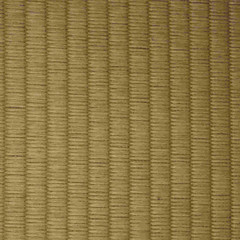
Tatami Wallcovering And Upholstery Fabric TextileRaffia and Tatami are often terms that are used synonymously these days by some interior designers.

Tatami are woven Japanese floor mats. Originally they were made from (rice-) straw but now they are made from a variety of materials with better properties for fire resistance, warmth and general comfort. Typically Tatami mats are made to be twice as long as they are wide and they are usually about 2m long.

Raffia (often Raphia in the USA) refers to fibres made from a tropical tree. Specifically raffia is made from the leaves of a specific palm tree called “Raphia ruffia”, which is usually found in Madagascar and more generally in Africa. A different variety in South America is “Raffia taedigera”.

Raffia that is more suited to top market interior design projects will probably often be made from other materials – one of the particular note would be made from high quality cellulose pulp.

So, often when clients ask for Tatami or Raffia they are really often asking for a straightforward, grass-like, woven fabric similar to that shown in the main image accompanying this article.

Click To Read More Interior Design Articles

Such raffia and tatami fabrics are usually available by the meter and have additional properties making them more superior to traditional variants. For example having high martindale test scores making them suitable for upholstery and coming pre-treated for fire retardancy.

Click <here> to request samples.

Tatami and Raffia by the meter may also be quite flexible allowing it to be fastened around wooden frames and then used as a textured finish for walls and ceiling.

With Wyzenbeek rubs of 40,000 KOTHEA’s 2011 Raffia (Raphia) are also eminently suitable for a wide range of upholstery uses.

Raffias can usually be fire treated to meet a wide range of contract requirements including hotels and marine installations.

This type of raffia weave has been used for thousands of years perhaps most famously as Japanese Tatami mats. They are of course one of today’s modern day design staples for a clean, modern look.

Links:

Designer Fabrics & Luxury Wallcoverings 2012 – Latest Collections of Faux Leather & Raffia

British Institute of Interior Design

Interior Design 101. Back to basics.

Minimally patterned, plain and simple patterns matter when you choose designer fabrics for your interior design scheme. It’s not just the ‘important’ stuff you have to worry about; it’s all the stuff.

Design after design. Pattern after pattern. Squashed into corners. Covered ceilings. Hung on walls. Something here, something there… OK you might have certain pieces that take centre stage in your grand design but you also have to set the stage with the backdrops, the reflected light, the subtle blend of auxiliary textures.

To a certain degree, if you must, you can compromise on the backdrops. It’s great having a silk panelled wall, relatively inexpensive and good to the touch. Not so good when it fades at differing rates in the exposed sun-lit areas of the room.

So when you choose designer fabrics yes you should be wowed by the colours, designs and textures BUT you should also be wowed and interested in the technical properties. Your clients might initially thank you for a great looking job. They won’t thank you if it starts to fall apart. they may well have already paid you at that point (so you’re OK right?) but will you then get recommended to their friends…probably not. It is so, so easy to make this kind of mistake.

So try faux silk rather than silk. It looks and feels pretty much the same but can be excellent in terms of non-fading.

So try faux leather. A wide variety of finishes and qualities are available and many are great for wall covering (!) as well as upholstery. Great to cover chairs or a bar in a restaurant but also in your kitchen as they can relatively easily be cared for and cleaned. If you love leather you might find that your upholsterer might not love that choice as you are working with hides of varying sizes, whereas with faux leather you are working with a fabric available by the metre.

Click for faux leather or faux silk designer fabric samples.

Faux Leather in Blue

Fine Faux Leather is available from KOTHEA in several collections reflecting varying degrees of technical properties such as thickness, flame retardancy and abrasion resistance (Martindale, Wyzenbeek). Our collections are typically used for contract applications in the hospitality and marine industries.

Here are  some of the blue colourways that are available, click an image to view a slideshow

A Chat With Verity du Sautoy – Her Thoughts On Winter Fabrics

Luxury Silk velvet From KOTHEA
Truly beautiful Cashmere Silk Velvet by KOTHEA

KOTHEA Fabric Picks For A Chilly Winter’s Day
With Verity du Sautoy of KOTHEA.

We love the seasons. All have their beauties and all have touched our senses in memorable ways over the years. Winter is no exception: lower, more balanced light; quietness and chaos with both the shopping and the weather; festive celebrations; the cuddle of a loved one; the hope and expectation of early spring flowers grasping for rare and tiny glimmers of light; and, perhaps, the welcomed warmth of a beautiful fabric.

Some of my best memories are centred on family: a warm fire; a little baby; or a bouncing toddler. Then an old children’s classic on the iPlayer watched on my Mac as it balances precariously on an elegant coffee table. I stroke my children’s hair with one hand and rest my other hand on my sofa. A generous cushion is warm, encapsulating and a bit of fun for the little ones to hide under. The curtains are not yet fully drawn but they smooth the boundary to the cold outside and give us tantalising glimpses of the world beyond – should we venture too close to the sheers that offer the final, soft protection from the elements.

Dominika B Tana Lawn

I work for a fabric company. I love fabric. I can’t pretend that it (fabric) is a be-all and end-all to life and that somehow it will make your life complete. It can’t. But what it clearly can do is complete the sensory experiences in the parts of life that, if you choose, you have control over…the parts of your home. Memories are not just photo-like snapshots in your brain; they are stored, multi-sensory splashes of emotion.

Here are my Winter picks. They are actual ‘picks’ that I’ve recently purchased or are about to purchase.

Take my sofa as an example. My sofa isn’t Continue reading “A Chat With Verity du Sautoy – Her Thoughts On Winter Fabrics”

Wyzenbeek – Martindale – Abrasion Testing

If you were given one pound for every time an interior designer asks which upholstery fabric is most durable, you would retire quickly. The answer is more complicated than a single test result can convey, and understanding why is useful when specifying fabric for a client.

What Abrasion Tests Actually Measure

Martindale and Wyzenbeek are abrasion tests. They measure one specific property: how many times a fabric can be rubbed against a standard surface before showing visible wear. They do not measure fibre strength, yarn construction, weave complexity, resistance to soiling, light fastness, or how well the fabric performs when cleaned. All of these variables also affect how long an upholstery fabric lasts in use.

There is a close relationship between fibre strength and yarn strength. Yarns are twisted to add strength, and a tighter twist generally produces a stronger yarn. This is measured in twists per inch or per metre. Tightly twisted yarns tend to be smooth and dense. Weave design adds another layer of complexity. The same fibre in different weave constructions can produce very different abrasion results. A fabric’s rub count is the outcome of fibre, yarn, and weave working together, which is why a single figure cannot tell the whole story.

The Two Tests

Martindale is the standard used in the UK and Europe. Wyzenbeek is the standard used in the United States. The two tests use different motions, different abradants, and different specimen orientations. There is no reliable correlation between them, and a result on one test cannot be used to predict a result on the other.

With Wyzenbeek, tested to ASTM D4157, a piece of cotton duck fabric or wire mesh is rubbed in a straight back-and-forth motion across the fabric until noticeable wear or thread break occurs. Each back-and-forth motion is one double rub.

With Martindale, tested to BS EN ISO 12947, the abradant is worsted wool or wire mesh and the fabric specimen is circular. The rubbing follows a Lissajous figure-of-eight pattern rather than a straight line. Each complete figure of eight is one cycle.

Specification Thresholds

The following figures represent standard guidance for specifying by application. For heavy duty contract use, the recommended minimum is 30,000 Wyzenbeek double rubs or 40,000 Martindale cycles. For general contract use the minimum is 15,000 Wyzenbeek double rubs or 20,000 Martindale cycles. For heavy domestic use the minimum is typically 15,000 Martindale cycles. For general domestic use, 15,000 to 25,000 Martindale cycles covers most applications. For light domestic or occasional use, 10,000 to 15,000 Martindale cycles is generally acceptable.

At results above 100,000, the practical difference in longevity becomes less meaningful for most residential applications. The cleaning and maintenance regime applied to a fabric will have more influence on its service life than the difference between a 100,000 and a 200,000 rub count.

On the Validity of Test Results

Some commentators question the reliability of abrasion test results. In the UK, test houses are independent and operate under British Standards monitoring. No individual fabric company is large enough to influence results, and it is in no supplier’s interest to undermine the authority of the independent bodies that regulate the industry. UK Martindale figures can generally be taken at face value when supplied with a third party test certificate from an accredited laboratory.

For the full technical methodology of the Martindale test, rub count classifications by application, and a detailed Martindale versus Wyzenbeek comparison, see: The Martindale Rub Test: A Complete Guide for Interior Designers and Specifiers.

For a direct side-by-side comparison of the two test methods, see: Martindale vs Wyzenbeek: Rub Test by Abrasion Explained.

Request Samples

Order cutting samples of any fabric from our current collections. Trade accounts only.

Order Cuttings

Upholstery Velvet – Sourcing Luxury Velvet (Mohair) in The UK

Luxury Mohair Velvet For Upholstery

Luxury Upholstery Velvet is notoriously difficult for interior designers to consistently source. Sourcing a generic velvet is easy enough but often velvets vary greatly in quality with many being relatively cheap and scoring relatively well with Martindale results but they just look ‘cheap’. The look and feel of the velvet are, after all, two of several important reasons why you are specifying it in the first place.

A further problem is composition. When, for example, you say you want a Mohair Velvet that is what you want: a velvet made out of Mohair and NOT lots of other things PLUS a bit of Mohair.

Whilst Mohair velvets are generally very good across the market they too can vary significantly in quality. So even when you buy a Mohair Velvet you are not necessarily getting the durable, luxurious, fantastic-looking product that you hoped for.

Further complications come when looking at Velvets made of a mix of yarns. Well, some of the mixed fibre yarns are actually excellent in quality!

So I guess I’m saying that there really is no sure and fast way of knowing what you are buying without actually seeing the fabric AND being assured of its technical characteristics, notably Martindale as we are considering upholstery here.

Most KOTHEA luxury upholstery velvets have inherent Martindale rub tests of in excess of 20,000 rubs with several collections exceeding 100,000 rubs for contract usage – 20,000 Martindale being eminently suitable for domestic upholstery.

In addition to non-velvet, textured upholstery we have many luxury velvets suitable for upholstery including Italian Silk Velvet (high quality, luxury velvet), Cashmere & Silk Velvet (the ultimate velvet), trevira Velvet (inherent fire retardancy), Mohair Velvet (high quality, luxury velvet),

Most of our velvet is available by the metre with no minimum quantities.

Fabric Tips #12: Rolling a velvet

Image via Wikipedia

You’ve just ordered a new velvet and unrolled it to admire your purchase. But how do you re-roll it?

When you roll almost any fabric you should have the face on the inside. With a velvet this is the pile so you have the pile on the inside.

Some, but not all, velvet piles stand straight up others will ‘lay down’. for the former it does not matter which way you then roll the fabric (provided the pile is on the inside). However for typically longer pile which lays down (ie you can brush it flat with your hand in one direction only) then you should roll the fabric down the pile as you return it to its roll.

Hopefully that made sense. Good luck.

Fabric Tips #11: Mohair Velvet – How To Store

Image via Wikipedia – Alpaca Wool can be made into luxurious alpaca velvet…if you can find it

How to store Velvet.

The same instructions apply to all velvets.

Some background first: As an interior designer you buy and handle many fabrics. You may have wondered why some fabrics come in rolls of up to 100m whereas other come in much smaller lengths. Is this because of their value? The likelihood of them being sold quickly enough? Or perhaps longer lengths of some fabrics would be just to heavy for someone in a warehouse to physically carry or indeed too heavy for a courier to carry? Or perhaps it’s something to do with the thickness of the roll?

Well there is some truth no doubt in all of these reasons and others to. But one very important consideration with a velvet and especially with a Mohair velvets is the weight of the fabric and the weight of the fabric ON ITSELF. Because velvets have a pile they are thicker and heavier than other fabrics as they contain more material; similarly some velvets such as many mohair velvets have a dense pile…again more fabric and more weight.

There comes a point when the sheer weight of the roll of fabric becomes too much for the pile of the first part of the wrapped fabric on the roll and the inherent weight of all the fabric can cause damage to the pile. So velvets and especially mohair velvets have smaller lengths on the roll. Sometimes 25m but sometimes also 40m and 50m per roll.

So the length of fabric on a roll will be impacted by the weight of the fabric per linear metre AND the fact that a pile fabric can be more affected by added weight than other fabric.

So, how to store.

1. Store horizontally

2. Store with no other, external weight applied to the fabric.

3. Covered up to avoid exposure to dirt and dust i the air  -especially if stored for long periods

Typically you will find that many of our velvets come to you in special containers where the velvet is on a roll and suspended by special cardboard ends in the boxes. For small volumes of velvet on a single roll there is often no need for these special containers. Where the velvets are supplied in suspended roll containers it is safe to store the velvet in this form. Ideally youwould have a horizontal racking system for rolls of fabric as lengths can easily be cut off as and when you need them but cleary most interior designers do not have this facility.

The safest method of course is to let your supplier hold the stock and order cut lengths from them. It de-risks you damaging the fabric. Unless of course the supplier can specifically reserve entire rolls just for you, you would have the potential problem of dye lot or batch variation of colour with many fabric dyes. There would normally be a charge for an additional service such as this.

Raffia Wallcovering

Tatami Wallcovering And Upholstery Fabric TextileRaffia adds texture as a wallcovering. As a natural product it has many benefits for the interior designer including a degree of thermal insulation and the ability to be adhered directly to wall surfaces or fastened to wall surfaces or ceiling when wrapped around wooden panels.

With Wyzenbeek rubs of 40,000 KOTHEA’s 2011 Raffia (Raphia) are also eminently suitable for a wide range of upholstery uses.

Raffias can usually be fire treated to meet a wide range of contract requirements including hotels and marine installations.

This type of raffia weave has been used for thousands of years perhaps most famously as Japanese Tatami mats. They are of course one of today’s modern day design staples for a clean, modern look.

Links: