Reasons to have tiles in your home

installing floor tiles

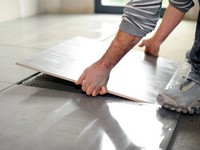
installing floor tilesMore and more people are turning to tiles over other materials such as carpet in their homes, and they have very good reason to do so. Not only are tiles modern and sophisticated, they have a whole heap of advantages and pros, and very few reasons not to have them. To list them all would be endless, so below are just a few reasons that we feel everybody should have tiles in their homes.

Let’s start with one of the most important factors that anyone thinks when they are refurbishing their homes. Your budget. One of the joys of tiles is that there is something that will suit all budgets. If you want a carpet that will last, and stay looking great the whole time, the likelihood is that you will end up spending a fair amount of money. Tiles on the other hand are available in such a huge range of materials, that there is something for everyone, regardless of how much you have to spend, and the appearance of these will not alter over time either. For those with a smaller budget, materials like porcelain and ceramic are perfect, and luxurious materials such as marble, and granite are better for those with more time and a larger budget.

Although the exact amount of work needed is different for different materials, in general, tiles require very little maintenance compared with other floor materials. Bear in mind that specialist stones such as marble require more work than others; however, the majority of tiles require simple daily cleaning with soap and water. If you have tiles in wet areas, such as bathrooms, you will need to look into having them sealed if necessary to ensure that they are fully waterproof. Tiles are great for those people who suffer from allergies. Any pet hair and allergens including dust will not get stuck into tiles in the same way that they do in carpets, which means that they can be swept up, and will not irritate those who suffer with certain allergies, particularly pet ones.

Finally, they just look great. Having tiles in a home instantly makes it feel modern and stylish. Many people are concerned that they will make your home feel cold, but this simply is not the case. Not only are some materials actually warmer than others, the majority of tiles can be installed over a heat mat, which will prevent the tiles from feeling cold underfoot, and will actually help warm your whole home. Tiles are available in such a huge array of colours and styles, that regardless of what you are looking for, you will find something that will fit in perfectly with your style.

Twitter for Interior Designers 2016

Keep Calm Interior Designer

Keep Calm Interior DesignerVery many interior designers, but less so architects, use TWITTER to support their business marketing efforts.
Twitter is very hit-and-miss. Some say,

Don’t bother using it, it wastes your time as it’s ineffective

Others say,

It takes time but I got a couple of project leads that way

I guess it takes just ONE large project to make it worthwhile.

the problem is that the way YOU use twitter is ineffective and  you won’t get ANY leads but you WILL waste a lot of time. Well, that’s what I would say to a lot of designers but it probably won’t apply to you. Here’s why…

Twitter can be used in several ways including:

  1. You just tweet something to your ‘followers’.
    • Let’s say you have 500 followers and each of those followers all follow 1,000 other twitter entities. So your generic tweet will be hidden away amongst those of 1,000 other twitterers. the chance of it being read are not great.
    • On the positive side a generic tweet can be automated from your blog or facebook posts, so this could be a ‘no-effort’ action for you.
    • Result: No effort, no REaction, ineffective.
  2. You genuinely tweet to an engaged community. These people are like-minded online buddies of the best order. Unfortunately they are all interior designers or interior designer wannabees rather than clients.
    • Result: Lots of great interactive dialogue, huge amount of time wasted. Wrong target market. Ineffective but a great way to pass/waste your valuable time.
  3. You focus your twitter-efforts on relevant hashtags. Great, assuming that everyone else uses the same hashtag for the same meaning then you could be on to a winner here. eg #INTERIORDESIGN. This is great because you will reach beyond your followers.
    • Result: Still a waste of time. Most trending hashtags are about Prince Harry or Kim Kardashian or something similar. the 5 people who tweet about your targeted hashtags are also interior designers. Complete waste of time
  4. You engage with specific people through twitter. This might be ‘some random person’ or it might be a potential client who has contacted y ou via twitter.
    • This is fine. You are effectively using twitter as an abbreviated email-proxy. If your potential client wants to communicate this way then that’s great. But it’s just really email.
  5. You automate your blogs to also tweet the same headline to twitter with a link in twitter back to the original post. Kinda like I’ve done here in fact. It’s still mostly a waste of time (but you’r reading it aren’t you?) but it took me zero extra time to put the content onto twitter. It also creates a bit of corporate noise on a well-known platform. Someone MIGHT just look at your company and then out of interest have a nose-around your facebook page, linkedin page and twitter feed. If either are empty then they might wonder about the size and scope of your organisation.
    • Result? Mostly harmless!

Anyway. You get the drift. twitter is mostly a waste of time. I blog in some other fields of business and twitter is a bit more important there but it still doesn’t lead to quantifiable business there either.

And yes I did automate this with a tweet. And a youthful emoticon 🙂


Adding the personal touch to your living room: DIY rug making

Making your home your own is the first thing we think about when we move into a new place or when re-decorating. If you are a creative and crafty person then giving your living room the personal touch with its very own homemade rug is a cool option. You can make rugs out of all sorts of materials. Homecraft Craft Supplies is a great place to start for tools, materials and rug wool.

Pom-Pom Rugs – Making pom-poms was probably one of the first things you made at school that actually looked good. But did you know you can make an entire rug out of pom-poms? To make your own funky design, you’ll need a piece of cardboard cut into two doughnut shapes of the same size, wool and scissors. The size of pom-poms you make depends on how fluffy you’d like your rug.

Place the rings together and begin winding the wool around the rings until they are nearly full of wool. Next, cut the wool around the edges. Pass a length of wool between the two pieces of cardboard, around all the strands of wool, and tie it firmly together. Now, you can remove the cardboard rings completely and you will have your finished pom-pom. You’ll need to repeat this lots of times to make enough for a whole rug. You can make your rug one colour – use a range of similar colours or try multi-colours to really give it an individual look.

Patchwork rugs – Making a patchwork rug will ensure you achieve a unique look in your living space. To make this type of rug select a range of different fabrics and lay them out to the length that you want for your new rug. Now that the fabric has been selected and laid out to your desired size and shape you will need to pin all the pieces together. If you’re a dab hand with a sewing machine use this to stitch along all the joins and make it a complete rug. On the underside you can add a block colour or if you have a slippery floor such as wood or tiles attach a non-slip pad to the underneath of the rug.

Stenciled rugs – First, invest in some reasonably priced plain solid coloured rugs. (Have a look at Wilko.com). You’ll also need some paint (acrylic craft paint is good) and some card. Make a stencil using the card of letters or pictures that you want to put on your rug and then paint away. Let your paint dry and you’ll have a simple but effective rug.

T-shirt/rag rugs – If you are looking to have a big clear out of your wardrobes and want to use up all of those old T-shirts or unwanted clothes then try making a rag rug. Start with cutting the T-shirts or your old clothes into two or three inch strips, then you can either sew, braid or knit them together to make a very unique rug. Connect the strips by placing them together at right angles and then sewing them together across the resulting square before braiding them into the shape of rug you want. Have a look at this great post on ehow.com for more tips.

Get creative and enjoy making your own unique rug.

6 ways to upcycle your old office furniture

If you’re fed up with the look of your office and feel that the whole space could do with some re-vamping, why not look at ways of upcycling your existing furniture? All you need is some imagination, and the confidence to transform your ideas into reality. Here are six ideas you might find useful.


  1. Upcycling chairs

You don’t necessarily have to have the painting skills of a professional artist, nor do you have to be master carpenter but if you are useful with a staple gun, this will help in your upcycling project. The upholstery of many office chairs, including those with castors from Tente attached, will look shabby after years of use, though the frame will still be perfectly sound. Simply choose a hard wearing fabric that you like and recover the headrest and seat of the chair. If you’re at all unsure follow the link here for some expert advice. The transformation will surprise you and you’ll have a piece of furniture that looks stylish and will last for years.


  1. Transforming dull filing cabinets

Dull grey metallic filing cabinets never look good even when they’re brand new. With a can of spray paint you can easily transform this item into a thing of beauty. Even though we are allegedly living in a paperless society, most people do keep a hard copy of essential documents and need somewhere to store these items, hence the enduring popularity of the filing cabinet. Using stencils you could always enhance your filing cabinet with some vibrant designs.


  1. Renovating the office desk

If your office desk is looking tired, and is constructed from either wood or metal, why not learn a little bit about decoupage? This process is achingly fashionable, and importantly it will give your sad old desk a new lease of sophisticated life. You can cover the surface of the desk with either fabric or paper and the resulting design will be sealed in a resilient coating of varnish. Try not to select a design that’s too busy as you may spend more time gazing at your beautiful new desk rather than working on it.


  1. Look at your lights

A can of spray paint is an essential tool in every upcycler’s arsenal. If your desk lamps are metal, simply respray them. You can go for primary colours or you could invest in metallic shades – it depends which colours will fit in with your existing design. Alternatively you could experiment with a new lampshade, and paint the base of the lamp.


  1. Upcyle your windows dressings

Blinds always look better in an office than curtains; if you have been using fabric curtains this might be the time to swap to blinds. You can always use the curtain material to make some attractive cushions.  You can quite simply construct a new blind from unwanted tea towels according to the style magazine House and Garden. Upcycling really does mean that you’ll rarely throw anything away again.


  1. Bookshelves need love

Despite the growth of all things digital most officers still need a few reference books to hand and bookshelves in which to house them. If your wooden bookshelf is looking sad, strip the surface, and then varnish. If you want to add colour, go for it and paint the shelves.

https://www.thisismoney.co.uk/money/bills/article-3122728/How-turn-old-junk-treasure.html

Faux Leather For Flooring

Cream Faux Leather Upholstery
Black Faux Leather Upholstery

KOTHEA was asked if Faux Leather could be used as flooring. We have experience of putting faux leather just about on any surface: in yachts, in hotels, in villas, on doors, on walls, on bars and of course on furniture. But sadly no experience with floors.

Some of the faux leathers/faux skins we sell have a Martindale / Rub test of over 100,000. This is suitable for HEAVY/CONTRACT upholstery. However to extrapolate that to even light use flooring is risky. The rub test mimics more the action of sitting rather than being walked upon. The forces exerted by walking, running and carrying things on faux leather would be much more than in seating areas. This would be further complicated by the adhesive which would have to be both perfectly bonded throughout the entire area in contact with the floor (possible) and the adhesive would have to be strong (possible).

Having said that I have a sneaky feeling that it is possible in reasonably low traffic areas. After all it is possible to buy leather tiles. Perhaps also the covering applied after laying can improve stability and durability. If you would like me to give a more definitive response on this issue please leave a comment.

Mohair & Cashmere Silk Velvet: Testing

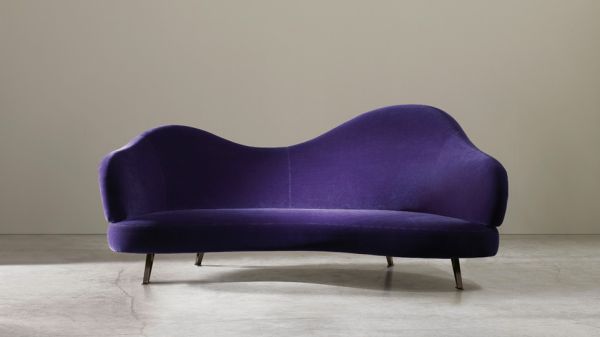
Chic-sofaHotels, Yachts and many public places have strict requirements for fabrics both for fire retardancy and wear, usually measured in the UK by an abrasion test (commonly referred to as Martindale or ‘rub test’).  Some of KOTHEA’s Mohair Velvets are highly suitable in such environments with a certified Martindale of 100,000 – which is more than the usual contract requirement of between 20,000 – 30,000.

We have many velvets of differing compositions (Silk Velvets, Cotton Velvets, Linen Velvets, etc.) and we were interested to see how one of the velvets, at the very highest end of our range, would perform. So we used SGS to test one of our Cashmere Silk Velvets (75% Cashmere 25% Silk).

The tests were undertaken in accordance with BSEN14455 (based on BSENISO12947) and a result of 13,000 rubs was obtained, which considering the perceived delicacy of the product was fantastic. 13,000 rubs make the product suitable for light usage such as residential.


Be Bold. Be Brass.

Source: Be Bold. Be Brass.

Very dark perhaps with a bit of brass. Very unusual with the colour scheme but it works.

We love the low lying seating with the off-black upholstery faux leather.

KOTHEA have a wide range of contract and residential fabrics including many types of faux leather

5 most common questions to Interior designers

Source: 5 most common questions to Interior designers

I imagine the most popular questions is “How much?”. You can see the other answers in the link.


What drew my attention to this image was: the black and cream contrast of the faux leather;  the contrast of hard and soft; the contrast of natural and man-made. Contrast really. But done well.

KOTHEA have a wide range of contract and residential fabrics including many types of faux leather