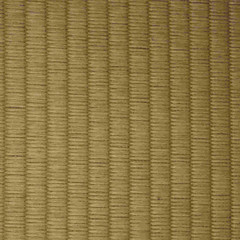
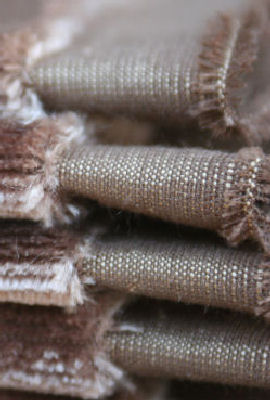
Raffia Wallcovering

Tatami Wallcovering And Upholstery Fabric TextileRaffia adds texture as a wallcovering. As a natural product it has many benefits for the interior designer including a degree of thermal insulation and the ability to be adhered directly to wall surfaces or fastened to wall surfaces or ceiling when wrapped around wooden panels.

With Wyzenbeek rubs of 40,000 KOTHEA’s 2011 Raffia (Raphia) are also eminently suitable for a wide range of upholstery uses.

Raffias can usually be fire treated to meet a wide range of contract requirements including hotels and marine installations.

This type of raffia weave has been used for thousands of years perhaps most famously as Japanese Tatami mats. They are of course one of today’s modern day design staples for a clean, modern look.

Links:

Contract Upholstery Fabric – How to Specify It

For a comprehensive guide to specifying fabric for hotel and hospitality projects, including Martindale thresholds by room type, BS 7176 fire certification, cleaning regime compatibility, and dye lot strategy, see: How to Specify Fabric for Hotel and Hospitality Projects.

A quick guide to specifying contract upholstery fabrics. The main areas to consider are as follows.

1. Determine Use

Is it panelling or seating? For seating you will need to consider flammability (cigarette, match, and Crib 5) and abrasion (Martindale).

2. Fabric Composition

The composition of the fabric including the yarn and weave will affect long-term wear, appearance, and technical performance. Natural fabrics such as wool can be more expensive but generally offer good handle and technical characteristics including natural flame retardancy. Man-made fabrics are usually easier to maintain but require careful selection to achieve the right aesthetic.

3. Flammability

The standard for contract seating acceptable throughout the EU is EN 1021 Parts 1 and 2 (cigarette and match). Higher-level standards in the UK are BS 5852 Crib 5 and BS 7176. The standard for vertical surface fabrics is BS 476 Part 7. For a full explanation see our complete guide to BS 5852 Crib 5.

4. Abrasion

Check the Martindale rub count for the fabric. For contract seating in hotels, restaurants, and offices, a minimum of 40,000 Martindale rubs is the standard threshold.

5. Environmental Considerations

Natural fibres such as wool generally have better environmental credentials than synthetic alternatives. Nylon in particular has a high environmental impact.

6. Care and Maintenance

Contract fabrics typically deteriorate from dirt accumulation rather than abrasion. Follow the manufacturer’s cleaning instructions. Remove stains promptly and vacuum regularly.

Request Samples

Order cutting samples of any fabric from our current collections. Trade accounts only.

Order Cuttings

Black Velvet – Even Better Italian Silk Velvet In Black

Black Velvet – only to be enjoyed by those who appreciate that black is the new black! KOTHEA have a range of velvets with shades of black colourways in most of those velvet collections.

“Black Diamond” is the colourway name for the Italian Silk Velvet (100% Silk Pile) with the code 777-108-900.

You can get black silk velvet samples here from KOTHEA if you are a trade professional. Just click the link.

KOTHEA velvets are the best in the market. We only sell top market fabrics, mostly to top European Interior Designers and Architects. Here are some more bits of technical information on our black Italian Silk velvet fabric:

Width: 140cm

Composition: 100% Silk Pile

No repeat, plain.

Abrasion: Martindale 20,000.

Available from stock, normal delivery within 5 days.

Minimum Order length: 2m

Mohair Velvet, Silk Velvet: How to upholster using it

Silk Velvet Upholstery Fabric TextileMohair Velvet and Silk Velvet buyers consider this: You have just invested a considerable amount of money in a high quality silk velvet or mohair velvet. Are you really considering upholstering with it yourself. Use an experienced upholsterer who, to be brutally honest, should not need the instructions that follow.

Some velvets are woven with a nap others are not. It is not a problem either way. If there is a nap you need to know which way it goes as that affects the process of upholstering. When you run your hand down the mohair velvet or silk velvet the smoothed direction indicates the direction of the nap. Remember this, it is important.

I’m assuming that you have already checked that the fabric is not damaged and that each piece is from the same dye lot.

The nap should be upholstered downwards for:

– the back;

– the seat; and

– side surfaces.

The nap should be upholstered from the outside inwards for:

– arm rests.

How do you flip your cushions? Top to bottom or left to right?

Most people flip from top to bottom. It is therefore standard upholstering practice to upholster the front and the back the opposite way. IE when they are flipped over the nap is the same.

You should use a layer of wadding between the foam and the fabric. The wadding can be either cotton or synthetic it does not really matter but check with any fire rating requirements. Again check that you are using the right kind of foam but HR foam or cold foam are both fine.

However if the pile is vertical then we advise the additional use of a cotton slip-cover.

Going back to the foam for a minute we advise that you use white wadding. In certain circumstances it is possible that grey wadding will ‘bleed’ causing marks on your beautiful Mohair Velvet. For example this may be caused from moisture used in the cleaning process.

Always use wadding on the arm rests as a protective layer to help eliminate ‘sharp’ edges. Using wadding on arm rests will thus reduce wear and tear considerably.

For the piping never use synthetic piping cord, always use cotton piping cord. As with the arm rests this will reduce wear and tear by eliminating the ‘sharper edges’.

Again to reduce wear and tear also use the length of the fabric to make the piping. this will look better as well.

Happy Upholstering

KOTHEA 2010 Fabric Collections

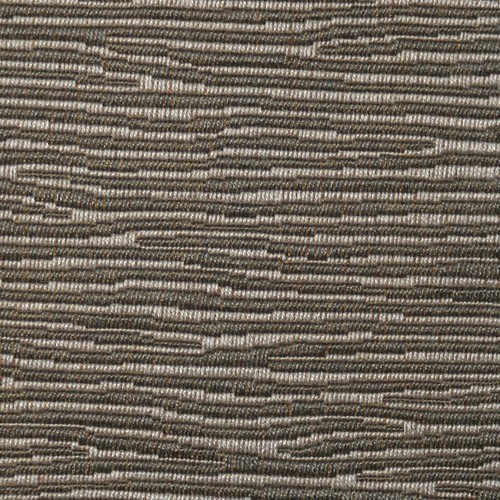
Finally! Our summer collections have been decided and we will begin to introduce the new designs and colourways throughout the remainder of this year. We have been inundated with new work in the first part of this year causing our blog posts to be curtailed and our ‘spring’ collection to nearly be an autumn/fall collection. Not that we really do seasonal collections in any case.
I will return later in another post to KOTHEA’s awesome sales figures for the financial year just finished. Most surprising, especially considering we are in the midst of a recession. We had our best ever year and by quite a large margin.

We expect some coverage of the new collections in World of Interiors and Elle decoration but, again, more on that at another time.

Where can you see our collections? Well, we are as elusive as ever but we are starting to digitize some images to our flickr feed (click the images on the right or here). The flickr update is ongoing, there is information on flickr now but some of the images are not final and some images do not have full associated descriptions / product details but we are woking on that this week. Our usual clients will receive the new collections in due course starting in late summer; if you need them more urgently for pressing projects of course we will be happy to oblige. Please get in contact in the usual way.

Not all are in production yet but most sampling is available now.

As a very broad summary we have:

1. New colours of several existing ranges including faux leather;

2. More velvets including patterned and crush;

3. Striped, double-width linens;

4. Upholstery weight linen; and

5. A few more interesting one-off designs in limited colourways like the one heading up this blog post.

Getting a better Martindale abrasion test result for interiors fabric

Rumours abound that different testing houses give different Martindale abrasion test results for the same fabrics. Is there any truth to that?

Probably not.

Sometimes the tests can be carried out differently and so the results are different. There is a British Standard for abrasion testing which specifies how the test is done, if it is done in a different way then that may affect the result.

For example if we ‘know’ that a fabric is going to achieve about 35,000 Martindale ‘rubs’ then we would ask the testing company to test to 40,000 or if we were uncertain of the likely result we would ask them to test to end-point.

It is usual practice for the fabric to be rubbed in increments of 3,000 or so at a time. Clearly it is easier if a machine is left to run for 30,000 rather than 3,000 and then reset 10 times. Also the ‘correct’ (latter) way will give an accurate result of exactly when the fabric wears out.

I’m not sure why this is done not having read the British Standard myself in detail; maybe the fabric tension on the machine is meant to be checked every 3,000 rubs?

Anyway, if the test is not done properly then a LOWER result will be obtained.

So, providing a reputable testing house that is properly accredited has undertaken the test then it is safe to assume that the result is accurate. Of course the fabric piece that you buy may vary ever so slightly and this might cause minor variations. But that is the nature of some fabrics. A fault in the fabric may also cause it to wear out much quicker than expected but that fault should normally have been spotted by your upholsterer before they used it.

Velvet

Velvets have become increasingly popular over the last 5 years. Both residential and contract usage of velvets have increased tremendously. Having been produced for hundreds of years velvets never seem to have lost the attention of discerning designers.

Interior Designers are often interested in the properties and manufacture of velvet – the two being necessarily related. The depth of the pile, the durability of the finish, the ease of maintaining the beautiful finish.

Velvet is made in one of two ways – cut or uncut:

1. Cut pile

a. Here the loom is configured to Continue reading “Velvet”

Faux Leather Skin – Heavy Contract Upholstery Walling

LONDON, England. 07-DECEMBER-2009 11.30 AM: KOTHEA today announced it has expanded its extensive contract faux skin collections by the addition of KOFAUXLEATHER. KOFAUXLEATHER is a high durability, faux leather: a superb contract fabric with a very high Martindale result. It simply and effortlessly delivers longstanding elegance in all the right bars, hotels and marine environments both as upholstery and as a wall or door covering. It looks great.

KOFAUXLEATHER

Reference: 04-003-378

Colour Shown: Marle

Other colourways: 18

Width: 140cm

Repeat: none

Composition: 100% Cotton basecloth, 94% vinyl 6% polyester coat.

Martindale: 100,000++

Primary Usage: Heavy contract upholstery and walling.

Type of fabric: Faux Leather / Faux Skin

About KOTHEA.

KOTHEA are a Continue reading “Faux Leather Skin – Heavy Contract Upholstery Walling”

KOTHEA Release KORAFT Fabric – New Raffia

LONDON, England. 05-OCTOBER-2009 11.30 AM: KOTHEA today announced it has expanded its panelling collections with the addition of KORAFT. Like KOTHEA, KORAFT is, well, just a little bit different and in the nicest possible way. KORAFT is just one of those products where you desire what you see – the very highest quality, beautifully textured raffia-like wall panelling also suitable for domestic upholstery. 

Reference: 01-009-410

Colour Shown: Natural

Other colourways: 1

Width: 138cm

Repeat: none

Composition: 73% Cotton, 27% Viscose

Primary Usage: Panelling and upholstery, contract & domestic.

Martindale: 14,000 Rubs

Type of fabric: Rafia/Textured Weave

About KOTHEA.

KOTHEA are a top-market fabric house based in Continue reading “KOTHEA Release KORAFT Fabric – New Raffia”