Bleached Fabric & Environmental Impact

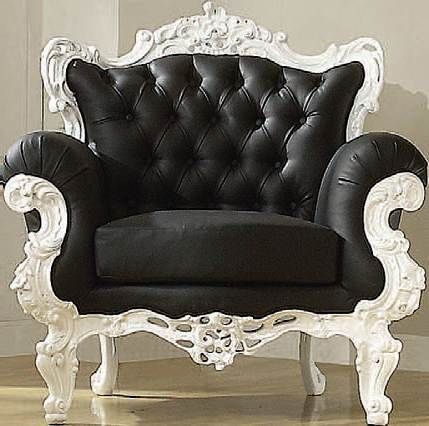
Black Mohair Velvet Contemporary Chair
Black faux leather upholstery

Most of us are familiar with household (chlorine-based) bleach, which is sodium hypochlorite. It is a very powerful bleaching agent and, like similar agents used in the industrial bleaching of fabrics, it has by-products that include; dioxins, furans and organochlorides.

An alternative to a chlorine based bleach is Hydrogen Peroxide (H2O2). This has medical uses and domestic uses such as for bleaching hair.

Hydrogen peroxide occurs naturally by the action of sunlight on water and is simply water plus an extra oxygen molecule (2 lots of H20 plus one lot of 02 equals 2 lots of H2o2 for all you chemists). Hydrogen peroxide is quite reactive and so easily gives up some of its oxygen to revert back to water. This act of giving up oxygen to something else, like fabric, causes the fabric or impurities in it to be oxidised. The oxidised parts of the fabric are chemically changed and lose their colour. They remain there but their colour is changed. That’s what makes it a bleach and so the end products are just the oxidised fabric and water.

Natural linen has a light brown or beige colour. To go lighter than this it has to be either bleached, or bleached and dyed.

If your clients are environmentally conscious and concerned about the environmental impact of the products they buy from you, it would be prudent to ensure that your linen is hydrogen peroxide bleached rather than chlorine bleached.

Fabric Treatment Companies – FR Flameproofing

We are often asked to recommend fabric treatment companies for flame retarding in contract installations. Most treatment companies offer other services such as; back coating fabric for walls and stain resistance/repellency. There are several such companies in the UK and at various times we have used all of the following:

Essex Flameproofing,

Textiles FR, and

TEK Treatments

Just click the company name to take you to their web site. Please feel free to add comments to this posting recommending any suppliers you have used but any negative comments about other companies are not permitted on this site. Thank you.

What Is Sanforisation? Sanforised and Sanforising Explained for Interior Designers

What Is Sanforisation? Sanforised and Sanforising Explained for Interior Designers

What it is: A mechanical pre-shrinking finishing process applied to woven fabric before it leaves the mill. Named after Sanford Lockwood Cluett, who patented the process in 1930.
Which fabrics: Most commonly applied to cotton and linen. Also used on some cotton-blend upholstery and shirting fabrics.
Why it matters: Fabric that has not been sanforised may shrink when used in curtains or upholstery that are subsequently washed or exposed to moisture. Sanforised fabric has been pre-shrunk to defined limits at the mill, reducing but not eliminating subsequent shrinkage.
On the label: Sanforised is a registered trademark. Fabric labelled Sanforised has been tested and certified to shrink no more than 1% in either direction. Sanforised-Plus is the rating for fabrics with even greater dimensional stability.

Sanforising is a mechanical finishing process applied to woven fabric to reduce the shrinkage that would otherwise occur when the fabric is exposed to moisture or heat after making up. Interior designers encounter the term on fabric data sheets and labels, most commonly on cotton and linen upholstery and curtain fabrics. Understanding what it means and what it does not guarantee is a practical specification consideration.


How the Process Works

Sanforising passes the woven fabric through a machine that compresses it mechanically in the warp direction — along the length of the fabric. A rubber blanket is stretched and then released, and the fabric is carried through this process so that the yarns are forced into a more compact arrangement in the warp direction before they are set by steam. The result is a fabric whose yarns have already been displaced into the position they would naturally move to if the fabric were washed. When the finished curtain or upholstered piece is subsequently washed or exposed to moisture, the fabric has less remaining tendency to shrink because the displacement has already occurred.

The process addresses warp shrinkage — shrinkage along the length of the fabric. Weft shrinkage — shrinkage across the width — is controlled by a separate process called tentering, in which the fabric is held to a defined width during drying and heat setting. Sanforised fabric has typically been through both processes.


What Sanforised Means on a Label

Sanforised is a registered trademark owned by Cluett, Peabody and Co. Fabric carrying the Sanforised mark has been independently tested and certified to shrink no more than 1% in either the warp or weft direction when washed. This is the residual shrinkage after the sanforising process — fabric may still shrink by up to 1% in each direction, but no more.

Sanforised-Plus is a higher standard, certifying residual shrinkage of no more than 0.5% in either direction. It appears on some high-quality cotton fabrics and performance linens.

Fabric described as pre-shrunk rather than Sanforised may have been through a similar mechanical process but without independent certification to the same standard. The level of residual shrinkage permitted under a pre-shrunk claim is not standardised.


What It Does Not Guarantee

Sanforised certification applies to shrinkage caused by washing. It does not address all the dimensional changes that fabric may undergo in use. Natural fibre fabrics — cotton and linen in particular — absorb and release atmospheric moisture as humidity changes. This hygroscopic behaviour causes minor dimensional changes that are distinct from washing shrinkage and are not addressed by sanforising. In environments with significant humidity variation — a room that alternates between very dry and very damp conditions — even sanforised linen or cotton may show minor dimensional change over time.

Sanforised certification also does not address the relaxation shrinkage that may occur in curtains hung under their own weight over time, particularly in heavy cotton or linen fabrics. This is a tension-release effect rather than a moisture-induced shrinkage and is unrelated to the sanforising process.


Relevance for Upholstery Specification

For upholstery fabrics that will not be washed — most contract upholstery is dry-clean or spot-clean only — sanforised certification has limited direct relevance to the face fabric performance. Where it matters most is in curtain fabrics that will be laundered, and in loose covers and cushion covers in domestic settings where machine washing is planned.

For linen upholstery fabrics, the dimensional stability of the fabric during making-up is more practically significant than its washing shrinkage. A fabric that relaxes or distorts during the tension applied in upholstery construction will affect the alignment of the finished piece regardless of its sanforised status. Confirm dimensional stability under tension with the supplier for any linen or cotton fabric being used in tight upholstery applications.


For linen upholstery fabric specification, see our upholstery linen page. For fabric care and cleaning codes, see our fabric care symbols guide. For fabric hand and how natural fibres behave in use, see our fabric hand and tactile properties guide.

Request Samples

Order cutting samples of any fabric from our current collections. Trade accounts only.

Order Cuttings

Moleskin Upholstery Fabric

Moleskin Upholstery FabricMoleskin Fabric is an unusual fabric for upholstery, usually associated with clothing. KOTHEA moleskin is a premium moleskin specifically designed for upholstery with Martindale Rubs between 20,000 and 30,000. Moleskin is often a blend of cotton and linen; however KOTHEA‘s 100% cotton moleskin is extremely tightly woven ensuring that a luxurious look and feel is guaranteed. The overall look is similar to suede yet more exclusive and durable.

Fabric Tips #10

Interior Designers are sometimes asked for the environmental credentials of their specification. Here are some figures that give you an idea of the greenness of different yarns used in fabric production. The figures show the energy consumption (per kilo in KWH) required to make the fibres. Of course this is far from the total carbon footprint of the finished delivered and fully made up cushion or sofa or curtain. But it is a starting point often covering the more energy intensive part of the process.

17 Wool
27 Viscose
32 Polypropylene
35 Polyester
69 Nylon

Clearly natural wool wins hands down!

As a side note, the “Campaign For Wool” should start to get media coverage throughout the rest of 2010 with the patronage of HRH Prince Charles. The society of British Interior Design are planning to give wool a big push “All we are saying is…give fleece a chance”. Their tagline. Great! Well it made me laugh!

Cashmere throws – bespoke / custom sizes

To supplement our range of coloured cashmere throws (147 x 183 cm), we now have the ability to weave 100% cashmere throws in any size up to a maximum width of 220cm in off-white and natural colours.

Our hand woven linen throws (pictured) can also be woven in bespoke dimensions, to order.

Dyes and Pigments in Fabric

A Brief History of Natural Dyes (Mordants)

A dye is a substance that gives colour to the fabric. Usually in a way such that washing, heating or lighting does not change the colour greatly.

Dyes tend to be carbon-based (ie organic in a chemical sense) whereas pigments are very fine powders ‘dissolved’ in a liquid. Pigments generally give brighter colours and are man-made.

Dyes have existed for at least 4000 years and, before 1850, were almost entirely from natural sources such as plants, trees and lichens but also sometimes from insects. Here are some natural dyes, rarely used today, and their sources:

1. Yellow
Seeds, stems and leaves of the weld plant
The inner bark of the North American oak ‘quercetin’
Dried petals of false saffron (safflower)

2. Red
Crushed insect bodies from Coccus (cochineal) or it’s distant relation Kermes.

3. Blue
From indigo or woad

4. Purple
From the medium-sized predatory sea snail ‘commonly’ known as Murex.

5. Black
From the middle wood of the Logwood tree. This is still used today to dye silk and leather and is combined with Chromium. I have written other articles about how this ‘natural’ dye is one of the most damaging to the environment because of the use of chromium.

The art of the dye was historically a closely guarded secret with practitioners having their formulae to produce the colours and to retain them by the addition of various metal salts.

Cotton could not be directly dyed whereas wool and silk could. To add a dye to cotton the cotton had to be first treated with salts made from aluminium (red), magnesium (violet), tin, calcium (purple-red), copper, barium (blue) and iron (black-violet) and then dyed. These salts are called mordants.

The Start Of Synthetic Dyes

In the 1850s Chromium was found to give superior dye retention and so started the decline of the natural dye. Chromium mordants are still widely used for wool and less so for silk and nylon.

More precisely, the first commercially successful dye was ‘mauve’ discovered in England in 1856 and taken to market the following year. It was only sold for about 7 years but that was sufficient to start the dramatic decline of natural dyes and the investment in the science for newer and better dyes.

The Chromium discovery meshed well with the Industrial Revolution. The massively growing textile industry in Europe required a cheap and predictable manufacturing process. Natural dyes and mordants could require up to 20 steps in production, the colour could be variable and the dyes had to be transported unreliably from around the world. Because of these factors and the development of chemical science, it is easy to see how by-products of coal tar extraction & coke production, abundant in Europe, became the foundation of the modern dye industry.

By 1900 nearly 90 per cent of industrial dyes were synthetic.

Pre-war (WWI) Germany dominated the commercial dye market accounting for 90% of all output. Many German scientists worked with distilled chemicals from coal tar, an abundant by-product of the industrial revolution at the time. The German success was probably due to their investment in the scientific method and in training scientists themselves. Some further ‘by-products’ of the research include aspirin and saccharin.

After WWI the industry gravitated to Britain (ICI), the USA and Switzerland, also moving away from coal tar to petroleum-based research.

Perhaps only now with the ‘green’ movement are we seeing a resurgence of interest in natural dyes. KOTHEA cautions the environmentally-conscious reader to look carefully at claims of dyes to be natural. Whilst they may well be made from natural materials the processes used along the way can be VERY damaging to the environment.