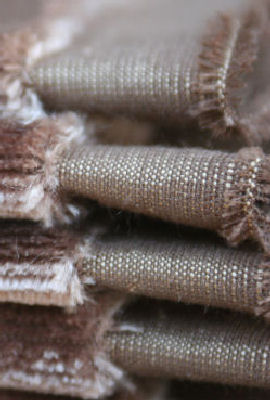
A Chat With Verity du Sautoy – Her Thoughts On Winter Fabrics

Luxury Silk velvet From KOTHEA
Truly beautiful Cashmere Silk Velvet by KOTHEA

KOTHEA Fabric Picks For A Chilly Winter’s Day
With Verity du Sautoy of KOTHEA.

We love the seasons. All have their beauties and all have touched our senses in memorable ways over the years. Winter is no exception: lower, more balanced light; quietness and chaos with both the shopping and the weather; festive celebrations; the cuddle of a loved one; the hope and expectation of early spring flowers grasping for rare and tiny glimmers of light; and, perhaps, the welcomed warmth of a beautiful fabric.

Some of my best memories are centred on family: a warm fire; a little baby; or a bouncing toddler. Then an old children’s classic on the iPlayer watched on my Mac as it balances precariously on an elegant coffee table. I stroke my children’s hair with one hand and rest my other hand on my sofa. A generous cushion is warm, encapsulating and a bit of fun for the little ones to hide under. The curtains are not yet fully drawn but they smooth the boundary to the cold outside and give us tantalising glimpses of the world beyond – should we venture too close to the sheers that offer the final, soft protection from the elements.

Dominika B Tana Lawn

I work for a fabric company. I love fabric. I can’t pretend that it (fabric) is a be-all and end-all to life and that somehow it will make your life complete. It can’t. But what it clearly can do is complete the sensory experiences in the parts of life that, if you choose, you have control over…the parts of your home. Memories are not just photo-like snapshots in your brain; they are stored, multi-sensory splashes of emotion.

Here are my Winter picks. They are actual ‘picks’ that I’ve recently purchased or are about to purchase.

Take my sofa as an example. My sofa isn’t Continue reading “A Chat With Verity du Sautoy – Her Thoughts On Winter Fabrics”

Fabric Tips #13: Velvet Curtain Making

Image by tenz1225 via Flickr

Here are some additional pointers to consider when you are making a curtain using a velvet. Remember that a velvet is just a type of fabric and the fibre(s) that the velvet is made from is important.

So for example, we would always recommend that you line a curtain. This gives a superior appearance but also reduced the amount of light going through the fabric hence limiting as much as possible the effect of any fading.

If the velvet has a pile that can be flattened in one direction then we would recommend that you have the pile going downwards for SHINY velvet fabrics and PATTERNED VELVETS.

If however you make up the curtain with the pile upwards then this will deepen the colour so you could make the curtains this way for cotton velvets and Trevira Velvet and Mohair velvets.

These are general guidelines and it is not necessarily wrong if you make up the curtain ‘the other way’ just so long as you understand the implications to the finished look and performance of the material.

Fabric Tips #12: Rolling a velvet

Image via Wikipedia

You’ve just ordered a new velvet and unrolled it to admire your purchase. But how do you re-roll it?

When you roll almost any fabric you should have the face on the inside. With a velvet this is the pile so you have the pile on the inside.

Some, but not all, velvet piles stand straight up others will ‘lay down’. for the former it does not matter which way you then roll the fabric (provided the pile is on the inside). However for typically longer pile which lays down (ie you can brush it flat with your hand in one direction only) then you should roll the fabric down the pile as you return it to its roll.

Hopefully that made sense. Good luck.

Contract Upholstery Fabric – How to Specify It

For a comprehensive guide to specifying fabric for hotel and hospitality projects, including Martindale thresholds by room type, BS 7176 fire certification, cleaning regime compatibility, and dye lot strategy, see: How to Specify Fabric for Hotel and Hospitality Projects.

A quick guide to specifying contract upholstery fabrics. The main areas to consider are as follows.

1. Determine Use

Is it panelling or seating? For seating you will need to consider flammability (cigarette, match, and Crib 5) and abrasion (Martindale).

2. Fabric Composition

The composition of the fabric including the yarn and weave will affect long-term wear, appearance, and technical performance. Natural fabrics such as wool can be more expensive but generally offer good handle and technical characteristics including natural flame retardancy. Man-made fabrics are usually easier to maintain but require careful selection to achieve the right aesthetic.

3. Flammability

The standard for contract seating acceptable throughout the EU is EN 1021 Parts 1 and 2 (cigarette and match). Higher-level standards in the UK are BS 5852 Crib 5 and BS 7176. The standard for vertical surface fabrics is BS 476 Part 7. For a full explanation see our complete guide to BS 5852 Crib 5.

4. Abrasion

Check the Martindale rub count for the fabric. For contract seating in hotels, restaurants, and offices, a minimum of 40,000 Martindale rubs is the standard threshold.

5. Environmental Considerations

Natural fibres such as wool generally have better environmental credentials than synthetic alternatives. Nylon in particular has a high environmental impact.

6. Care and Maintenance

Contract fabrics typically deteriorate from dirt accumulation rather than abrasion. Follow the manufacturer’s cleaning instructions. Remove stains promptly and vacuum regularly.

Request Samples

Order cutting samples of any fabric from our current collections. Trade accounts only.

Order Cuttings

What Is BS 476 Part 7 Class 1 ( BS476 )

BS476 Part 7 Class 1 is the FR / Fire Retardancy test for contract wall covering.

In the case of fabric wall coverings, the fabric is held vertically and subjected to a flame. If the rate of spread of any flame falls below a certain level the test is passed.

The test is a severe one. It is appropriate for example, in hotels and offices.

When organising treatment for your fabric ask for it to be treated so that it passes this standard test and inform the treatment company that the fabric will be subsequently tested.

What is BS5867 / BS 5867 part 2 type B? type C?

For the full guide to BS 5852 Crib 5 fire standards for contract upholstery, see: BS 5852 Crib 5: A Complete Guide for Interior Designers and Specifiers.


BS 5867 Part 2 Type B is the contract fire retardancy standard for curtains.

As an interior designer you do not need to understand the technical details of the test. However you are responsible for the project and must:

  • Confirm what standard is required for your project.
  • Specify fabric that meets that standard.
  • Prove that the fabric installed complies.

Here is what to do:

1. Determine the fire retardancy standard required. This may involve contacting the local fire officer. Confirm what documentation you need to provide.

2. Confirm with your fabric supplier whether the fabric inherently meets the standard or requires treatment.

3. On purchasing the fabric, specify the treatment required. Say to the fabric company: treat this fabric to BS 5867 Part 2 Type B and provide documentation confirming this has been done.

4. A treatment certificate confirms the fabric has been treated to the standard. It does not confirm the fabric has passed the test. For larger projects, arrange for your specific batch of fabric to be independently tested after treatment at a UKAS-accredited testing laboratory (not the treatment house). At the end of that process you will receive documentation confirming the fabric meets the standard.

Related: fire retardancy for contract upholstery, Crib 5 and BS 7176.

Test Details

Test method

A sample of the fabric, vertically held, is exposed to a small flame. For Type B (hotels and similar) the ease of ignition is observed. It is noted whether the flame reaches any edge of the specimen and whether any burning pieces fall. For Type C (NHS environments) the fabric is further assessed for behaviour once the flame is removed but when the fabric may still be smouldering. The fabric is tested before and after laundering: Type B requires 12 wash cycles at 40 degrees; Type C requires 50 wash cycles at 40 degrees.

Type B performance criteria: The edges must remain completely intact and no burning debris should fall.

Request Samples

Order cutting samples of any fabric from our current collections. Trade accounts only.

Order Cuttings

Mohair Velvet, Silk Velvet: How to upholster using it

Silk Velvet Upholstery Fabric TextileMohair Velvet and Silk Velvet buyers consider this: You have just invested a considerable amount of money in a high quality silk velvet or mohair velvet. Are you really considering upholstering with it yourself. Use an experienced upholsterer who, to be brutally honest, should not need the instructions that follow.

Some velvets are woven with a nap others are not. It is not a problem either way. If there is a nap you need to know which way it goes as that affects the process of upholstering. When you run your hand down the mohair velvet or silk velvet the smoothed direction indicates the direction of the nap. Remember this, it is important.

I’m assuming that you have already checked that the fabric is not damaged and that each piece is from the same dye lot.

The nap should be upholstered downwards for:

– the back;

– the seat; and

– side surfaces.

The nap should be upholstered from the outside inwards for:

– arm rests.

How do you flip your cushions? Top to bottom or left to right?

Most people flip from top to bottom. It is therefore standard upholstering practice to upholster the front and the back the opposite way. IE when they are flipped over the nap is the same.

You should use a layer of wadding between the foam and the fabric. The wadding can be either cotton or synthetic it does not really matter but check with any fire rating requirements. Again check that you are using the right kind of foam but HR foam or cold foam are both fine.

However if the pile is vertical then we advise the additional use of a cotton slip-cover.

Going back to the foam for a minute we advise that you use white wadding. In certain circumstances it is possible that grey wadding will ‘bleed’ causing marks on your beautiful Mohair Velvet. For example this may be caused from moisture used in the cleaning process.

Always use wadding on the arm rests as a protective layer to help eliminate ‘sharp’ edges. Using wadding on arm rests will thus reduce wear and tear considerably.

For the piping never use synthetic piping cord, always use cotton piping cord. As with the arm rests this will reduce wear and tear by eliminating the ‘sharper edges’.

Again to reduce wear and tear also use the length of the fabric to make the piping. this will look better as well.

Happy Upholstering

What Is Trevira CS? Inherently Flame-Retardant Polyester Explained

What Is Trevira CS? Inherently Flame-Retardant Polyester Explained

What it is: Trevira CS is a brand name for a permanently flame-retardant polyester fibre manufactured by Trevira GmbH in Germany. The CS stands for Comfort and Safety.
How it works: The flame-retardant additive is incorporated into the polyester polymer during fibre production — it is part of the fibre itself, not a surface treatment applied afterwards.
Why it matters: The fire resistance is permanent. It cannot be washed out, worn off, or degraded by cleaning. Fabric made from Trevira CS does not require topical FR treatment to achieve contract fire standards.
Certification: Trevira CS fabric can achieve BS 5867 Part 2 Type B and Type C for curtains and BS 5852 Crib 5 for upholstery, depending on fabric construction.

Trevira CS is one of the most widely used inherently flame-retardant fibres in the UK and European contract interiors market. It is specified for curtains and upholstery in hotels, offices, healthcare facilities, and public buildings where fire compliance is required and the permanence of the fire performance is commercially important. This guide explains what Trevira CS is, how it differs from topically treated polyester, and where it is and is not appropriate to specify.


Inherent vs Topical Flame Retardancy

Standard polyester fabric does not meet UK contract fire standards without treatment. The two routes to compliance are topical FR treatment — applying chemical compounds to the fabric surface after weaving — or using a fibre with inherent flame retardancy built into the polymer from manufacture.

Trevira CS takes the second route. The phosphorus-based flame-retardant compound is added to the polyester melt during fibre extrusion. It becomes part of the polymer chain rather than sitting on or in the fabric surface. This means the fire performance is genuinely permanent — it survives laundering, dry cleaning, and normal use without degradation and without the re-treatment requirements associated with topically treated fabrics.

This permanence is the primary commercial advantage of Trevira CS over topically treated alternatives in high-frequency-cleaning environments such as healthcare curtains and hotel restaurant seating where laundry cycles are regular and frequent.


Fire Standards Trevira CS Can Achieve

Fabric woven from Trevira CS yarn can achieve BS 5867 Part 2 Type B for curtains and drapery, and Type C — which includes a laundering pre-conditioning requirement — making it appropriate for hospital cubicle curtains that are regularly laundered. This is the most demanding UK curtain fire standard and one that few non-inherent fabrics can meet reliably over repeated wash cycles.

For upholstery, Trevira CS fabric can be constructed to achieve BS 5852 Crib 5, though the specific fabric construction — weave density, pile height if applicable, and backing — affects the result. A fabric containing Trevira CS yarn is not automatically Crib 5 certified: the specific fabric as constructed must be tested and certified by a UKAS-accredited laboratory.

Trevira CS fabric also achieves good performance against the IMO fire standards used in marine and yacht interiors, making it a practical specification for vessels requiring FTP Code compliance. See our IMO marine fire standards guide for marine application requirements.


Where Trevira CS Is and Is Not Appropriate

Trevira CS is well suited to curtain fabrics in healthcare, hospitality, and institutional environments where BS 5867 Type C compliance and launderability are required simultaneously. It is also appropriate for acoustic panel fabrics and wall lining fabrics where a surface spread of flame classification is needed without reliance on topical treatment. For high-frequency-cleaning upholstery in healthcare environments, Trevira CS upholstery fabric is a practical alternative to silicone leather where a fabric aesthetic is preferred.

Trevira CS is standard polyester in all its non-fire properties. It does not have the tactile warmth of natural fibres, the lustre of mohair or silk, or the inherent sustainability credentials of wool or linen. For hospitality and high-end residential interiors where tactile quality and aesthetic warmth are the primary criteria, natural-fibre fabrics with independent fire certification are typically preferred over Trevira CS. For the distinction between inherent and topical fire resistance across fibre types, see our FR treatment and fibre compatibility guide.


Frequently Asked Questions

Does Trevira CS need FR treatment?

No. The flame-retardant property is inherent to the fibre — it is part of the polymer structure from manufacture. Fabric made from Trevira CS does not require topical FR back-coating or wet-padding treatment to achieve its fire performance. This is what distinguishes it from standard polyester fabric, which would require topical treatment to meet contract fire standards.

Does Trevira CS fire performance survive washing?

Yes. Because the flame retardancy is part of the fibre polymer rather than a surface application, it is not affected by washing, dry cleaning, or abrasion. This makes Trevira CS particularly appropriate for healthcare curtains and other applications requiring regular laundering without re-treatment or re-certification.

Is all Trevira CS fabric automatically Crib 5 certified?

No. Trevira CS yarn has inherent flame-retardant properties, but the specific fabric woven from it must be tested and certified by a UKAS-accredited laboratory to confirm it meets the required standard for the specific application. The weave construction, pile height, and backing all affect the fire performance of the finished fabric. Always obtain a test certificate for the specific fabric being specified rather than assuming certification from the yarn specification alone.


For the Crib 5 standard for upholstery, see our Crib 5 guide. For curtain fire standards including BS 5867 Type B and Type C, see our hotel fabric specification guide. For inherent vs topical fire resistance across fibre types, see our FR treatment and fibre compatibility guide. For how FR treatment works, see our how FR treatment works guide.

Request Samples

Order cutting samples of any fabric from our current collections. Trade accounts only.

Order Cuttings

KOTHEA 2010 Fabric Collections

Finally! Our summer collections have been decided and we will begin to introduce the new designs and colourways throughout the remainder of this year. We have been inundated with new work in the first part of this year causing our blog posts to be curtailed and our ‘spring’ collection to nearly be an autumn/fall collection. Not that we really do seasonal collections in any case.

I will return later in another post to KOTHEA’s awesome sales figures for the financial year just finished. Most surprising, especially considering we are in the midst of a recession. We had our best ever year and by quite a large margin.

We expect some coverage of the new collections in World of Interiors and Elle decoration but, again, more on that at another time.

Where can you see our collections? Well, we are as elusive as ever but we are starting to digitize some images to our flickr feed (click the images on the right or here). The flickr update is ongoing, there is information on flickr now but some of the images are not final and some images do not have full associated descriptions / product details but we are woking on that this week. Our usual clients will receive the new collections in due course starting in late summer; if you need them more urgently for pressing projects of course we will be happy to oblige. Please get in contact in the usual way.

Not all are in production yet but most sampling is available now.

As a very broad summary we have:

1. New colours of several existing ranges including faux leather;

2. More velvets including patterned and crush;

3. Striped, double-width linens;

4. Upholstery weight linen; and

5. A few more interesting one-off designs in limited colourways like the one heading up this blog post.