BS 5852 Crib 5 is the fire safety standard required for most contract upholstery in the United Kingdom. If you are specifying fabric for a hotel, restaurant, bar, office, healthcare environment, or any other commercial interior, Crib 5 compliance is the baseline expectation. This guide explains what the standard is, how the test works, the critical difference between inherent and topical certification, and how to specify correctly. For dye types and FR treatment compatibility — which dyes cause fading after treatment — see our dye types and FR treatment guide. For colour fastness and crocking specification, see our colour fastness and crocking guide. For hotel and hospitality projects see our hotel fabric specification guide. For wall panel and headboard applications, a different standard applies: see our guide to fabric for wall panels and headboards.For projects involving yachts or commercial vessels, a separate framework applies: see our guide to IMO marine fire standards for yacht interiors.
What Crib 5 Is
Crib 5 is shorthand for BS 5852 Ignition Source 5. BS 5852, titled Methods of Test for Assessment of the Ignitability of Upholstered Seating, is the British Standard that defines how upholstered furniture materials must behave when exposed to ignition sources of increasing intensity. The standard defines eight ignition source levels. The three that matter most in practice are Source 0 (a smouldering cigarette), Source 1 (a small flame equivalent to a lit match), and Source 5, which is the Crib 5 test.
The name comes from the wooden structure used as the ignition source. A crib is a small lattice of dry timber pieces, stacked five tiers high, weighing approximately 17 grams. The number 5 refers to the number of tiers. The crib is placed on the upholstery assembly and ignited. The test is designed to simulate an ignition event more intense than a match flame, comparable to a burning pile of paper, and is the realistic minimum for contract environments where furniture may be exposed to more severe ignition risks than a smouldering cigarette.
The Three-Stage Test
BS 5852 Crib 5 is not a single test in isolation. To achieve a Crib 5 certification, a fabric must first pass both the cigarette test (Source 0) and the match test (Source 1). Only materials that pass both of these lower-level tests are eligible to proceed to the Crib 5 stage. A material that fails the cigarette or match test cannot be certified to Crib 5 regardless of how it performs under the wooden crib.
For more detail on the cigarette and match stages of BS 5852, see our guide to how FR treatment works.
In the cigarette test, a smouldering cigarette is placed in the crease between the seat and back of the upholstered test rig. The material must show no ignition and no progressive smouldering.
In the match test, a small burner flame is held against the upholstery for 20 seconds. The material must self-extinguish immediately and show no spread of flame.
In the Crib 5 test, the lit wooden crib is placed on the upholstered assembly. All flaming must cease within 10 minutes. The fire must not spread beyond defined limits or penetrate the filling material. There must be no self-sustaining smouldering after the crib has burned out.
The Composite Nature of the Test
This is the point most frequently misunderstood in specification. BS 5852 does not test the fabric in isolation. It tests the full composite assembly: the fabric cover, the foam or filling, and any interliner, all as they would be used together in the finished piece of furniture.
A fabric that achieves Crib 5 certification in one configuration with a specific foam may not achieve it when applied over a different foam. A certificate from a fabric supplier confirms the fabric was tested in a specific configuration. If the foam or filling used in your project differs from the foam used in the test, the certificate may not be valid for your application.
Always confirm with your fabric supplier the exact configuration under which the Crib 5 test was conducted, including the foam specification, before relying on that certificate for a contract project.
Inherent Versus Topical Certification
The single most important distinction in specifying a Crib 5 fabric is whether the certification is inherent or achieved through topical treatment. The practical consequences are significant.
Inherent Crib 5 means the fire resistance is a property of the fibre itself. The yarn from which the fabric is woven is non-combustible or self-extinguishing by its nature, independent of any chemical application. Mohair velvet is the primary example in the Kothea range. Mohair fibre is inherently resistant to ignition, and a correctly woven mohair velvet carries an inherent Crib 5 pass without any treatment being applied. The certification is permanent, unaffected by cleaning, does not alter the handle or surface appearance of the fabric, and carries no additional cost for FR treatment.
Topical or back-coated treatment is applied to a fabric that is not inherently fire resistant. The fabric passes through a bath of fire-retardant chemicals, which are bonded to the reverse of the fabric through a coating process. The resulting fabric can achieve a Crib 5 pass, but with three important caveats.
First, the BS 5852 standard requires a water-soak test as part of full certification. The fabric is soaked in water to simulate cleaning and then retested. Many fabrics that pass the dry Crib 5 test fail after the water-soak stage. An indicative test without the water-soak is not a complete Crib 5 certificate. Do not rely on an indicative certificate for contract projects without confirming with the client and fire officer that it is acceptable.
Second, the coating process can affect the appearance and handle of certain fabrics. Pile fabrics such as velvets are particularly susceptible. Immersion or back-coating can flatten the pile, stiffen the handle, or leave residue on the face of the fabric. This is one of the reasons mohair velvet with an inherent pass is preferable for contract use over cotton or linen velvet that requires treatment.
Third, a topically treated fabric may need re-treatment if cleaned by a method that degrades the coating. Professional cleaning must use methods compatible with the treatment. Confirm the appropriate cleaning regime with the treatment provider before specifying.
For a detailed guide to the treatment process and the difference between Crib 5 and BS 7176, see our guide to how FR treatment works.
BS 7176 and Hazard Categories
BS 7176, Specification for Resistance to Ignition of Upholstered Furniture for Non-Domestic Seating, extends the BS 5852 framework by categorising different commercial environments into hazard levels and specifying the appropriate ignition source requirement for each.
Low hazard covers environments such as offices. Medium hazard covers hotels, theatres, and healthcare waiting areas. High and extreme hazard cover environments such as prisons, secure psychiatric units, and offshore installations.
For most hospitality and commercial interiors the relevant category is Medium Hazard, and the standard associated with it is effectively Crib 5. The practical difference between specifying to BS 5852 Crib 5 and specifying to BS 7176 Medium Hazard is that BS 7176 includes the water-soak stage explicitly and requires the certificate to document the specific end-use environment and foam specification. In complex or sensitive projects, specifying BS 7176 Medium Hazard rather than simply Crib 5 gives a more complete and defensible specification. The treatment applied to achieve both is the same.
When Crib 7 Is Required
Crib 7 follows the same principle as Crib 5 but uses a larger wooden crib, seven tiers high and approximately 126 grams against Crib 5’s 17 grams, producing a more intense ignition source. It is required in high and extreme hazard environments: primarily prisons, secure psychiatric units, and some offshore or industrial installations. The Regulatory Reform (Fire Safety) Order 2005 assigns responsibility for determining the appropriate hazard category to the responsible person managing the building, not to the designer or fabric supplier. If a project falls into a high hazard category, engage a specialist fire safety consultant before specifying.
Crib 5 fabric, when combined with an appropriate FR foam, can sometimes achieve a Crib 7 pass as a composite. This must be verified by testing and documented with the relevant certificate. Do not assume that a Crib 5 fabric will achieve Crib 7 without independent testing.
Curtain Fabrics and the Different Standard
BS 5852 applies to upholstery. Curtain fabrics are governed by a separate standard, BS 5867, which tests vertical hanging fabrics rather than upholstered composites. The two standards are not interchangeable. A curtain fabric certified to BS 5867 is not automatically suitable for upholstery use, and a Crib 5 certified upholstery fabric is not automatically certified for use as a curtain in a contract environment. Always confirm the correct standard for the specific application before specifying.
Kothea Fabrics and Crib 5
Mohair velvet from Kothea carries an inherent BS 5852 Crib 5 pass across all active mohair velvet ranges. The inherent certification means no treatment is required, no additional cost is incurred, the certification survives cleaning, and the handle and surface of the fabric are unaffected. The primary Mohair Velvet range achieves 100,000 Martindale rubs alongside its inherent Crib 5 certification, combining contract-grade durability with the highest fire safety standard for most commercial projects.
Faux Leather 3 from Kothea carries a BS 5852 Crib 5 certification alongside a Martindale rub count in excess of 200,000, making it among the most specification-complete fabrics available for severe contract environments including transport seating, healthcare, and hospitality.
Cotton velvet requires topical treatment to achieve a Crib 5 pass and is not supplied by Kothea with an inherent certification.
How to Specify Correctly
State the standard in full. Ask for BS 5852 Ignition Source 5 (Crib 5), not just Crib 5. The full reference removes ambiguity.
Confirm inherent or topical. Ask the supplier explicitly whether the certification is inherent to the fibre or achieved through topical treatment. If topical, ask whether the full water-soak test was completed and request the certificate confirming it.
Confirm the composite configuration. Ask which foam was used in the test. If your project uses a different foam, the certificate may not cover your specific application.
Use a UKAS-accredited treatment house. If your project requires a fabric to be treated, specify that treatment must be carried out by a UKAS-accredited company. This ensures the process is correctly executed and independently verifiable.
Request the full test certificate. An indicative result is not a certificate. For contract projects, require the independent test certificate before the fabric is upholstered.
Consider BS 7176 for complex environments. For hotel bedrooms, healthcare, or any environment where the hazard category is uncertain, specifying BS 7176 Medium Hazard rather than Crib 5 alone provides a more defensible specification at no additional treatment cost.
Quick answers
What is BS 5852?
BS 5852 is the British Standard that tests the ignitability of upholstered seating. It defines eight ignition source levels, from a smouldering cigarette (Source 0) up to larger wooden crib sources. Crib 5 is BS 5852 Ignition Source 5, the level required for most UK contract upholstery. The standard tests the full composite of fabric, filling, and interliner together, not the fabric alone.
Is BS 5852 the same as BS 7176?
No, though they are related. BS 5852 is the test method for the ignition sources, including Crib 5. BS 7176 is the specification standard for non-domestic seating that references BS 5852, groups commercial environments into hazard categories, adds the water-soak stage explicitly, and requires the certificate to document the end-use environment and foam. For most hotel and contract projects, BS 7176 Medium Hazard is the more complete specification, achieved with the same treatment as Crib 5.
What is a BS 5852 Crib 5 certificate?
A BS 5852 Crib 5 certificate confirms that a specific composite of fabric and filling passed the cigarette, match, and Crib 5 wooden crib tests, including the water-soak stage for full certification. The certificate is valid only for the fabric and foam combination tested. An indicative test without the water-soak is not a full certificate. For contract projects, require the independent certificate from a UKAS-accredited laboratory before the fabric is upholstered.
Does a fabric need to be treated to pass BS 5852 Crib 5?
Not always. Fabrics with inherent fire resistance, such as mohair velvet, pass BS 5852 Crib 5 without any topical treatment because the resistance is a property of the fibre. Fabrics that are not inherently fire resistant, such as cotton or linen velvet, require topical back-coating treatment to achieve a pass. Inherent certification is permanent, survives cleaning, and does not alter the handle, whereas topical treatment can degrade with cleaning and may affect the appearance of pile fabrics.
For surface spread of flame requirements for wall and ceiling linings — a separate standard from Crib 5 — see our BS 476 Part 7 guide.
For fabric sustainability certifications including GOTS and Oeko-Tex, see our fabric sustainability certifications guide. For healthcare fire standards including BS 7176, see our healthcare fabric guide.
For how the Building Safety Act 2022 affects fabric fire certification documentation in higher-risk buildings, see our Building Safety Act and fabric specification guide.
Request Samples
Order cutting samples of any fabric from our current collections. Trade accounts only.
Order CuttingsOr call +44 (0)20 8943 4904 or email info@kothea.com
Our Collections
Mohair Velvet Faux Leather Cashmere Throws Silks Linen Textured Upholstery
Specification Guides
Buying Guide by Purpose Crib 5 Fire Guide Martindale Rub Test BS 5867 Curtains Marine Fabric


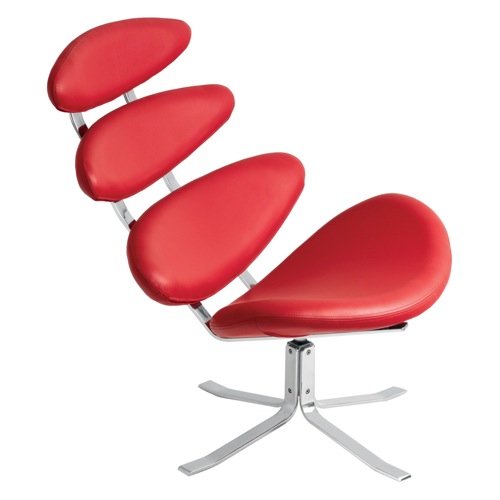
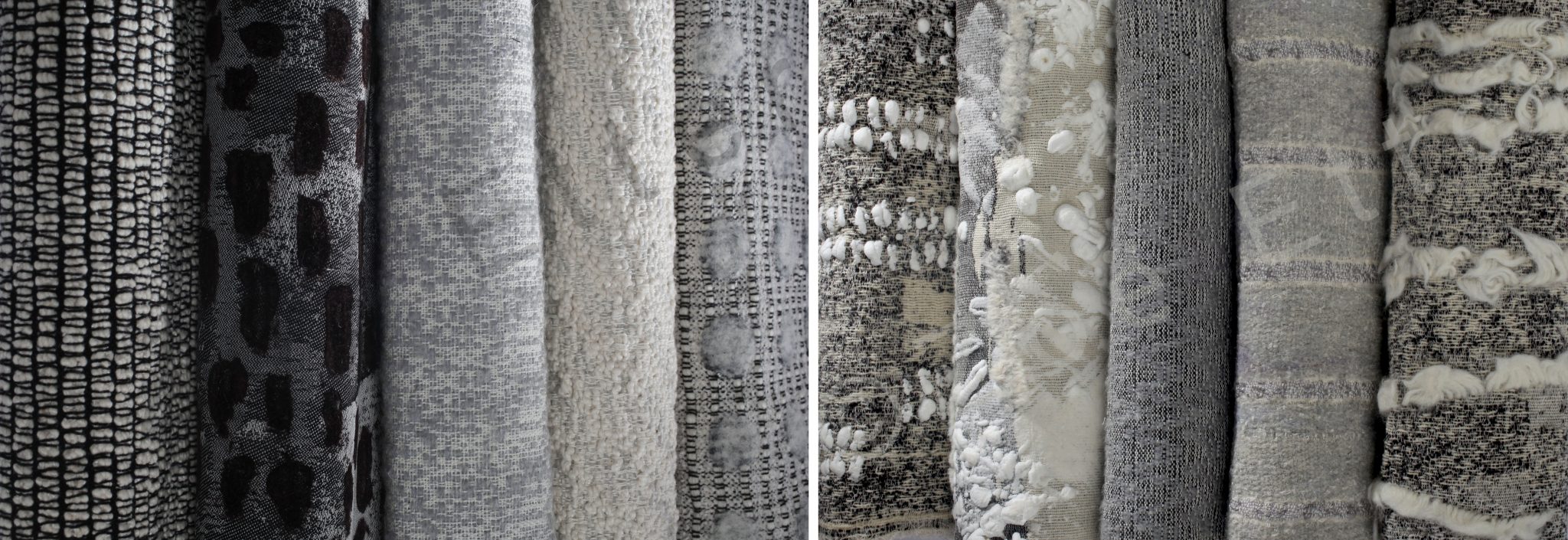 Up-and-coming Fabric Designer, Zoë Etter, was recently commissioned by KOTHEA to update our linen ‘Alpha Boucle’ upholstery fabric for S/S 2017 to incorporate new elements for the luxury market. The muted fabric features the addition of embellished and tufted yarn in simple linear shapes which are designed for a smart, contemporary look for the home.
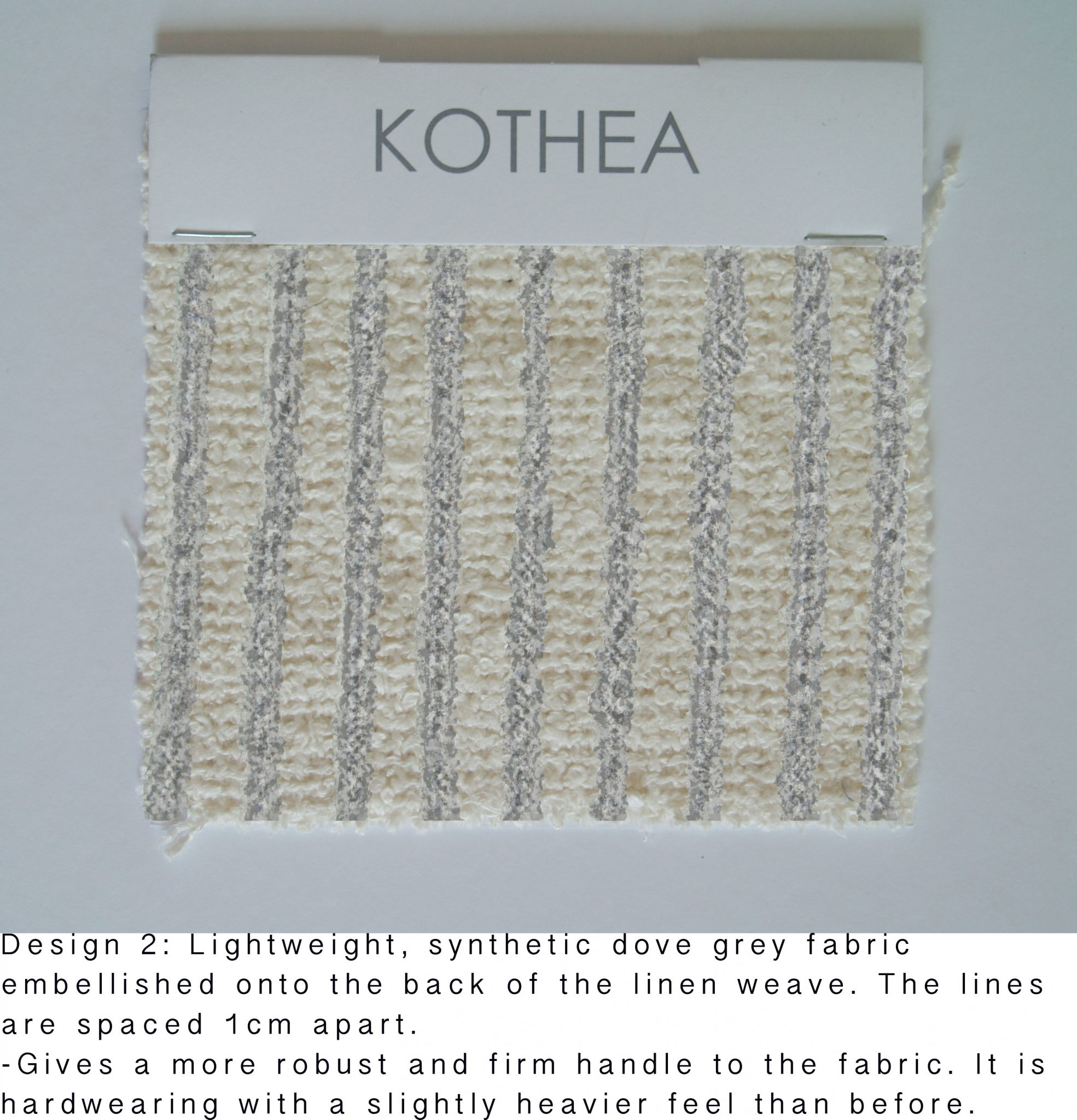 The refined designs are aimed at clients who want a simple, durable style that is visually effective. The soft colourways combined with the rich textures offers flexibility for a statement upholstery that is classic in style with a modern edge. Most suitable for chairs and soft furnishings, the fabrics’ 3D look is inviting, and remains comfortable whilst giving a luxurious feel.
 .
.