Fabric Treatment Companies – FR Flameproofing

We are often asked to recommend fabric treatment companies for flame retarding in contract installations. Most treatment companies offer other services such as; back coating fabric for walls and stain resistance/repellency. There are several such companies in the UK and at various times we have used all of the following:

Essex Flameproofing,

Textiles FR, and

TEK Treatments

Just click the company name to take you to their web site. Please feel free to add comments to this posting recommending any suppliers you have used but any negative comments about other companies are not permitted on this site. Thank you.

Shimmering Upholstery

White Textured Upholstery on Contemporary Chair


New for Spring 2015, striking and shimmering design beautifully upholstered on an occasional chair.

Textured Upholstery & Sheers

White Textured Upholstery on Contemporary Sofa

Some farbics beautifully arranged from our Spring 2015 Collection. A vey nice (we think) staged image in a set full of light diffused from some white souble-wodth sheers. 3 differing and contrasting cushions arranged off-centre on white contempoary seating

Cushions

Cushions for textured upholstery sofas

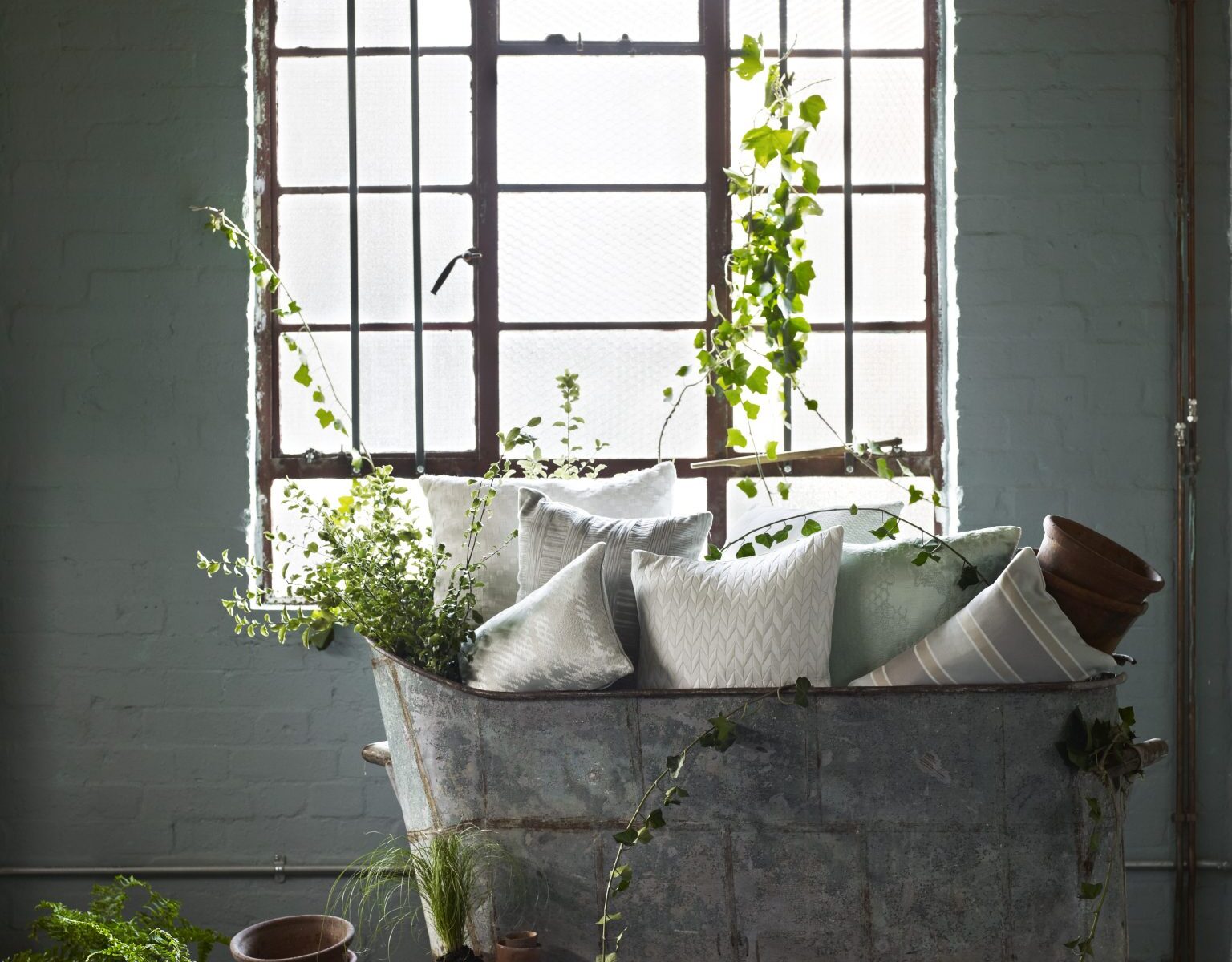
When your sofa is full up the obvious place to put your spare cushions is in that bath tub in the corner of your lounge. We have several new Spring 2015 collections waiting to hit the sewing machines of London.

A Chat With Verity du Sautoy – Her Thoughts On Winter Fabrics

Luxury Silk velvet From KOTHEA
Truly beautiful Cashmere Silk Velvet by KOTHEA

KOTHEA Fabric Picks For A Chilly Winter’s Day
With Verity du Sautoy of KOTHEA.

We love the seasons. All have their beauties and all have touched our senses in memorable ways over the years. Winter is no exception: lower, more balanced light; quietness and chaos with both the shopping and the weather; festive celebrations; the cuddle of a loved one; the hope and expectation of early spring flowers grasping for rare and tiny glimmers of light; and, perhaps, the welcomed warmth of a beautiful fabric.

Some of my best memories are centred on family: a warm fire; a little baby; or a bouncing toddler. Then an old children’s classic on the iPlayer watched on my Mac as it balances precariously on an elegant coffee table. I stroke my children’s hair with one hand and rest my other hand on my sofa. A generous cushion is warm, encapsulating and a bit of fun for the little ones to hide under. The curtains are not yet fully drawn but they smooth the boundary to the cold outside and give us tantalising glimpses of the world beyond – should we venture too close to the sheers that offer the final, soft protection from the elements.

Dominika B Tana Lawn

I work for a fabric company. I love fabric. I can’t pretend that it (fabric) is a be-all and end-all to life and that somehow it will make your life complete. It can’t. But what it clearly can do is complete the sensory experiences in the parts of life that, if you choose, you have control over…the parts of your home. Memories are not just photo-like snapshots in your brain; they are stored, multi-sensory splashes of emotion.

Here are my Winter picks. They are actual ‘picks’ that I’ve recently purchased or are about to purchase.

Take my sofa as an example. My sofa isn’t Continue reading “A Chat With Verity du Sautoy – Her Thoughts On Winter Fabrics”

Fabric Tips #13: Velvet Curtain Making

Image by tenz1225 via Flickr

Here are some additional pointers to consider when you are making a curtain using a velvet. Remember that a velvet is just a type of fabric and the fibre(s) that the velvet is made from is important.

So for example, we would always recommend that you line a curtain. This gives a superior appearance but also reduced the amount of light going through the fabric hence limiting as much as possible the effect of any fading.

If the velvet has a pile that can be flattened in one direction then we would recommend that you have the pile going downwards for SHINY velvet fabrics and PATTERNED VELVETS.

If however you make up the curtain with the pile upwards then this will deepen the colour so you could make the curtains this way for cotton velvets and Trevira Velvet and Mohair velvets.

These are general guidelines and it is not necessarily wrong if you make up the curtain ‘the other way’ just so long as you understand the implications to the finished look and performance of the material.

Black Velvet – Even Better Italian Silk Velvet In Black

Black Velvet – only to be enjoyed by those who appreciate that black is the new black! KOTHEA have a range of velvets with shades of black colourways in most of those velvet collections.

“Black Diamond” is the colourway name for the Italian Silk Velvet (100% Silk Pile) with the code 777-108-900.

You can get black silk velvet samples here from KOTHEA if you are a trade professional. Just click the link.

KOTHEA velvets are the best in the market. We only sell top market fabrics, mostly to top European Interior Designers and Architects. Here are some more bits of technical information on our black Italian Silk velvet fabric:

Width: 140cm

Composition: 100% Silk Pile

No repeat, plain.

Abrasion: Martindale 20,000.

Available from stock, normal delivery within 5 days.

Minimum Order length: 2m

Vicuna Silk Velvet (Vicugna) – Better Than Cashmere Silk Velvet?

Silk Velvet Fabric Upholstery Fabric Martindale Rub TestCashmere Silk Velvet is one of the world’s most luxurious fabrics. But is it THE most luxurious? Now this is a good question! and a little tricky to answer.

Perhaps the most expensive yarn is from the vicuña (vicuna, vicugna), which is a camel-like animal found in the high alpine areas of the South American Andes. Whilst not an endangered species it is a rare animal and difficult to farm as it tends to escape!

Cashmere yarn comes from the cashmere goat and other goats such as the pashmina goat.

Cashmere and Vicuna have an outer layer of hair which is coarse and rough but protective for the animal. This is the guard hair. Underneath the guard hair is a warm layer of much, much softer hair. This underlayer consists of hollow-fibred hair that is an excellent insulator. The vicuna has the finest of these fibres of any (resultant) wool anywhere in the world.

About 400g of yarn can be produced from one Vicuna compared to 150g from the Cashmere goat, the latter being a smaller animal. There are many more Cashmere goats in the world and I suspect this is why Cashmere is relatively affordable – as it is produced in much larger volumes in a more competitive market.

As an indication, a Vicuna scarf would cost in excess of US$1000. As far as I know, it is not produced in sufficient quantities to be available in a suitable form for interiors use (I could be wrong). But if it were it could be woven with silk to produce THE MOST EXPENSIVE AND BEST woollen silk velvet in the world. A further problem is that the Vicuna fibre can readily be damaged when dyed, again making significant production quantities problematic.

Now, as much of the Cashmere yarn produced comes from China, Australia and other countries…in fact just about anywhere other than Kasmir! it strikes me that is an opportunity waiting to happen for some illustrious, economically-minded, goat breeder out there with friends in the textiles industry. If the production problems could be overcome I could see that there still would be a market for an interiors fabric retailing at in excess of GBP800/m  (US£1300/yard) – albeit a small one.

What Is Trevira CS? Inherently Flame-Retardant Polyester Explained

What Is Trevira CS? Inherently Flame-Retardant Polyester Explained

What it is: Trevira CS is a brand name for a permanently flame-retardant polyester fibre manufactured by Trevira GmbH in Germany. The CS stands for Comfort and Safety.
How it works: The flame-retardant additive is incorporated into the polyester polymer during fibre production — it is part of the fibre itself, not a surface treatment applied afterwards.
Why it matters: The fire resistance is permanent. It cannot be washed out, worn off, or degraded by cleaning. Fabric made from Trevira CS does not require topical FR treatment to achieve contract fire standards.
Certification: Trevira CS fabric can achieve BS 5867 Part 2 Type B and Type C for curtains and BS 5852 Crib 5 for upholstery, depending on fabric construction.

Trevira CS is one of the most widely used inherently flame-retardant fibres in the UK and European contract interiors market. It is specified for curtains and upholstery in hotels, offices, healthcare facilities, and public buildings where fire compliance is required and the permanence of the fire performance is commercially important. This guide explains what Trevira CS is, how it differs from topically treated polyester, and where it is and is not appropriate to specify.


Inherent vs Topical Flame Retardancy

Standard polyester fabric does not meet UK contract fire standards without treatment. The two routes to compliance are topical FR treatment — applying chemical compounds to the fabric surface after weaving — or using a fibre with inherent flame retardancy built into the polymer from manufacture.

Trevira CS takes the second route. The phosphorus-based flame-retardant compound is added to the polyester melt during fibre extrusion. It becomes part of the polymer chain rather than sitting on or in the fabric surface. This means the fire performance is genuinely permanent — it survives laundering, dry cleaning, and normal use without degradation and without the re-treatment requirements associated with topically treated fabrics.

This permanence is the primary commercial advantage of Trevira CS over topically treated alternatives in high-frequency-cleaning environments such as healthcare curtains and hotel restaurant seating where laundry cycles are regular and frequent.


Fire Standards Trevira CS Can Achieve

Fabric woven from Trevira CS yarn can achieve BS 5867 Part 2 Type B for curtains and drapery, and Type C — which includes a laundering pre-conditioning requirement — making it appropriate for hospital cubicle curtains that are regularly laundered. This is the most demanding UK curtain fire standard and one that few non-inherent fabrics can meet reliably over repeated wash cycles.

For upholstery, Trevira CS fabric can be constructed to achieve BS 5852 Crib 5, though the specific fabric construction — weave density, pile height if applicable, and backing — affects the result. A fabric containing Trevira CS yarn is not automatically Crib 5 certified: the specific fabric as constructed must be tested and certified by a UKAS-accredited laboratory.

Trevira CS fabric also achieves good performance against the IMO fire standards used in marine and yacht interiors, making it a practical specification for vessels requiring FTP Code compliance. See our IMO marine fire standards guide for marine application requirements.


Where Trevira CS Is and Is Not Appropriate

Trevira CS is well suited to curtain fabrics in healthcare, hospitality, and institutional environments where BS 5867 Type C compliance and launderability are required simultaneously. It is also appropriate for acoustic panel fabrics and wall lining fabrics where a surface spread of flame classification is needed without reliance on topical treatment. For high-frequency-cleaning upholstery in healthcare environments, Trevira CS upholstery fabric is a practical alternative to silicone leather where a fabric aesthetic is preferred.

Trevira CS is standard polyester in all its non-fire properties. It does not have the tactile warmth of natural fibres, the lustre of mohair or silk, or the inherent sustainability credentials of wool or linen. For hospitality and high-end residential interiors where tactile quality and aesthetic warmth are the primary criteria, natural-fibre fabrics with independent fire certification are typically preferred over Trevira CS. For the distinction between inherent and topical fire resistance across fibre types, see our FR treatment and fibre compatibility guide.


Frequently Asked Questions

Does Trevira CS need FR treatment?

No. The flame-retardant property is inherent to the fibre — it is part of the polymer structure from manufacture. Fabric made from Trevira CS does not require topical FR back-coating or wet-padding treatment to achieve its fire performance. This is what distinguishes it from standard polyester fabric, which would require topical treatment to meet contract fire standards.

Does Trevira CS fire performance survive washing?

Yes. Because the flame retardancy is part of the fibre polymer rather than a surface application, it is not affected by washing, dry cleaning, or abrasion. This makes Trevira CS particularly appropriate for healthcare curtains and other applications requiring regular laundering without re-treatment or re-certification.

Is all Trevira CS fabric automatically Crib 5 certified?

No. Trevira CS yarn has inherent flame-retardant properties, but the specific fabric woven from it must be tested and certified by a UKAS-accredited laboratory to confirm it meets the required standard for the specific application. The weave construction, pile height, and backing all affect the fire performance of the finished fabric. Always obtain a test certificate for the specific fabric being specified rather than assuming certification from the yarn specification alone.


For the Crib 5 standard for upholstery, see our Crib 5 guide. For curtain fire standards including BS 5867 Type B and Type C, see our hotel fabric specification guide. For inherent vs topical fire resistance across fibre types, see our FR treatment and fibre compatibility guide. For how FR treatment works, see our how FR treatment works guide.

Request Samples

Order cutting samples of any fabric from our current collections. Trade accounts only.

Order Cuttings