Colour Fastness and Crocking: Specifier’s Guide for Interior Designers

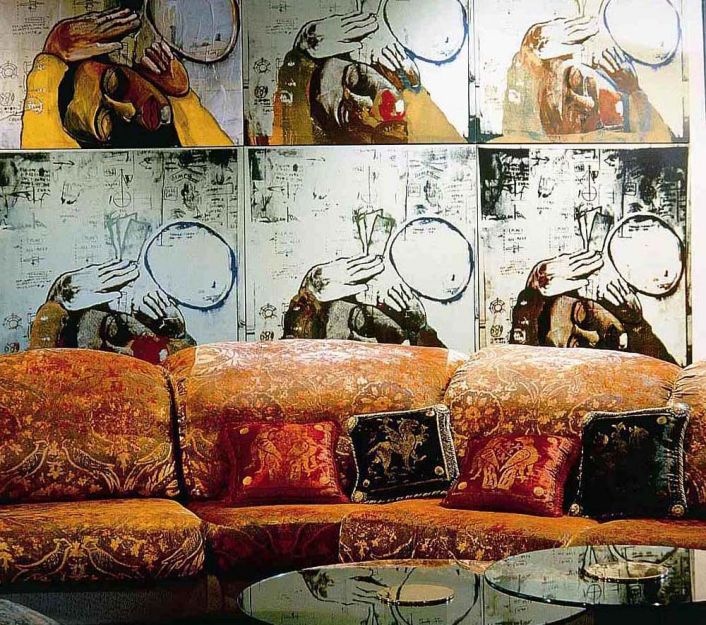
Orange, Black and red colourful velvets

Colour Fastness and Crocking: A Specifier’s Guide for Interior Designers

Crocking grade minimum for contract upholstery: Grade 4 dry / Grade 3 wet (ISO 105-X12 grey scale)
Light fastness minimum for contract interiors: ISO 105-B02 grade 5 — grade 6 for south-facing or high-light environments
Highest crocking risk: Dark colourways, velvet pile fabrics, deeply saturated reds and navies
Reverse crocking risk: New denim, dark throw cushions, and clothing transferring dye onto light upholstery

Colour fastness describes how well a fabric retains its colour when exposed to the agents most likely to cause change: light, rubbing, cleaning, and moisture. Crocking is a specific type of colour fastness failure in which excess dye transfers from one surface to another through friction. Both are routine specification criteria for contract fabric but are consistently underspecified in residential projects, which is where most complaints about colour change and dye transfer originate.

This guide explains the two tests that matter most — ISO 105-B02 for light fastness and ISO 105-X12 for crocking — how to read the grades, which fabrics and colourways carry the highest risk, and what to specify to avoid problems in use. For colour naming, systems, and metamerism — why the same colour looks different in different light — see our colour naming and specification guide. For light fastness guidance specific to room orientation and project environment, see our complete guide to light fastness and the Blue Wool Scale. For dye types and their interaction with FR treatment, see our post on dye types and FR treatment compatibility.


The Two Tests That Matter

Colour fastness is not a single test. It is a family of tests under the ISO 105 series, each measuring resistance to a specific agent. For interior fabric specification, two tests are routinely relevant and should appear on every contract fabric data sheet.

ISO 105-B02: Colour fastness to light. This test measures how resistant a fabric’s colour is to degradation by light. A xenon arc lamp simulates sunlight and the fabric is exposed for a controlled duration. The result is graded against the Blue Wool Scale from 1 to 8, where grade 1 indicates very poor light fastness and grade 8 indicates the highest possible resistance. For a full explanation of this test and the Blue Wool Scale, see our light fastness guide.

ISO 105-X12: Colour fastness to rubbing (crocking). This test measures how much dye transfers from a fabric onto other surfaces through friction. The fabric is rubbed with a standardised white cloth using a crockmeter — a machine that applies controlled pressure and movement — under both dry and wet conditions. The degree of staining on the white cloth is assessed using the grey scale for staining, graded from 1 to 5. Grade 5 indicates no staining. Grade 1 indicates severe staining. Most contract specifications require a minimum of grade 4 for dry rubbing and grade 3 for wet rubbing.


Understanding Crocking

Crocking occurs when dye that has not fully bonded to the fabric fibre transfers onto another surface through friction. Every dyed fabric contains some proportion of unfixed dye after manufacture. The degree of crocking depends on the dye class used, the dyeing process, the fibre type, and whether the fabric has been adequately washed and finished after dyeing to remove surplus dye.

Dry crocking is caused by mechanical abrasion alone. A fabric in good condition and correctly dyed will typically achieve a better dry crocking grade than wet. Wet crocking occurs when moisture is present — from perspiration, cleaning, or humidity — and is almost always worse than dry crocking because water molecules help loosen dye and carry it to the adjacent surface. This is why a fabric that appears stable in dry conditions can transfer colour noticeably on a humid day or after light spillage.

The fabrics most susceptible to crocking are those with rough or open pile surfaces, dark saturated colourways, and fibres that are difficult to dye with strong molecular bonds. Velvet is the most relevant category for interior designers. The pile surface of velvet creates more friction points than a flat-woven fabric and dye at the pile tips is more exposed to contact than dye within the body of a woven yarn. Dark velvet colourways — deep navy, rich red, dark green, charcoal — are dyed with higher concentrations of pigment and carry greater crocking risk than pale or mid-tone colourways of the same fabric.

Denim is the most commonly cited source of reverse crocking onto upholstery. New denim is typically dyed with indigo, which physically lodges within the fibre structure rather than forming a covalent bond. Indigo is easily dislodged by friction and moisture and will transfer readily onto light-coloured upholstery, particularly in warm or humid conditions. In a hotel or hospitality environment this is commercially significant: a guest in new jeans sitting on a pale upholstered chair can leave a visible mark within a single visit.


Crocking Grades: What They Mean in Practice

Grade 5: No staining. No dye transfers to the rubbing cloth. Rarely achieved by dark saturated colourways on pile fabrics.

Grade 4: Slight staining. A small amount of dye transfers but is barely visible. The minimum acceptable grade for dry crocking in most contract specifications.

Grade 3: Moderate staining. Visible dye transfer that would be noticeable in use. The minimum acceptable grade for wet crocking in most contract specifications. Grade 3 dry would indicate elevated crocking risk and should prompt discussion with the supplier before specifying for high-contact applications.

Grade 2: Significant staining. Noticeable colour transfer likely in use. Not acceptable for contract upholstery. May be flagged as acceptable for cushion or decorative applications only.

Grade 1: Severe staining. The fabric will visibly transfer colour in normal use. Not acceptable for any upholstery application.

The accepted industry minimum for contract upholstery fabrics is grade 4 dry and grade 3 wet. For hotel and hospitality environments where guests wear a wide range of clothing and the fabric is cleaned frequently, specifying grade 4 for both dry and wet provides better protection. Always confirm both grades — dry and wet — before specifying, as some suppliers report only the dry grade.


Crocking and Velvet: Specific Considerations

Velvet requires particular attention in crocking specification for two reasons. First, the pile structure creates more contact surface than a flat-woven fabric, increasing the potential for dye transfer in use. Second, velvet in dark colourways is dyed with higher pigment concentrations to achieve the depth of colour that makes dark velvet visually distinctive. The combination of pile structure and high pigment load means that dark velvets consistently achieve lower crocking grades than the same fabric in pale colourways.

This does not mean dark velvet cannot be specified for contract use. Mohair velvet in particular achieves good colour fastness due to the natural receptivity of the mohair fibre to acid dyes and the strong molecular bonds those dyes form with protein fibres. A well-dyed dark mohair velvet will typically achieve grade 3 to 4 dry and grade 3 wet, which is within the acceptable range for contract use. The key is confirming the actual grade for the specific colourway before specifying, not assuming a single grade applies across all colourways in the range.

Pale colourways of any velvet carry the reverse crocking risk: dye transfer from clothing onto the fabric. This is most acute with white, cream, and very pale colourways in environments where guests may be wearing freshly laundered dark clothing or new denim. For hotel seating in these colourways, confirm the crocking grade of the fabric in the context of incoming dye transfer, not just outgoing.

For a full comparison of velvet fibre types and their relevant specification data, see our velvet types compared guide.


Light Fastness and Crocking: How They Relate

Light fastness and crocking are distinct tests measuring different forms of colour stability, but they are both dye-related and a fabric that performs poorly on one will often perform poorly on both if the underlying dye chemistry is weak. A fabric dyed with reactive dyes, for example, will typically show moderate light fastness and may show crocking susceptibility, particularly after FR treatment. A fabric dyed with vat dyes — the most stable dye class — will achieve excellent light fastness and low crocking risk. Understanding the dye type used is therefore useful context when evaluating both grades.

The practical relationship for specifiers is as follows. A fabric that achieves light fastness grade 6 and crocking grade 4 dry is a well-dyed fabric with strong molecular dye-fibre bonds throughout. A fabric that achieves light fastness grade 3 and crocking grade 2 dry has weak dye-fibre bonds and is likely to show visible colour change and dye transfer in use within months. Neither extreme is always obvious from looking at the fabric in a showroom.

Always request both grades from the supplier before specifying for contract use. A supplier who cannot provide both grades — either because the fabric has not been tested or because the grades are not published — is a supplier whose fabric should not be specified for contract without independent testing.


Colour Fastness After FR Treatment

FR treatment can affect colour fastness. Back-coating, the most common method of applying Crib 5 treatment to upholstery fabrics, involves applying a chemical compound to the reverse of the fabric. Provided the treatment is applied correctly and does not penetrate the face of the fabric, it typically has no effect on the colour fastness or crocking grade of the face fabric.

Wet padding, used for certain curtain and lighter-weight fabrics, applies FR chemicals to the fabric in solution. Reactive dyes are known to be sensitive to the mild acidic conditions involved in some FR padding treatments. In some cases, fading can develop in the months following treatment — not immediately after, but progressively as atmospheric pollutants interact with the treated fabric. This is not visible at the time of installation and cannot be detected by standard pre-treatment testing. If specifying a fabric with reactive dyes for FR treatment, confirm with the treatment provider whether fading has been observed with that dye class on similar fabrics, and request sample swatches treated and stored for three to six months before committing to a full order.

For full detail on dye types and FR treatment interactions, see our post on dye types and FR treatment compatibility.


What to Check Before Specifying

Request the ISO 105-X12 crocking grade for both dry and wet conditions, and for the specific colourway you are ordering. Crocking grades can vary significantly between colourways within the same range, particularly between dark and pale colourways. A grade reported for the standard or mid-tone colourway in a range may not reflect the performance of the darkest available colourway.

Request the ISO 105-B02 light fastness grade for the specific colourway. As with crocking, light fastness varies between colourways and a dark colourway may achieve a higher grade than a pale one in the same range.

If the fabric is to be FR treated, confirm the dye class and whether fading problems have been observed with similar fabrics and treatments. Ask the treatment provider directly, not just the fabric supplier.

For hotel and hospitality projects, consider the reverse crocking risk for pale upholstery. The fabric’s own crocking grade tells you how much dye will transfer out. It does not tell you how resistant the fabric surface is to incoming dye transfer from guests’ clothing. Pale, tight-woven, or coated fabrics are more resistant to incoming dye transfer than pale velvet or pale linen.


Frequently Asked Questions

What is crocking in upholstery fabric?

Crocking is the transfer of excess dye from a fabric onto another surface through friction. It occurs when dye has not fully bonded to the fibre during dyeing, leaving surplus pigment on or near the surface that is dislodged by contact. Crocking can be dry, caused by mechanical friction alone, or wet, where moisture helps carry the dye to the adjacent surface. Wet crocking is almost always worse than dry. It is tested to ISO 105-X12 and graded 1 to 5, with grade 5 meaning no transfer and grade 1 meaning severe transfer. The minimum acceptable grades for contract upholstery are grade 4 dry and grade 3 wet.

Which fabrics crock the most?

Dark saturated colourways of pile fabrics — particularly velvet — carry the highest crocking risk. The pile surface creates more friction points than a flat-woven fabric and dark colourways are dyed with higher pigment concentrations. Denim is the most commonly cited source of reverse crocking onto upholstery, particularly onto pale fabrics. New denim dyed with indigo can transfer blue dye onto light-coloured seating on first contact. Cotton velvet in dark colourways has higher crocking risk than mohair velvet in comparable colourways due to the stronger molecular bond formed between acid dyes and protein fibres.

What crocking grade should I specify for hotel upholstery?

For hotel and hospitality upholstery, specify a minimum of grade 4 dry and grade 3 wet to ISO 105-X12. For pale upholstery in environments where guests wear a wide range of clothing, consider the reverse crocking risk from incoming dye transfer and prefer fabrics with tighter weave structures or protective finishes. For dark velvet in high-contact seating, confirm the specific colourway crocking grade with the supplier before ordering, as grades can vary significantly between the darkest and lightest colourways in the same range.

Does FR treatment affect crocking and colour fastness?

Back-coating, the most common method for upholstery, typically does not affect the face colour of the fabric if applied correctly. Wet padding treatments used for curtains and lighter fabrics can affect fabrics dyed with reactive dyes. Reactive dyes are sensitive to mild acidic conditions and can fade progressively in the months following treatment, a problem that is not visible at installation. If specifying a fabric with reactive dyes for FR treatment, confirm with the treatment provider whether this has been observed with similar fabrics.

What is the difference between crocking and light fastness?

Crocking is the transfer of dye to other surfaces through friction, tested to ISO 105-X12. Light fastness is the resistance of a fabric’s colour to degradation by light exposure, tested to ISO 105-B02 and graded on the Blue Wool Scale from 1 to 8. Both reflect the quality of the dye-fibre bond, and a fabric with weak dye chemistry will often perform poorly on both. They are separate tests and a fabric must be tested to both standards to report both grades. A high Martindale rub count does not imply good crocking or light fastness — these are entirely separate properties.

Can new jeans stain my upholstery?

Yes. New denim is typically dyed with indigo, which physically lodges within the cotton fibre rather than forming a chemical bond. Indigo transfers readily onto adjacent surfaces through friction, particularly in warm or humid conditions. The risk is highest with pale upholstery fabrics, particularly those with open or pile surfaces. Tight-woven, solution-dyed, or coated fabrics are more resistant to incoming dye transfer than velvet or linen. In hotel environments with pale seating, this is a practical specification consideration rather than a theoretical one.


For specification data on individual Kothea ranges see the mohair velvet, upholstery linen, and faux leather product pages.

Request Samples

Order cutting samples of any fabric from our current collections. Trade accounts only.

Order Cuttings

Light Fastness and the Blue Wool Scale: Fabric Specification Guide

Light Fastness and the Blue Wool Scale: A Complete Guide for Interior Designers and Specifiers

Light fastness is a fabric’s resistance to fading when exposed to light. For interior designers, it is one of the most practically consequential specifications you will make. A fabric that fades within two years in a south-facing room represents a specification failure regardless of how well it performs on every other measure. This guide explains how light fastness is tested, what the Blue Wool Scale grades mean, which grades to specify for different applications, and how light fastness interacts with fibre type, dye method, and room orientation.

This is the third in a series of technical specification guides from Kothea. The first covers the Martindale rub test and the second covers BS 5852 Crib 5 fire certification.
For why velvet in pale colourways in south-facing rooms is a specific light fastness risk, see our when not to use velvet guide. For colour naming, systems, and metamerism, see our colour naming and specification guide. For the companion test covering dye transfer and crocking, see our colour fastness and crocking guide.


What Light Fastness Means

Light fastness measures how much a fabric’s colour changes when exposed to light. It is not the same as colour fastness generally, which covers a broader range of stressors including washing, rubbing, and perspiration. Light fastness specifically measures the effect of ultraviolet and visible light on the dye or pigment within a fabric.

Fading occurs when light energy breaks down the chemical bonds in a dye molecule, altering its ability to absorb and reflect specific wavelengths of light. The result is a shift in the perceived colour of the fabric, which may manifest as bleaching, yellowing, or a change in hue depending on the dye type and fibre.

The speed and extent of fading depends on the fibre type, the class of dye used, the dyeing method, the intensity and spectrum of light the fabric is exposed to, and the presence of UV filtering in the glazing of the windows in the room.

Light fastness should not be confused with shade change in velvet, which is the apparent change in colour caused by pile being pushed in different directions through use. Shade change is a mechanical phenomenon and is not related to dye degradation or light exposure.


How the Test Works

The standard test for light fastness in the United Kingdom and Europe is ISO 105-B02: Colour Fastness to Artificial Light: Xenon Arc Fading Lamp Test. The fabric specimen is placed in a controlled chamber and exposed to a xenon arc lamp, which produces a spectrum of light representative of natural daylight at the D65 standard illuminant. This simulates the conditions of a south-facing interior window.

The specimen is assessed at intervals by comparing the degree of colour change against a set of eight reference fabrics known as blue wool references, numbered 1 to 8. These references are produced and calibrated by specialist manufacturers such as James Heal, who supply accredited test houses worldwide. Each blue wool reference is dyed with a different dye to produce a known and calibrated resistance to fading. Blue wool 1 is the most fugitive and blue wool 8 is the most resistant. Each successive reference is approximately twice as resistant to fading as the previous one, giving the scale a geometric rather than linear progression. The difference between grade 5 and grade 6 represents twice the resistance of grade 4 to grade 5, not an equal step.

The result awarded to the fabric is the number of the blue wool reference that most closely matches the degree of fading shown by the test specimen. A fabric rated at grade 5 has faded to a degree equivalent to blue wool reference 5 under the same exposure conditions.


The Blue Wool Scale: What Each Grade Means

Grade 1 indicates very poor light fastness. The fabric will fade rapidly under even moderate light exposure. No upholstery or curtain fabric should be specified at this grade.

Grade 2 indicates poor light fastness. Significant fading is expected within a short period. Not suitable for any interior application where appearance durability matters.

Grade 3 indicates moderate light fastness. Acceptable only for very low-light environments with no direct sunlight exposure. Not recommended for curtains or upholstery in standard residential or contract use.

Grade 4 indicates good light fastness and is the recognised minimum for interior furnishing fabrics. Suitable for residential upholstery and curtains in rooms with indirect or limited natural light. Not recommended for south-facing rooms with large glazed areas or for high-light contract environments.

Grade 5 indicates very good light fastness and is the recommended minimum for most residential upholstery and curtain specifications. Suitable for rooms with moderate natural light including east and west-facing rooms.

Grade 6 indicates excellent light fastness and is recommended for south-facing rooms, high-light residential environments, and standard contract interiors including hotels and restaurants.

Grade 7 indicates very high light fastness. Recommended for environments with prolonged or intense light exposure including glazed atriums, conservatories, and south-facing hospitality spaces.

Grade 8 indicates the maximum achievable light fastness and is reserved for the most demanding light environments including marine, semi-outdoor, and direct sunlight applications.


Specification Thresholds by Application

For residential upholstery in rooms with limited or indirect natural light, grade 4 is the minimum acceptable threshold. For residential upholstery in rooms with moderate natural light, specify grade 5 or above. For south-facing rooms or rooms with large glazed areas, specify grade 6 or above. For contract upholstery in hotels, restaurants, and offices with standard glazing, specify grade 5 as a minimum with grade 6 preferred. For glazed atriums, hotel lobbies with skylights, or any environment with prolonged daylight exposure, specify grade 6 to 7.

For curtains, the same grading applies but the exposure is usually more direct and more sustained than for upholstery. A curtain fabric in a south-facing room should be specified at grade 6 or above regardless of whether the curtains are habitually closed or drawn.

For marine, yacht, or semi-outdoor applications, grade 7 to 8 is the appropriate range and specialist outdoor-rated fabrics should be specified rather than standard interior upholstery fabric.


The Effect of Room Orientation

Room orientation is one of the most underspecified variables in fabric selection. A north-facing room in the UK receives no direct sunlight at any time of year, and a grade 4 or 5 fabric is typically adequate. An east-facing room receives direct morning sun for a limited period. A west-facing room receives afternoon sun, which can be intense in summer. A south-facing room receives direct sunlight throughout the day from spring through autumn, with peak UV intensity between midday and 3pm.

The difference in light exposure between a north-facing and south-facing room in London over a twelve-month period is very significant. A grade 4 fabric that performs adequately in a north-facing study may show visible fading within eighteen months in a south-facing drawing room.

Always ask the client which direction the principal windows face and factor that into the light fastness requirement before specifying.


Fibre Type and Dye Method

Not all fibres accept dyes equally, and not all dyes are equally resistant to light degradation. The light fastness of a fabric is a product of both.

Silk is the most photosensitive natural fibre. Silk dyes are chemically susceptible to UV degradation, and silk fabrics typically achieve lower light fastness ratings than wool, cotton, or linen. Silk and silk velvet should be specified with caution in high-light environments, and the client should be advised of this limitation explicitly before specification is finalised.

Wool and mohair accept reactive and acid dyes that can achieve good light fastness ratings when correctly selected. Well-dyed wool upholstery fabrics typically achieve grade 5 to 6. Mohair, being a wool-derived fibre, has similar dye chemistry. Kothea’s Mohair Velvet Seven is tested independently to ISO 105-B02 and achieves grade 4 to 5 for light colourways and grade 5 to 6 for dark colourways. Darker colourways generally achieve higher light fastness grades because a greater proportion of colour loss is required before a visual change becomes perceptible.

Cotton and linen typically achieve moderate light fastness with standard reactive dyes. Pre-washed and solution-dyed cotton and linen can achieve higher grades depending on the dyestuff selection.

Polyester is inherently more resistant to UV degradation than natural fibres and typically achieves grades 6 to 7. Solution-dyed polyester, where colour is introduced into the fibre during extrusion rather than applied to the surface after weaving, achieves the highest light fastness ratings of any standard interior fabric and is appropriate for the most demanding high-light or semi-outdoor applications.

PVC and PU faux leathers are treated with UV-stabilising additives during manufacture and typically achieve high light fastness ratings. However, UV degradation of the substrate itself can cause surface cracking and loss of surface texture independent of colour change, which is a separate consideration for high-light environments.


What Light Fastness Does Not Measure

The ISO 105-B02 test measures colour change under controlled artificial light. It does not measure the effect of UV-filtering glass, which can significantly reduce UV exposure in modern double or triple-glazed windows. It does not measure the effect of cleaning on dye stability, which is covered by separate fastness tests. It does not predict how a specific fabric will behave in a specific room, because actual exposure varies by latitude, season, window orientation, glazing specification, and curtain or blind usage.

Low-e glazing and UV-blocking film can substantially reduce the UV component of light entering a room, extending the effective service life of a fabric beyond what the grade alone would suggest. If a client is refurbishing a property with high-specification glazing, this should be factored into the specification conversation.


Light Fastness and Crocking

Light fastness should not be confused with crocking, which is the transfer of dye from a fabric surface to another material through rubbing or friction. Crocking is measured by a separate test and graded on a different scale of 1 to 5. A fabric with good light fastness may still crock, particularly when wet.

For dark-coloured velvets in upholstery applications, crocking is a relevant concern particularly where light-coloured clothing is likely. Always check the crocking rating as well as the light fastness grade when specifying dark velvets for seating.


Kothea and Light Fastness

Mohair Velvet Seven from Kothea is tested independently to ISO 105-B02 and achieves grade 4 to 5 for light colourways and grade 5 to 6 for dark colourways, making it appropriate for moderate to high-light residential environments and standard contract interiors with adequate glazing.

For high-light environments, colourway selection is material. A dark colourway at grade 5 to 6 will outperform a pale colourway at grade 4 to 5 in a south-facing room. If the client’s brief requires a pale colourway in a south-facing room, this should be discussed explicitly and the light fastness limitation acknowledged before specification is finalised.

For full specification data on light fastness across the Kothea range, see the mohair velvet upholstery page or contact Kothea directly.


How to Specify Light Fastness

Ask the supplier for the ISO 105-B02 grade and confirm whether the test was carried out by an independent third party laboratory or self-declared by the supplier. Self-declared ratings without an independent test certificate should not be relied upon for contract projects.

State the required minimum grade in your specification as a labelled field. For example: Light fastness minimum grade 5 to ISO 105-B02. This makes the requirement explicit and verifiable.

Where the project involves south-facing rooms, large glazed areas, or a light-sensitive colourway, note this in your specification and confirm with the supplier that the grade applies to the specific colourway being ordered. Light fastness can vary between colourways within the same range, particularly between light and dark shades.


Frequently Asked Questions

What light fastness grade do I need for a south-facing room?

For a south-facing room in the UK, specify a minimum of grade 6 to ISO 105-B02 for both upholstery and curtain fabrics. South-facing rooms receive direct sunlight throughout the day from spring through autumn, which represents the most demanding light exposure condition in standard residential interiors. Grade 4, the minimum for interior furnishing fabrics generally, is insufficient for sustained south-facing exposure and will show visible fading within one to two years in most cases. If the glazing incorporates UV-blocking film or low-e coating, this will extend fabric performance, but grade 6 remains the appropriate specification baseline regardless of glazing.

What does a Blue Wool Scale grade of 5 mean for upholstery fabric?

A Blue Wool Scale grade of 5, tested to ISO 105-B02, means the fabric’s colour has faded to a degree equivalent to blue wool reference 5 under controlled xenon arc light exposure. Grade 5 is the recommended minimum for most residential upholstery specifications and is appropriate for rooms with moderate natural light including east and west-facing rooms. It is not recommended for south-facing rooms with large windows, where grade 6 is the appropriate minimum. Each grade on the scale represents approximately twice the light resistance of the grade below it, so the difference between grade 5 and grade 6 is significant rather than marginal.

Does silk fabric fade faster than other upholstery fabrics?

Yes. Silk is the most photosensitive of the natural upholstery fibres and typically achieves lower ISO 105-B02 grades than wool, mohair, cotton, or linen under equivalent conditions. The dyes used on silk are chemically more susceptible to UV degradation. Silk velvet and silk upholstery fabrics should not be specified for rooms receiving significant natural light without an explicit conversation with the client about this limitation. For high-light environments, mohair velvet or solution-dyed synthetic fabrics are more appropriate choices.

What is the light fastness rating of Kothea mohair velvet?

Kothea’s Mohair Velvet Seven is tested independently to ISO 105-B02 and achieves grade 4 to 5 for light colourways and grade 5 to 6 for dark colourways. For south-facing rooms, dark colourways at grade 5 to 6 are the appropriate selection from this range. For rooms with indirect or moderate natural light, light colourways at grade 4 to 5 are suitable. Contact Kothea to confirm the grade applicable to a specific colourway before finalising your specification.

Can UV-blocking glazing improve the effective light fastness performance of a fabric?

Yes. Modern low-e glazing and dedicated UV-blocking film reduce the UV component of light entering a room, which is the primary driver of dye degradation in interior fabrics. A fabric at grade 5 installed behind UV-blocking glazing will typically outlast the same fabric at grade 5 behind standard single glazing by a considerable margin. However, UV-blocking glazing does not eliminate UV exposure entirely, and the ISO 105-B02 grade should still be specified at the appropriate level for the room orientation. Treat the glazing specification as a factor that extends fabric performance, not as a substitute for adequate light fastness in the fabric itself.

What is the difference between light fastness and colour fastness?

Light fastness is a specific type of colour fastness that measures resistance to fading caused by light exposure, tested to ISO 105-B02 and graded on the Blue Wool Scale from 1 to 8. Colour fastness is a broader term covering resistance to colour change or transfer from a range of stressors including washing, rubbing (crocking), perspiration, and dry cleaning, each tested to a separate standard within the ISO 105 series and graded on a scale of 1 to 5. A fabric can have excellent light fastness and poor crocking resistance, or vice versa. For contract upholstery, both light fastness to ISO 105-B02 and crocking resistance should be checked and specified independently.


To request cuttings from the Kothea range, including Mohair Velvet Seven with independent ISO 105-B02 light fastness certification.

Request Samples

Order cutting samples of any fabric from our current collections. Trade accounts only.

Order Cuttings