Vicuna Silk Velvet (Vicugna) – Better Than Cashmere Silk Velvet?

Silk Velvet Fabric Upholstery Fabric Martindale Rub TestCashmere Silk Velvet is one of the world’s most luxurious fabrics. But is it THE most luxurious? Now this is a good question! and a little tricky to answer.

Perhaps the most expensive yarn is from the vicuña (vicuna, vicugna), which is a camel-like animal found in the high alpine areas of the South American Andes. Whilst not an endangered species it is a rare animal and difficult to farm as it tends to escape!

Cashmere yarn comes from the cashmere goat and other goats such as the pashmina goat.

Cashmere and Vicuna have an outer layer of hair which is coarse and rough but protective for the animal. This is the guard hair. Underneath the guard hair is a warm layer of much, much softer hair. This underlayer consists of hollow-fibred hair that is an excellent insulator. The vicuna has the finest of these fibres of any (resultant) wool anywhere in the world.

About 400g of yarn can be produced from one Vicuna compared to 150g from the Cashmere goat, the latter being a smaller animal. There are many more Cashmere goats in the world and I suspect this is why Cashmere is relatively affordable – as it is produced in much larger volumes in a more competitive market.

As an indication, a Vicuna scarf would cost in excess of US$1000. As far as I know, it is not produced in sufficient quantities to be available in a suitable form for interiors use (I could be wrong). But if it were it could be woven with silk to produce THE MOST EXPENSIVE AND BEST woollen silk velvet in the world. A further problem is that the Vicuna fibre can readily be damaged when dyed, again making significant production quantities problematic.

Now, as much of the Cashmere yarn produced comes from China, Australia and other countries…in fact just about anywhere other than Kasmir! it strikes me that is an opportunity waiting to happen for some illustrious, economically-minded, goat breeder out there with friends in the textiles industry. If the production problems could be overcome I could see that there still would be a market for an interiors fabric retailing at in excess of GBP800/m  (US£1300/yard) – albeit a small one.

Velvet

Velvets have become increasingly popular over the last 5 years. Both residential and contract usage of velvets have increased tremendously. Having been produced for hundreds of years velvets never seem to have lost the attention of discerning designers.

Interior Designers are often interested in the properties and manufacture of velvet – the two being necessarily related. The depth of the pile, the durability of the finish, the ease of maintaining the beautiful finish.

Velvet is made in one of two ways – cut or uncut:

1. Cut pile

a. Here the loom is configured to Continue reading “Velvet”

Upholstery Curtain Cushion Domestic Textured Weave

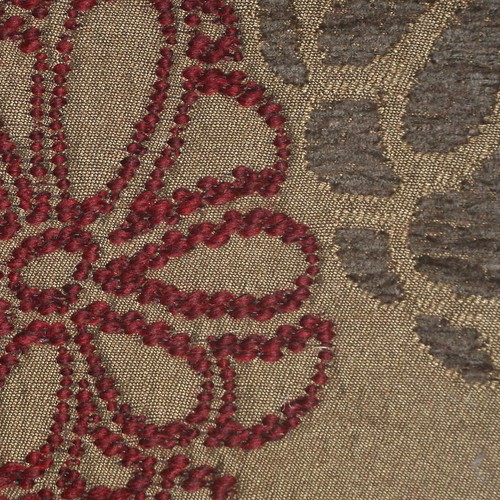
LONDON, England. 02-NOVEMBER-2009 11.30 AM: KOTHEA today announced it has expanded its collections of residential textured weaves to include KOSHAZAM. KOSHAZAM has a striking and complex design which challenges the aesthetic intellect of the most discerning designers.

KOSHAZAM
Reference: 03-037-262
Colour Shown: Red Flower
Other colourways: 4
Width: 138cm
Repeat: 72cm
Composition: Mix
Primary Usage: Domestic curtains and
upholstery.
Type of fabric: Textured weave

About KOTHEA.

KOTHEA are a top-market fabric house based in Continue reading “Upholstery Curtain Cushion Domestic Textured Weave”

Making cushions

Making Cushions
Making Cushions

Making cushions can be trickier than you might think. For consistent, professional results we have our cushions made up by Tricia Tucker at www.softfurnishing.co.uk if you want instructions on how to make up cushions yourself then you could start by looking here www.alternative-windows.com/cushionindex.htm.

Velvet Fabrics by KOTHEA include Mohair Velvet, Cotton Velvet, Linen Velvet

Velvet Fabric Includes Mohair Velvet

Velvet Fabrics by KOTHEA include Mohair Velvet, Cotton Velvet, Linen Velvet & silk velvet. The most popular being mohair velvet the most luxurious being Cashmere Silk Velvet.

KOTHEA was asked “what is the difference between cotton velvet and mohair velvet upholstery fabric”.

More of an explanation about velvet is given here – essentially ‘velvet’ is the finish arrived at by a specific production process. That process can be applied to many fibres. Mohair usually refers to a silk-like fabric or yarn made from the hair of the Angora goat and cotton is a natural fibre that grows from the cotton plant.

This blog contains lots of posts on velvets both from: an explanatory point of view; a marketing/sales point of view; and a usage point of view – hopefully something for everyone. You can use the search tools to the right to find out more. Please feel free to ask questions.

Double Width Linen Sheers

Double Width Linen Sheers are an effective way of reducing the making up cost of sheers whilst also reducing the number of joins.

We were recently asked if we stock “Sheer linen fabric with a 180cm width”. We have several double width sheers even wider than this (up to 280 cm).

Upholstery Textiles / Upholstery Textile

Upholstery textiles from KOTHEA offer the very best Martindale / rub test values for contract and residential usage. KOTHEA never compromise on elegance in design throughout their extensive range of collections that encompass many textured upholstery textiles and hard wearing textiles such as mohair velvet and faux leather. Much more textile information can be found about our products and company elsewhere here in The Fabric Blog.

Try searching for particular technical characteristics like ‘Martindale’ or ‘ the specific type of product like ‘Mohair’ or ‘upholstery fabric’ or ‘textured upholstery’ .

Alternatively ask a question by commenting on this page and it will be answered.

Upholstry Fabric / Upholstry Fabrics

Upholstry fabrics (sp. upholstery)  from KOTHEA offer the very best Martindale / rub test values for contract and residential usage. KOTHEA never compromise on elegance in design throughout their extensive range of collections that encompass many textured upholstery fabrics and hard wearing fabrics such as mohair velvet and faux leather. Much more information can be found about our products and company elsewhere here in The Fabric Blog.

Try searching for particular technical characteristics like ‘Martindale’ or ‘ the specific type of product like ‘Mohair’ or ‘upholstery fabric’ or ‘textured upholstery’ .

Alternatively ask a question by commenting on this page and it will be answered.

Upholstery Fabric / Upholstery Fabrics

Upholstery fabrics from KOTHEA offer the very best Martindale / rub test values for contract and residential usage. KOTHEA never compromise on elegance in design throughout their extensive range of collections that encompass many textured upholstery fabrics and hard wearing fabrics such as mohair velvet and faux leather. Much more information can be found about our products and company elsewhere here in The Fabric Blog.

Try searching for particular technical characteristics like ‘Martindale’ or ‘ the specific type of product like ‘Mohair’ or ‘upholstery fabric’ or ‘textured upholstery’ .

Alternatively ask a question by commenting on this page and it will be answered.

Martindale vs Wyzenbeek – Rub Test By Abrasion Explained

[youtube=http://www.youtube.com/watch?v=-LzT0dsPap4&w=200&rel=0]

Both Wyzenbeek and Martindale are abrasion or rub tests. They are however different tests which test different properties and success in one test does not infer success in the other. Wyzenbeek involves rubbing along the warp and weft of the fabric whereas Martindale is a figure-8 rub. The video clip shows a testing machine in action…not very exciting stuff. This article continues and gives summary information to assist Interior Designers to specify the right levels of abrasion resistance – usually for upholstery.

In more detail then:

For Heavy Duty Usage you should specify:
30,000 double rubs Wyzenbeek method; or

40,000 cycles Martindale method.

End use examples of heavy-duty installations, where upholstery fabrics rated at 30,000 double rubs, should be appropriate are: single shift corporate, hotel rooms/suites; conference rooms; and dining area usage.

There are extreme wear situations that may require higher levels of abrasion resistance. End use examples that may require higher than 30,000 double rubs include: 24 hours transportation terminals, 24 hour telemarketing, 24 hour healthcare emergency rooms, 24 hour casino gambling areas, and such public gathering places as theatres, stadiums, lecture halls and fast food restaurants.

It is strongly suggested that double rubs exceeding 100,000 are not meaningful in providing additional value in use. Higher abrasion resistance does not necessarily indicate a significant extension of the service life of the fabric.

Click To Read More Interior Design Articles

The Wyzenbeek and Martindale tests are the two methods commonly used to predict wear-ability. Actual performance is determined by many factors such as fiber content, weaves, finishes, furniture design, maintenance, cleaning, and usage. Durability of an upholstery fabric is a complex interaction (combination) of a number of performance tests that, in addition to abrasion, includes seam slippage, piling, tensile strength, and usage.

There is no correlation between the Wyzenbeek and Martindale tests so it is not possible to estimate the number of cycles that would be achieved on one test if the results from the other test were known.

TEST METHODS
A Wyzenbeek machine is used for this test allowing sample of the test fabric to be pulled tight in a frame and held stationary. Individual test specimens cut from the warp and weft direction are then rubbed back and forth using an approved fabric as the abradant. The number of double rub cycles achieved before two yarn breaks occur or noticeable wear is observed is recorded as the fabric’s abrasion rating.

Martindale
This is an oscillating test. Fabric samples are mounted flat and rubbed in a figure eight like motion using a piece of worsted wool cloth as the abradant. The number of cycles that the fabric can endure before fabric shows objectionable change in appearance (yarn breaks, piling, holes) is counted. Number of cycles determines abrasion rating.

Inferring one result from another:

Despite what you will read on other web sites including the sites of some of the best known fabric houses in the world you simply cannot infer a Wyzenbeek score from a Martindale score or vice versa. However as said earlier for Heavy Duty usage you might specify: 30,000 double rubs Wyzenbeek method OR 40,000 cycles Martindale method. So in that sense you can say that for a certain level of usage the Martindale result needs to be 33% higher than the Wyzenbeek. But you CANNOT say that if a fabric scores 100,000 Wyzenbeek then there is no point in undertaking a Martindale test as you “know” its result would be 133,333 – that would simply be wrong; the Martindale could be higher or lower, you have to test it.

If this post does supply you with enough information please comment below or email us and we will expand it.

For more information on luxury cashmere throws or to request cuttings please visit www.kothea.com.  For black faux leather upholstery fabrics try <here> and for mohair velvet and mohair velvet upholstery fabric please follow the links.  Upholstery Linen is also one of our specialities as are luxury  silk velvet  fabrics.