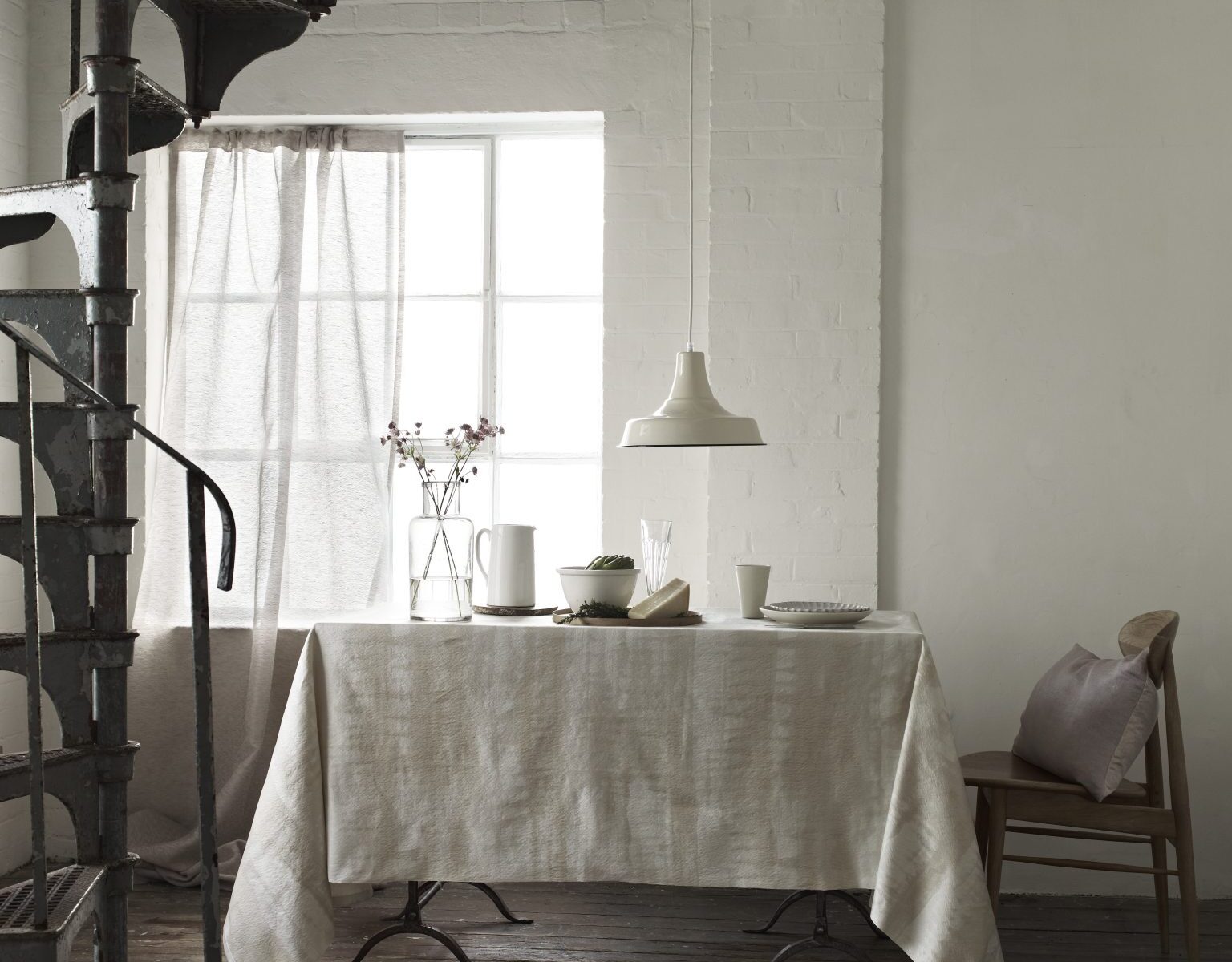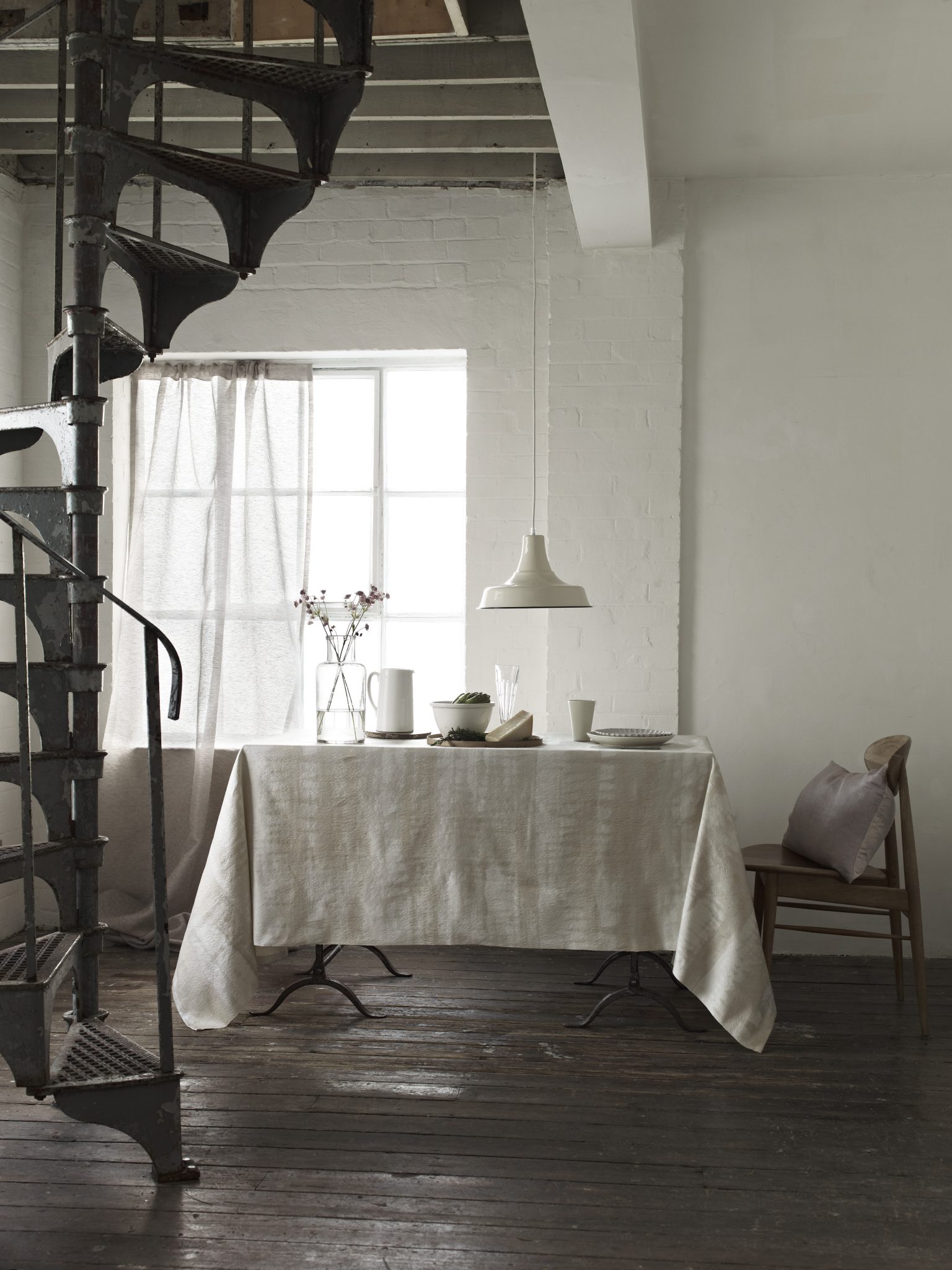
Textured Upholstery & Sheers

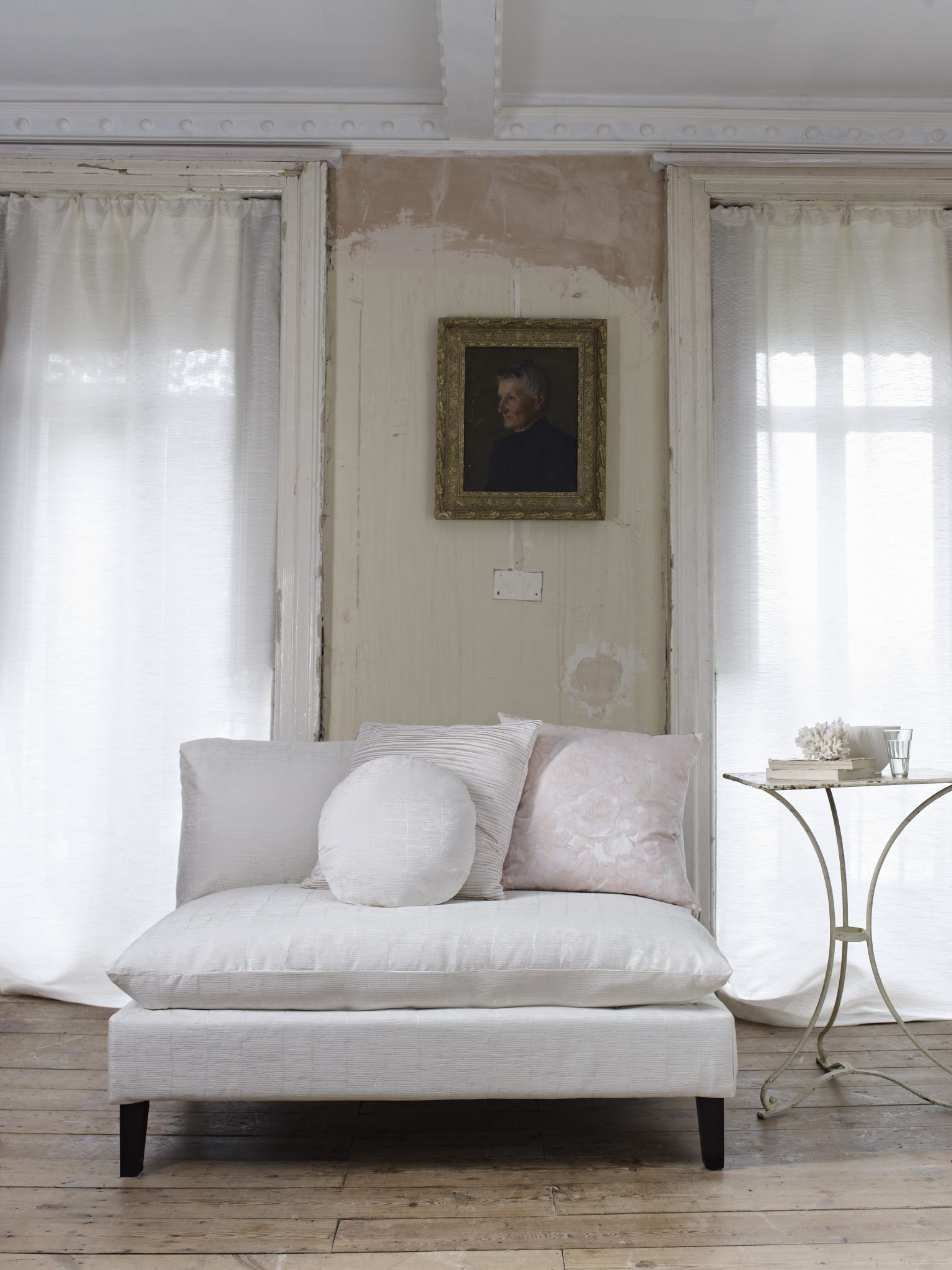
White Textured Upholstery on Contemporary Sofa

Some farbics beautifully arranged from our Spring 2015 Collection. A vey nice (we think) staged image in a set full of light diffused from some white souble-wodth sheers. 3 differing and contrasting cushions arranged off-centre on white contempoary seating

Double Width Sheer

Double width sheer fabric

Double width sheers are great as a window treatment. The extra width (twice the size, incredibly!) means less seams, so improving the appearance and ‘hang’ as well as reducing the making-up time.

Faux Leather Upholstery Fabrics

Black Faux Leather Upholstery
Click Image To Request Samples

KOTHEA are one of the UK’s leading Faux Leather suppliers to the Interior Design and Architectural sector. Our products in this sphere have high performance, commercial and residential characteristics – fantastic durability and adherence to appropriate fire retardancy standards.

We have several faux leather collections – they are aimed specifically for upholstery but are often also used on walls, doors, sometimes for curtains and cocktail bar fronts and stools.

Most of the wide range of colours we stock are available in several different finishes. The finishes range from a ‘flat’ vinyl to a heavy, but naturally, textured leather finish. In between these extremes, there are leather textures with differing degrees of depths of textures.

Click HERE To Request Samples.

The ‘feel’ of the collections vary. Some are very like leather to the touch, whilst others are more vinyl. Typically more vinyl-type finishes have highly superior cleaning and light fastness properties.

Please note that these faux leathers are specifically targetted towards interiors. They are not thin, low-grade fashion faux leather.

We also have several ranges of faux animal skins, mimicking skins such as crocodile and ostrich. These are niche products and are only available by the roll.
<

Contract Curtains – BS 5867: part2: 1980: Type B

New black curtains shading for the sun. (Photo credit: Wikipedia)

One of the specifications for the flame retardancy for contract curtains in the UK is Contract Curtains – BS 5867: part2: 1980: Type B.

Q: Is this the right one for you to use?
A: Maybe.

It is normally the responsibility of the interior desinger to determine what specification is required and to agree that with the local fire officer. Sometimes there might not be an interior designer. In that situation it is the responsibility of someone like, for example, the hotel owner. It is NOT THE RESPONSIBILITY OF THE FABRIC COMPANY nor is it the responsibility of the CURTAIN MAKER.

You should also tread carefully. If from your research you decide that the correct specification is BS 5867: part2: 1980: Type B then you are still not all the way there. If you plan to use other materials with your curtain or hang them in a novel way or with some sort of coating then all those ‘extra bits’ are relevant. The fire officer needs to be consulted to see if your method of making and hanging the curtains is OK.

Also note that if you are having your fabric treated by someone like Essex Flameproofing or TEK or Textiles FR then once they have treated the fabric they may well perform an indicative test. However if you are then going on to do unusual things to the fabric whilst making and hanging the curtains then you may have to have the curtain material tested by a testing house – such as TFT Ilkley. IE they test the retardancy and compliance of the made up curtain and not just the raw fabric in laboratory conditions.

If you are unsure of these opinions then please consult your local fire officer for correct guidance.
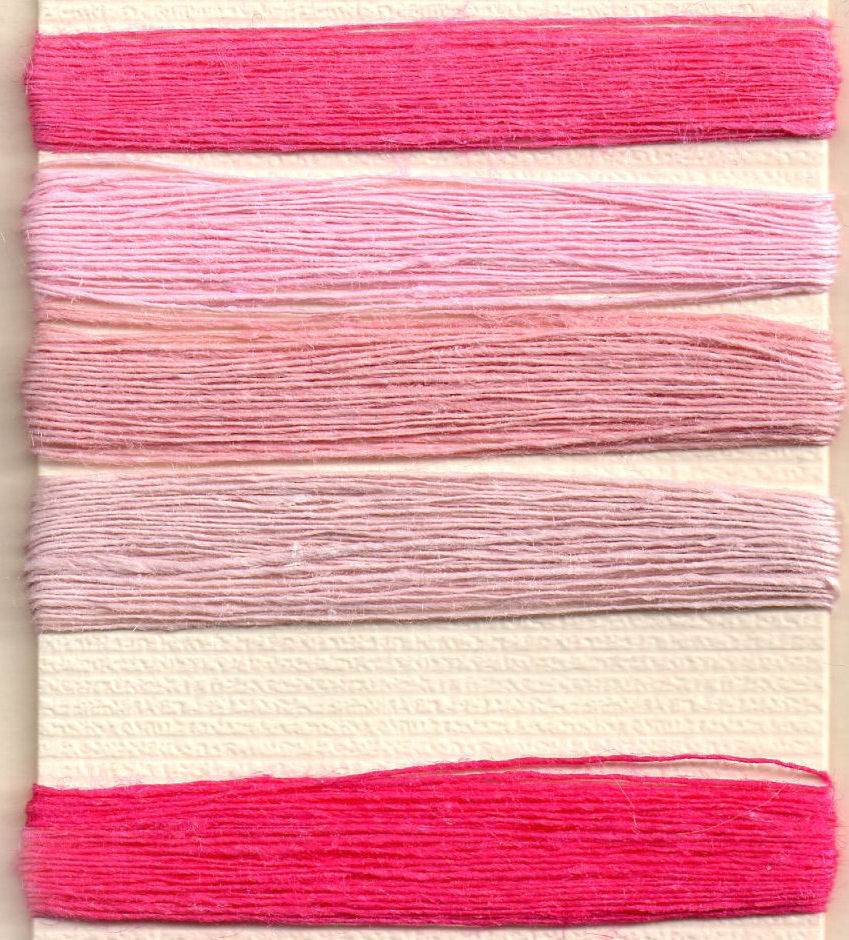
Pink Linen For Upholstery & Curtains

LinenPinksPink linen is a rather rare and unusual flower. Not often specified in your average interior designer’s scheme. I found this scan that we had emailed someone recently for the client to choose for some curtains. We were even able to introduce different pinks into the warp and weft of the linen for an unusual effect. (We can do that with most of our linen colours).

Anyway, I just thought the pink linen image looked nice and I wanted to share it with you!

Designer Fabrics & Luxury Wallcoverings 2012 – Latest Collections of Faux Leather & Raffia

British Institute of Interior Design

Interior Design 101. Back to basics.

Minimally patterned, plain and simple patterns matter when you choose designer fabrics for your interior design scheme. It’s not just the ‘important’ stuff you have to worry about; it’s all the stuff.

Design after design. Pattern after pattern. Squashed into corners. Covered ceilings. Hung on walls. Something here, something there… OK you might have certain pieces that take centre stage in your grand design but you also have to set the stage with the backdrops, the reflected light, the subtle blend of auxiliary textures.

To a certain degree, if you must, you can compromise on the backdrops. It’s great having a silk panelled wall, relatively inexpensive and good to the touch. Not so good when it fades at differing rates in the exposed sun-lit areas of the room.

So when you choose designer fabrics yes you should be wowed by the colours, designs and textures BUT you should also be wowed and interested in the technical properties. Your clients might initially thank you for a great looking job. They won’t thank you if it starts to fall apart. they may well have already paid you at that point (so you’re OK right?) but will you then get recommended to their friends…probably not. It is so, so easy to make this kind of mistake.

So try faux silk rather than silk. It looks and feels pretty much the same but can be excellent in terms of non-fading.

So try faux leather. A wide variety of finishes and qualities are available and many are great for wall covering (!) as well as upholstery. Great to cover chairs or a bar in a restaurant but also in your kitchen as they can relatively easily be cared for and cleaned. If you love leather you might find that your upholsterer might not love that choice as you are working with hides of varying sizes, whereas with faux leather you are working with a fabric available by the metre.

Click for faux leather or faux silk designer fabric samples.

Fabric Tips #13: Velvet Curtain Making

Image by tenz1225 via Flickr

Here are some additional pointers to consider when you are making a curtain using a velvet. Remember that a velvet is just a type of fabric and the fibre(s) that the velvet is made from is important.

So for example, we would always recommend that you line a curtain. This gives a superior appearance but also reduced the amount of light going through the fabric hence limiting as much as possible the effect of any fading.

If the velvet has a pile that can be flattened in one direction then we would recommend that you have the pile going downwards for SHINY velvet fabrics and PATTERNED VELVETS.

If however you make up the curtain with the pile upwards then this will deepen the colour so you could make the curtains this way for cotton velvets and Trevira Velvet and Mohair velvets.

These are general guidelines and it is not necessarily wrong if you make up the curtain ‘the other way’ just so long as you understand the implications to the finished look and performance of the material.

Fabric Tips #12: Rolling a velvet

Image via Wikipedia

You’ve just ordered a new velvet and unrolled it to admire your purchase. But how do you re-roll it?

When you roll almost any fabric you should have the face on the inside. With a velvet this is the pile so you have the pile on the inside.

Some, but not all, velvet piles stand straight up others will ‘lay down’. for the former it does not matter which way you then roll the fabric (provided the pile is on the inside). However for typically longer pile which lays down (ie you can brush it flat with your hand in one direction only) then you should roll the fabric down the pile as you return it to its roll.

Hopefully that made sense. Good luck.

What is BS5867 / BS 5867 part 2 type B? type C?

For the full guide to BS 5852 Crib 5 fire standards for contract upholstery, see: BS 5852 Crib 5: A Complete Guide for Interior Designers and Specifiers.


BS 5867 Part 2 Type B is the contract fire retardancy standard for curtains.

As an interior designer you do not need to understand the technical details of the test. However you are responsible for the project and must:

  • Confirm what standard is required for your project.
  • Specify fabric that meets that standard.
  • Prove that the fabric installed complies.

Here is what to do:

1. Determine the fire retardancy standard required. This may involve contacting the local fire officer. Confirm what documentation you need to provide.

2. Confirm with your fabric supplier whether the fabric inherently meets the standard or requires treatment.

3. On purchasing the fabric, specify the treatment required. Say to the fabric company: treat this fabric to BS 5867 Part 2 Type B and provide documentation confirming this has been done.

4. A treatment certificate confirms the fabric has been treated to the standard. It does not confirm the fabric has passed the test. For larger projects, arrange for your specific batch of fabric to be independently tested after treatment at a UKAS-accredited testing laboratory (not the treatment house). At the end of that process you will receive documentation confirming the fabric meets the standard.

Related: fire retardancy for contract upholstery, Crib 5 and BS 7176.

Test Details

Test method

A sample of the fabric, vertically held, is exposed to a small flame. For Type B (hotels and similar) the ease of ignition is observed. It is noted whether the flame reaches any edge of the specimen and whether any burning pieces fall. For Type C (NHS environments) the fabric is further assessed for behaviour once the flame is removed but when the fabric may still be smouldering. The fabric is tested before and after laundering: Type B requires 12 wash cycles at 40 degrees; Type C requires 50 wash cycles at 40 degrees.

Type B performance criteria: The edges must remain completely intact and no burning debris should fall.

Request Samples

Order cutting samples of any fabric from our current collections. Trade accounts only.

Order Cuttings

What Is Trevira CS? Inherently Flame-Retardant Polyester Explained

What Is Trevira CS? Inherently Flame-Retardant Polyester Explained

What it is: Trevira CS is a brand name for a permanently flame-retardant polyester fibre manufactured by Trevira GmbH in Germany. The CS stands for Comfort and Safety.
How it works: The flame-retardant additive is incorporated into the polyester polymer during fibre production — it is part of the fibre itself, not a surface treatment applied afterwards.
Why it matters: The fire resistance is permanent. It cannot be washed out, worn off, or degraded by cleaning. Fabric made from Trevira CS does not require topical FR treatment to achieve contract fire standards.
Certification: Trevira CS fabric can achieve BS 5867 Part 2 Type B and Type C for curtains and BS 5852 Crib 5 for upholstery, depending on fabric construction.

Trevira CS is one of the most widely used inherently flame-retardant fibres in the UK and European contract interiors market. It is specified for curtains and upholstery in hotels, offices, healthcare facilities, and public buildings where fire compliance is required and the permanence of the fire performance is commercially important. This guide explains what Trevira CS is, how it differs from topically treated polyester, and where it is and is not appropriate to specify.


Inherent vs Topical Flame Retardancy

Standard polyester fabric does not meet UK contract fire standards without treatment. The two routes to compliance are topical FR treatment — applying chemical compounds to the fabric surface after weaving — or using a fibre with inherent flame retardancy built into the polymer from manufacture.

Trevira CS takes the second route. The phosphorus-based flame-retardant compound is added to the polyester melt during fibre extrusion. It becomes part of the polymer chain rather than sitting on or in the fabric surface. This means the fire performance is genuinely permanent — it survives laundering, dry cleaning, and normal use without degradation and without the re-treatment requirements associated with topically treated fabrics.

This permanence is the primary commercial advantage of Trevira CS over topically treated alternatives in high-frequency-cleaning environments such as healthcare curtains and hotel restaurant seating where laundry cycles are regular and frequent.


Fire Standards Trevira CS Can Achieve

Fabric woven from Trevira CS yarn can achieve BS 5867 Part 2 Type B for curtains and drapery, and Type C — which includes a laundering pre-conditioning requirement — making it appropriate for hospital cubicle curtains that are regularly laundered. This is the most demanding UK curtain fire standard and one that few non-inherent fabrics can meet reliably over repeated wash cycles.

For upholstery, Trevira CS fabric can be constructed to achieve BS 5852 Crib 5, though the specific fabric construction — weave density, pile height if applicable, and backing — affects the result. A fabric containing Trevira CS yarn is not automatically Crib 5 certified: the specific fabric as constructed must be tested and certified by a UKAS-accredited laboratory.

Trevira CS fabric also achieves good performance against the IMO fire standards used in marine and yacht interiors, making it a practical specification for vessels requiring FTP Code compliance. See our IMO marine fire standards guide for marine application requirements.


Where Trevira CS Is and Is Not Appropriate

Trevira CS is well suited to curtain fabrics in healthcare, hospitality, and institutional environments where BS 5867 Type C compliance and launderability are required simultaneously. It is also appropriate for acoustic panel fabrics and wall lining fabrics where a surface spread of flame classification is needed without reliance on topical treatment. For high-frequency-cleaning upholstery in healthcare environments, Trevira CS upholstery fabric is a practical alternative to silicone leather where a fabric aesthetic is preferred.

Trevira CS is standard polyester in all its non-fire properties. It does not have the tactile warmth of natural fibres, the lustre of mohair or silk, or the inherent sustainability credentials of wool or linen. For hospitality and high-end residential interiors where tactile quality and aesthetic warmth are the primary criteria, natural-fibre fabrics with independent fire certification are typically preferred over Trevira CS. For the distinction between inherent and topical fire resistance across fibre types, see our FR treatment and fibre compatibility guide.


Frequently Asked Questions

Does Trevira CS need FR treatment?

No. The flame-retardant property is inherent to the fibre — it is part of the polymer structure from manufacture. Fabric made from Trevira CS does not require topical FR back-coating or wet-padding treatment to achieve its fire performance. This is what distinguishes it from standard polyester fabric, which would require topical treatment to meet contract fire standards.

Does Trevira CS fire performance survive washing?

Yes. Because the flame retardancy is part of the fibre polymer rather than a surface application, it is not affected by washing, dry cleaning, or abrasion. This makes Trevira CS particularly appropriate for healthcare curtains and other applications requiring regular laundering without re-treatment or re-certification.

Is all Trevira CS fabric automatically Crib 5 certified?

No. Trevira CS yarn has inherent flame-retardant properties, but the specific fabric woven from it must be tested and certified by a UKAS-accredited laboratory to confirm it meets the required standard for the specific application. The weave construction, pile height, and backing all affect the fire performance of the finished fabric. Always obtain a test certificate for the specific fabric being specified rather than assuming certification from the yarn specification alone.


For the Crib 5 standard for upholstery, see our Crib 5 guide. For curtain fire standards including BS 5867 Type B and Type C, see our hotel fabric specification guide. For inherent vs topical fire resistance across fibre types, see our FR treatment and fibre compatibility guide. For how FR treatment works, see our how FR treatment works guide.

Request Samples

Order cutting samples of any fabric from our current collections. Trade accounts only.

Order Cuttings