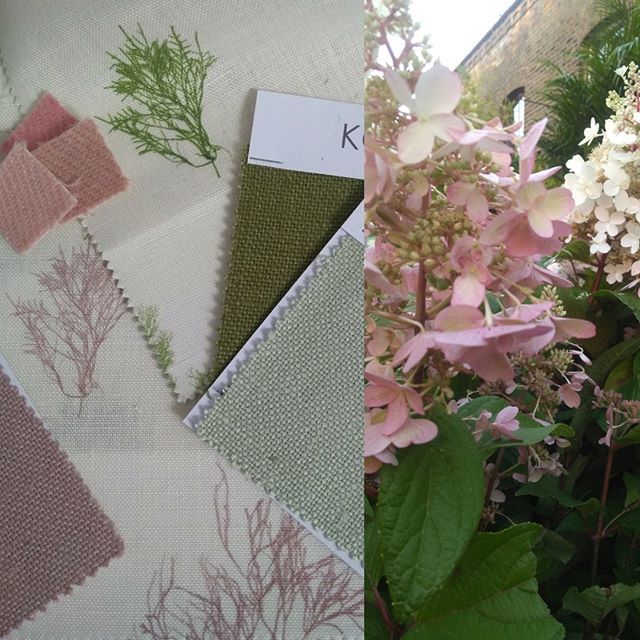
KOTHEA wade linen in vintage rose, aloe and basil, dusty pink samples of our cashmere throws complementing Tradescant’s ceramium print in colours moss and blush. This delicate print is drawn from samples of Victorian pressed seaweed. Samples inspired by these stunning hydrangea found at one of our favourite London markets, Columbia Road! . . . . . . .
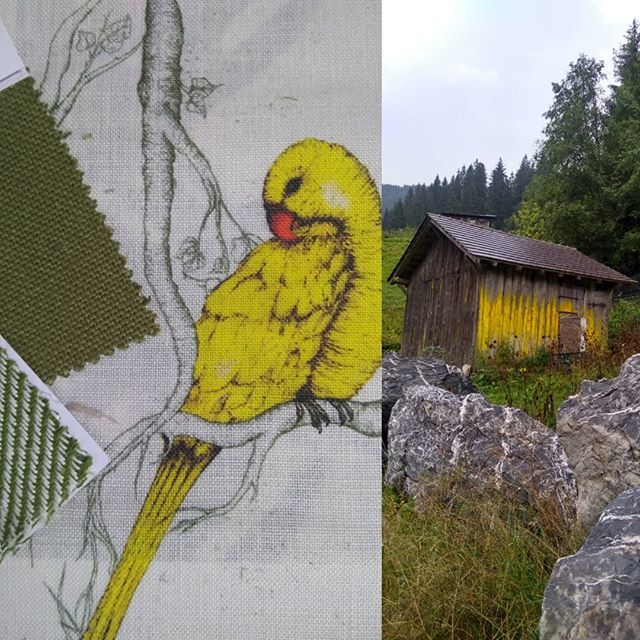
KOTHEA samples of our handwoven vespa linen in ecru and meadow, wade linen in basil and this delicately drawn parakeet printed fabric from Tradescant. Fabric samples inspired by this yellow painted hut we came across on a walk in the French Alps. . . . . . . .
KOTHEA samples of faux leather in colour bronze with a <200,000 Martindale rub test ,stardust wallcovering in bronze and space, and Studio 198 stunning hand painted wallcovering. Samples inspired by these metal sculptured peacock feathers seen on the top of the peacocktail emporium. . . . . . . . #KOTHEA #interiordesign #interior #interiors #interiordecor #interiordesignideas #interiordesigner #decor #decoration #fauxleather #metallicleather #wallcovering #grasscloth #wallpaper #metallicwallpaper #bronze #copper #wallpanel #studio198 #metal #metalsculpture #art #sculpture #peacock #feathers #cityoflondon #london #londonlife #guildhall #samples
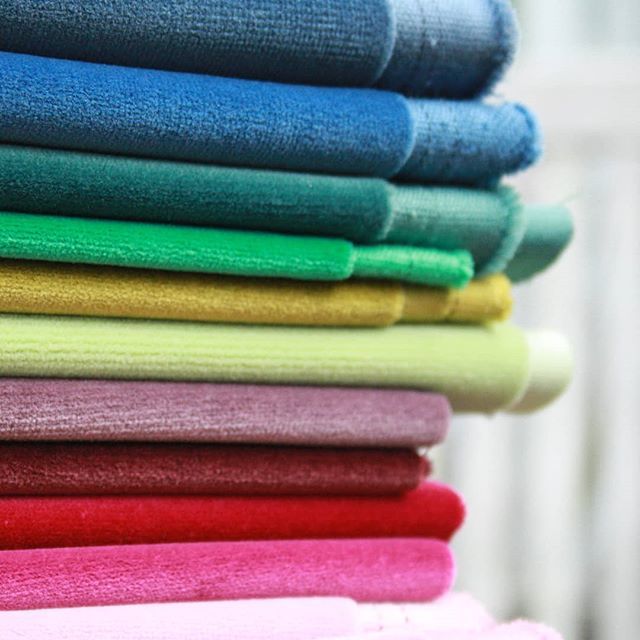
KOTHEA was asked what linen velvet fabric could be used for.
A: General uses. Upholstery, curtains, cushions. The 100% linen velvet we have has a Martindale / Rub Test of 20,000 so it is certainly suitbale for appropriate upholstery uses. A linen velvet offers a relatively unusual yet natural fibre for a velvet.
Faux (or fake) Leather offers a great alterantive to leather. With Martindale rubs of over 100,000 this is a very safe choice for high use contract areas. It’s usually made of a pure cotton basecloth with a poly-cotton visible coating. There are many other animal skins that are mimiced in the same way and in many cases the finishes are convincing.
But why not just use leather?
Much leather production has now moved away from the West to areas with less stringent environmental laws and lower wage rates. This is where the problem lies.
Chromium based compounds are used in the tanning and curing process of real leather. They are thought to be carcinogenic as, in some European tanning factories, cancer rates were found to be up to 50% higher in workers than in the population as a whole. Furthermore there were higher incidences of Leukemia in children living in areas near the tanneries. Environmental problems are exacerbated by the siting of factories next to rivers; the significant amounts of discharge that are produced are fed into the water courses and then dispersed over wide areas. In more lowly regulated economies it is not unreasonable to believe that the situation is probably worse.
Moving towards a better leather requires that chromium use is stopped completely and that the water used in production is cleaned and re-used in the factory. Any tanins and dyes uses would preferably be plant based.
Food for thought: If you wear leather clothing on sweaty skin then chromium residues in the leather can rub off and enter the skin.
KOTHEA had two recent projects where we had to adhere Faux Leather vertically. This poses a more serious challenge than paper-based wall coverings due to both the weight of the fabric (nearly 1kg per linear metre) and the wear and tear when adhered to a door. Both installations were more involved than domestic ones as we had to consider firstly the use on a yacht in a marine environment and secondly the high levels of usage of a hotel.
So the adhesive needs to be strong.
A further set of issues to overcome are related to how the fabric might react to any chemicals in the adhesive. In both instances our fabric had a 100% cotton back coat with a vinyl mix visible layer. Superfically a conclusion could be drawn that most adhesives would be OK with the surfaces they are fastening to in these instances ie a natural wooden door and inert stone wall combined with the natural cotton back cloth. However the adhesive will almost certainly penetrate the back cloth. Becuase of this the use of a solvent based adhesive, such as Asceton, is most definately not recommended.
So the adhesive needs to be strong and water based.
After performing suitability tests in these instances we chose to use Mapei’s Adheselix VS45 . VS45 is an acrylic adhesive in water dispersion and has been used extensively by Mapei’s customers for PVC/foam wallcoverings and rubber flooring. An alternative of Adesilex G19 was also suggested for areas with more moisture but that was not necessary in these cases.
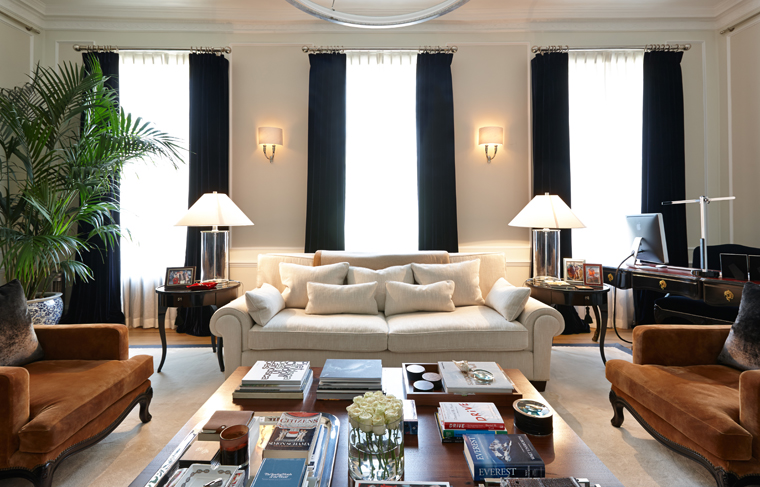
Nice geometric layout from Pellizzoni MPD, we particularly love the brown mohair velvet-esque fabric upholstered wide chairs (to the side) with contrasting and textured cushions.
KOTHEA have a wide range of contract and residential fabrics including many types of faux leather
Designed by the excellent CHAMPALIMAUD, KOTHEA faux leather fabrics are specified on the UK’s super luxurious GAINSBOROUGH BATH SPA. Lovely town great fabrics 😉







![Restaurant-2-1940x1340[1]](https://www.KOTHEA.com/wp-content/uploads/2015/09/restaurant-2-1940x13401.jpg)
![lw0435_67554293_790x490[1]](https://www.KOTHEA.com/wp-content/uploads/2015/09/lw0435_67554293_790x4901.jpg)